

Blog
How to Manage Skin Friction While Travelling

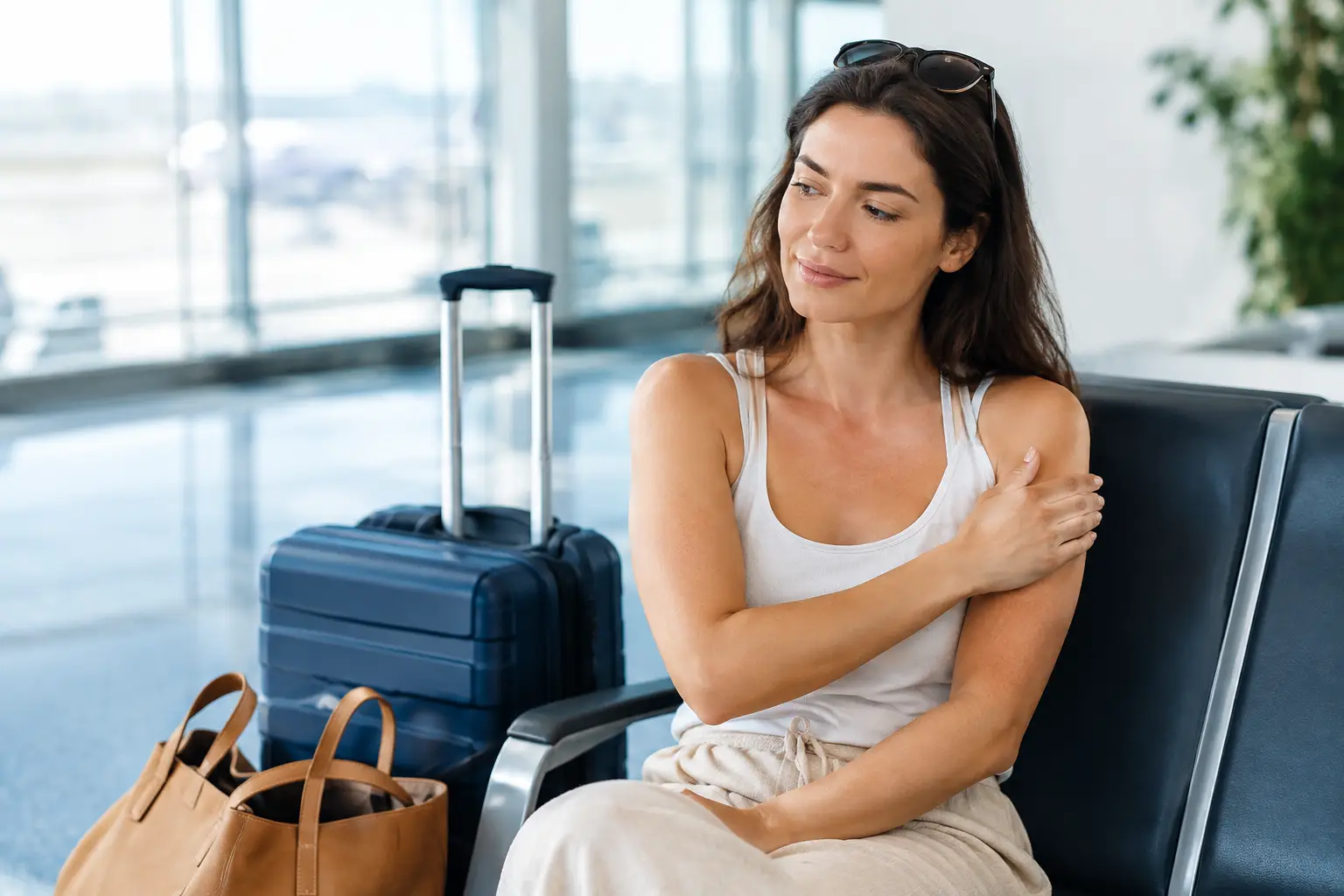
A long travel day can involve far more movement than a training session: airport terminals, station platforms, unfamiliar streets, hotel stairs and hours in a warm seat. To manage skin friction while travelling, think beyond your destination. The clothes, footwear and skin protection you choose before leaving can decide whether you arrive ready to explore or counting every painful step.
Friction is a small problem until it is not. A hot spot on your heel can become a blister halfway through a city break. Damp underwear can rub on a humid transfer day. Thigh chafing can make a short walk to dinner feel like a challenge. A little preparation gives you the freedom to move on your own terms.
Why travel creates more friction than expected
Travel changes the conditions your skin and feet are used to. You may sit for several hours, then suddenly walk quickly with a backpack or suitcase. You may wear shoes for far longer than usual, deal with heat, rain or humidity, and find that your usual routine is interrupted.
Moisture is often the tipping point. Sweat, rain, sea water and even humidity soften the outer layer of skin, making it more vulnerable to rubbing. Add a seam, a tight waistband, a bag strap or a pair of socks that has slipped down, and friction builds quickly.
There is also the issue of repetition. One poorly fitting shoe may feel fine for ten minutes, yet become a problem after 20,000 steps. This is why prevention works better than waiting for discomfort. Once skin is raw or a blister has formed, every step adds more irritation.
Manage skin friction travel starts with what you wear
The best travel outfit is not always the one that looks best on the hanger. It is the one that stays comfortable after a delayed flight, a warm walk and a full day on your feet.
Choose breathable fabrics that move moisture away from the body, particularly for underwear, socks and base layers. For walking-heavy holidays, avoid rough seams and clothing that bunches at the inner thighs, waist or underarms. Fitted cycling shorts, leggings or lightweight shorts with a smooth inner layer can make a major difference if thigh chafing is a regular issue.
New clothes can be tempting for a trip, but they are a gamble for a big walking day. Wear them first on a local walk, gym session or commute. The same applies to shoes. A holiday is not the time to break in new trainers, sandals or hiking boots, however good they looked in the shop.
Fit matters more than the label. Shoes need enough room for feet that swell during a flight or a long day of walking, but not so much room that your heel slides. If you are packing sandals, check the straps carefully. A stiff edge across the toes or ankle can rub faster than you expect in warm weather.
Give your feet a practical advantage
Your feet handle the biggest workload when you travel, so treat them like performance equipment. Start with clean, dry feet and socks that suit the conditions. Technical walking or running socks are useful for active itineraries because they reduce moisture and are less likely to crease inside your footwear.
For flights and long drives, loosen laces slightly if your feet tend to swell. Once you arrive, change out of damp socks promptly. If you have been walking in rain, drying your shoes overnight and rotating to a second pair the following day can prevent a repeat rubbing problem.
Pay attention to early warning signs. A warm, tender patch or a slight sting on the heel is your cue to stop and adjust. Do not push through because you are trying to keep up with the group. Five minutes spent changing socks, repositioning footwear or applying protection is far better than losing the next two days to a blister.
Build a friction-prevention routine before you leave
The most reliable approach is simple: apply protection before the rubbing begins. Think of it as invisible armour for the areas you know will be under pressure.
Before setting out, apply an anti-chafe balm to common friction zones such as the inner thighs, groin, underarms, bra line, waistband line, heels and toes. The right areas depend on your body, your clothing and your plans. A beach holiday may call for thigh and sandal-strap protection, while a hiking trip will put more focus on feet, socks and pack-contact points.
A stick balm is particularly useful for travel because it is quick to apply, compact and does not leave your hands feeling coated. Runglide RG Anti Chafe Balm is designed to reduce skin-on-skin and skin-on-fabric friction without petroleum or oils, making it an easy addition to a travel wash bag or daypack.
Reapply when conditions change. After swimming, a shower, a humid walk or several hours of sightseeing, your original layer may no longer be enough. There is no single timetable because sweat levels, weather and activity vary, but checking in with your skin before discomfort starts is a good habit.
Pack for the journey, not just the destination
Your anti-friction kit should be accessible during the journey rather than buried in a suitcase. If a delay turns into an unexpected walk across a terminal or a change of plans puts you outdoors all afternoon, you will be glad it is close to hand.
For active travel, pack these essentials:
- An anti-chafe balm for known rub points
- A spare pair of clean, dry socks in your day bag
- Blister plasters or dressings for early hot spots
- Lightweight underwear or shorts that have already been tested
- A small cloth or tissues to dry skin and feet when needed
This is not overpacking. It is the same logic as carrying a mobile phone charger or a water bottle: a small item can prevent a much larger inconvenience.
Adapt to the type of trip you are taking
A city break, a hiking holiday and a beach escape create different friction risks. Planning for the activity makes your routine more effective.
For city travel, focus on footwear and inner-thigh protection. Hard pavements add up quickly, especially when you are walking between landmarks and meals. Wear your proven trainers or supportive sandals, and avoid carrying a heavy bag on one shoulder all day. A cross-body bag or backpack can distribute weight more evenly, but check that straps are not rubbing your neck or shoulders.
For hiking and trekking, moisture management becomes critical. Bring more than one pair of suitable socks, protect known hot spots before the trail, and take a short break when you feel rubbing. Boots should be properly worn in, while laces should be adjusted for descents to limit toe movement.
For cycling trips, chafing can develop at the saddle contact area, inner thighs and along clothing seams. Well-fitting shorts and a friction barrier can help, but it also depends on your riding position, saddle setup and how many consecutive days you are cycling. If a specific area repeatedly rubs, do not rely on balm alone. Check the fit of your kit and equipment.
For warm-weather holidays, keep skin dry where possible and change out of wet swimwear. Salt water, sand and damp fabric can create a surprisingly abrasive combination. A quick rinse and dry layer before walking back from the beach may save your skin later.
Know when to stop treating it as a minor rub
Most travel friction problems improve when you remove the cause, clean and dry the area, and protect it from further rubbing. However, broken skin needs more care. Keep it clean, cover it where appropriate, and reduce the activity that is aggravating it.
If redness is spreading, the area is unusually hot, swollen or increasingly painful, or you see signs of infection, seek advice from a pharmacist or medical professional. It may be frustrating to alter your itinerary, but ignoring a worsening problem can take far more out of your trip.
Travelling should expand your world, not shrink it to the distance between your next painful steps. Test your kit, protect the places that work hardest and keep a few practical essentials within reach. Then you can spend your energy on the view, the route and the memories waiting ahead.