

Blog
Anti Chafe Wipes Versus Balm: What Works Best?

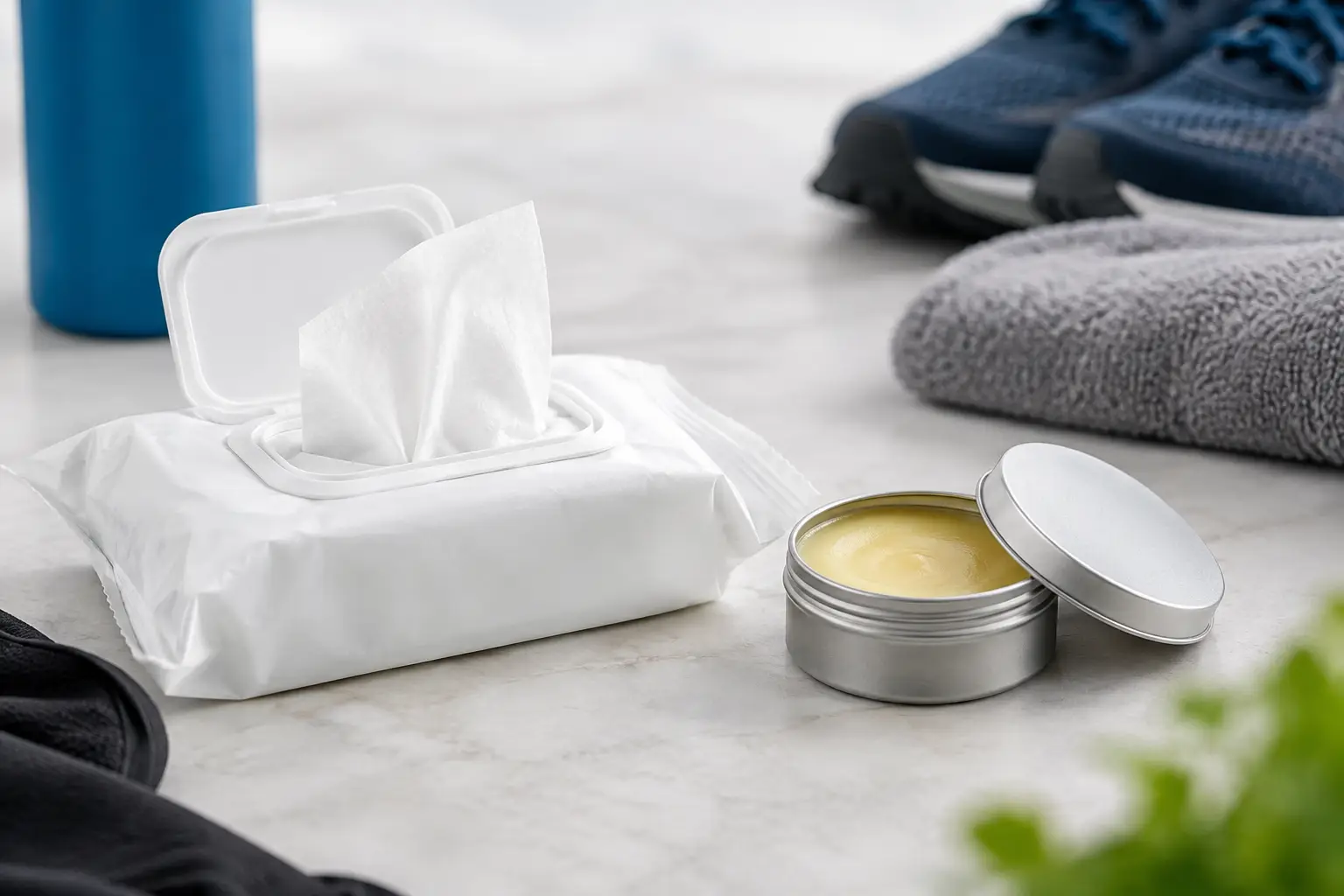
A long run can be going beautifully until the inside of your thighs starts to sting, a bra seam begins to rub, or a heel hotspot makes every step feel louder. That is when the question of anti chafe wipes versus balm stops being theoretical. Both are designed to reduce friction before it turns into sore, irritated skin, but they behave differently once you start moving.
For most active people, a balm is the more dependable choice for broad, high-friction areas and longer efforts. Wipes have a place too, particularly when speed, hygiene and a small single-use format matter most. The best option is the one you will apply properly before discomfort gets the chance to interrupt your day.
Anti chafe wipes versus balm: the key difference
Anti-chafe wipes are pre-moistened cloths or pads that apply a thin protective layer as you wipe them over the skin. They are lightweight, compact and simple to carry in a race belt, jersey pocket or hand luggage. A wipe can feel especially convenient if you are getting changed at the gym, travelling, or want to avoid carrying a full stick.
Anti-chafe balm is a solid or semi-solid product, commonly applied from a twist-up stick. It creates a more substantial barrier between skin, fabric, footwear or equipment. That barrier helps surfaces glide instead of repeatedly dragging against one another. For runners, hikers, cyclists and anyone dealing with skin-on-skin rubbing, that direct application is a major advantage.
The practical distinction is coverage and control. A wipe spreads a lighter layer quickly. A balm lets you put protection exactly where friction is likely to be greatest, then build a more confident layer without needing to use multiple single-use packets.
When anti-chafe wipes make sense
Wipes earn their place when convenience is the priority. They are easy to stash in a small bag and can be useful for last-minute application before a short walk, a gym session, a commute in warm weather or a quick change between events. Because each wipe is individually contained, they can also feel more hygienic when you are away from home.
They can be useful for smaller areas where you need a light touch, such as around a clothing seam or at the edge of a sports bra. If you are already carrying blister plasters, gels and tissues for an event, a wipe is another low-bulk item that can fit the kit.
There are trade-offs. One wipe may not provide enough product for both thighs, underarms, feet and other high-friction zones. The fabric of the wipe can also make application less precise around toes, under clothing edges or curved areas. If you sweat heavily, swim, face persistent rain or are heading out for hours, a thin layer may need reapplying sooner than a well-applied balm.
Wipes also create more packaging per use. That may not matter for an occasional event, but regular users often prefer a stick they can use repeatedly through weeks of training.
Why balm is usually better for longer movement
Balm is built for repeat friction. It is particularly useful where skin touches skin, where a garment moves back and forth, or where socks and shoes repeatedly press against the same point. Think inner thighs on a long run, underarms during a hike, the waistband area on a warm day, or heels and toes inside walking shoes.
A stick format makes it easy to apply without covering your hands in product. You can draw it directly across the skin, apply a little more to known trouble spots, and get moving. There is less guesswork than trying to judge how much protection remains on a wipe after covering several areas.
For endurance sessions, a balm’s staying power is usually the deciding factor. It is not a guarantee that you will never need a top-up – heat, rain, sweat, distance, clothing and individual skin sensitivity all matter – but it gives you a stronger starting point. Apply it before you leave, not once rubbing has already begun. Prevention is far more comfortable than trying to rescue irritated skin halfway through a run.
RG Anti Chafe Balm is made for that kind of practical, pre-activity routine: a portable stick that provides an invisible armour against friction without petroleum or oils. For an Irish brand based in Newry, designing a simple solution for people who run, walk, hike and train in changeable conditions is more than a nice idea. It is the point.
Balm works beyond sport
The benefit is not limited to race day. Balm can be a quiet daily essential under dresses, skirts, workwear and shorts, during city breaks, on long travel days, or whenever warm weather turns a short walk into an uncomfortable one. The same friction that causes a runner’s chafe can affect anyone moving through a busy day.
That versatility makes a stick easier to keep in your training bag, desk drawer or travel wash bag. You do not need to be preparing for a marathon to deserve a comfortable walk.
Choose by activity, not marketing claims
The choice between a wipe and a balm depends on what you are doing and where you tend to rub. A short, low-sweat session may suit either. A demanding effort calls for a product that can handle more contact and cover more ground.
For a quick gym workout, a wipe may be enough if you only need a small amount of protection. For a 10K, a long hike, a cycle ride or a full day of sightseeing, balm is generally the safer bet. For open-water swimming or activities involving heavy moisture, check the product instructions carefully and consider whether you can reapply when needed.
Foot friction deserves its own attention. If your socks or shoes are causing hotspots, balm can be applied to clean, dry skin before putting your socks on. A wipe may be useful in a pinch, but a stick gives you more control around the heel, sides of the foot and toes. Of course, no anti-chafe product can fully compensate for shoes that fit badly or socks that stay soaked. Your kit still matters.
How to get better results from either option
Start with clean, dry skin. Moisture from sweat, moisturiser or a rushed post-shower routine can affect how evenly any friction barrier sits on the skin. Apply before your activity, especially in places that have rubbed before. If you have had thigh chafing on previous runs, do not wait to see whether it happens again.
Use enough product to create an even layer, but do not overdo it. With balm, several direct passes across a high-friction zone are usually more effective than a faint, patchy swipe. With a wipe, make sure the area feels evenly covered rather than applying one hurried pass and hoping for the best.
Pay attention to the source of the friction. It may be skin-on-skin contact, but it could also be a backpack strap, a cycling seam, a heart-rate monitor, a swimsuit edge or a new pair of trainers. A good anti-chafe routine is specific to your body and your kit.
If skin is already raw, broken or very sore, stop applying friction products over the affected area and give it time to recover. Keep the area clean, reduce further rubbing and seek advice from a pharmacist or healthcare professional if symptoms are severe, worsening or show signs of infection.
The verdict: carry wipes, rely on balm
Wipes are useful for convenience, one-off top-ups and minimal packing. They are not a bad option – they are simply more limited when distance, sweat and repeated friction are involved. Balm offers broader coverage, more targeted application and better value for anyone who deals with chafing regularly.
If you only ever need protection for a quick session, choose the format that fits your routine. But if your aim is to train longer, travel more comfortably or step outside without worrying about the familiar burn of rubbing skin, make balm part of the preparation. A few seconds before you move can protect the freedom to keep moving.