

Blog
What Causes Toe Hotspots When Running? Stop Them

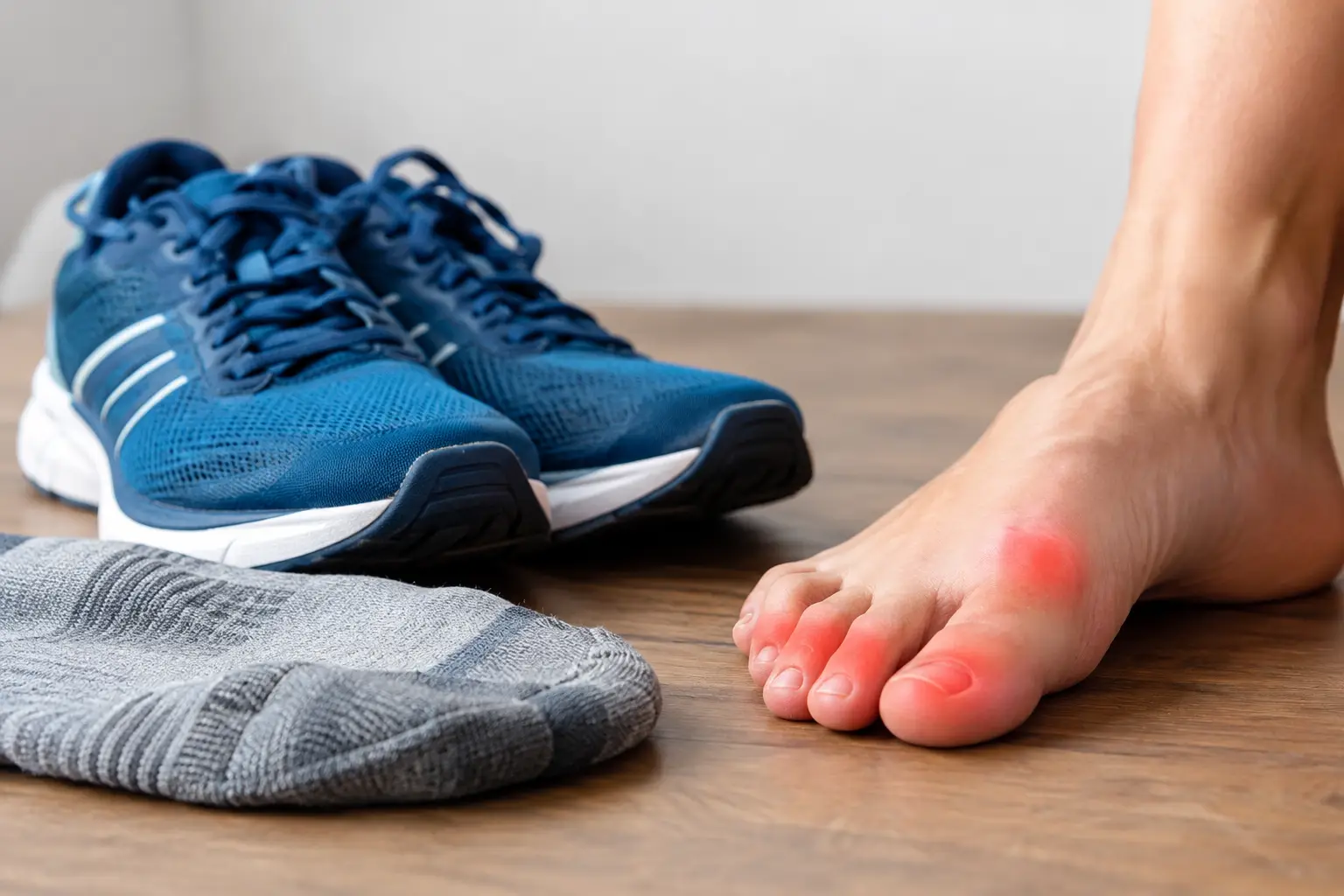
That small, burning patch on a toe can turn an easy run into a countdown to the finish. Ask what causes toe hotspots when running, and the short answer is friction. The useful answer is that friction nearly always has a trigger: a shoe that lets the foot move, a seam that rubs, damp socks, swelling, or a change in how you are running.
A hotspot is your early warning system. The skin is being repeatedly rubbed, compressed or sheared before a blister has fully formed. Respond early and you can often finish comfortably. Ignore it, and fluid can build beneath the skin, leaving you with a painful blister that affects the next few days of training too.
What causes toe hotspots when running?
Your feet do not stay the same shape from the first minute to the last. They warm up, sweat, swell and strike the ground thousands of times. When the shoe, sock and skin cannot move together comfortably, a toe can start to rub in one precise spot.
The common thread is repeated movement under pressure. A hotspot on the side of the big toe, for example, may come from the toe being pushed into a narrow toe box. One beneath the toes can point to your foot sliding forwards on downhills. A burning spot between toes often has moisture and crowding involved.
Shoes that are too tight, too loose or the wrong shape
Running shoes should feel secure at the heel while leaving room for your toes to spread and for your feet to swell. A shoe that is too short or narrow presses toes together and makes them rub against the upper, the insole or each other. This is particularly common on longer runs, warm days and routes with sustained descents.
But extra room is not always the answer. If a shoe is too large, or laced too loosely, your foot can slide forwards and back with every stride. That repeated micro-movement creates shear force across the toes. You may notice it under the toenail, at the tip of the toe or beneath the ball of the foot.
Shoe shape matters as much as size. Two pairs marked with the same size can fit very differently through the forefoot and toe box. If one toe consistently gets sore in a particular model, trust the pattern. Your foot may simply need a different shape, not a tougher toe.
Socks that hold sweat or create pressure points
Cotton socks can feel soft at the start, but once wet they may stay wet and bunch under pressure. Damp fabric increases friction, while folds and seams can create a concentrated rubbing point. Even a quality running sock can become a problem if it is worn out, too big or slides inside the shoe.
Choose socks that fit closely without squeezing your toes. Technical fabrics that move moisture away from the skin are a practical choice for most runners. Some runners also prefer toe socks for recurring rubbing between toes, as the fabric separates the skin. They are not essential for everyone, but they can be a worthwhile experiment if that is where your hotspots appear.
Sweat, rain and wet conditions
Moisture softens the outer layer of skin. Softer skin is more vulnerable to rubbing and can blister faster, which is why a familiar pair of shoes may suddenly cause trouble during a humid run or a wet race.
Rain does not have to mean an instant blister, but it changes the job of your socks and shoes. If you are running trails, travelling to an event, or tackling a long session where wet feet are likely, test your sock-and-shoe combination beforehand. A pair that works for a 5K in cool weather may not hold up for three wet hours on the hills.
Swelling, fatigue and form changes
Longer distance brings small changes that matter. Feet naturally swell, especially in heat. As fatigue builds, your stride may shorten, your foot placement can become less controlled, and you might start pushing off differently through one side. A hotspot that appears only after 10 miles is often connected to these late-run changes rather than a fault you would notice walking around the house.
Toenail length can add to the issue. Nails that are too long can repeatedly press into the front of the shoe, particularly on descents. Trim them straight across and avoid cutting them excessively short, which can leave sore edges or increase the risk of an ingrown nail.
Find the pattern before changing everything
The fastest way to prevent recurring hotspots is to notice exactly where and when they occur. A hotspot at the end of the second toe needs a different solution from one between the fourth and fifth toes.
Think about the conditions around the run. Did it happen after a new pair of shoes, a longer route, a hillier session, a warm day or a change in socks? Did it begin on both feet or just one? One-sided rubbing can sometimes reveal a lacing issue, a worn insole, or a slight difference in foot shape.
Also inspect your shoes after a run. Look for a creased or rough section inside the toe box, a loose insole, worn lining, or a sock that has shifted. Small issues are easy to overlook until your feet have spent an hour moving against them.
How to stop a hotspot before it becomes a blister
If you feel a hotspot during a run, act while the skin is still intact. Stopping briefly can be frustrating, but it is far quicker than losing a week of comfortable running to a deep blister. Dry the area if possible, smooth out the sock, and check whether your laces are allowing the foot to slide.
For long runs, carry a small foot-care kit that suits your needs. This might include a spare pair of socks, blister dressings or tape, and a way to reduce friction. The right choice depends on your skin, conditions and route, so test it in training rather than relying on a new tactic on race day.
Before running, prepare the likely trouble spots. A friction-reducing balm can create a protective layer between skin, sock and shoe, particularly around toe edges, under the forefoot and where toes rub together. Runglide Anti Chafe Balm is a portable option for runners who want that invisible armour in their pre-run routine. Apply it to clean, dry skin, then put on well-fitting socks without rushing the process.
Tape and blister patches can help too, though they work best on clean, dry skin and must be applied smoothly. If tape bunches or moves, it can create the very friction you are trying to prevent. For a known problem area, practise your chosen method on shorter runs first.
Adjust shoe fit without overcorrecting
A hotspot does not automatically mean you need new shoes. Start with the simplest checks: make sure there is roughly a thumb’s width of space in front of your longest toe, that the heel feels held in place, and that the forefoot is not compressed. Try a different lacing approach if your foot slides forward, especially for downhill running.
If your toes feel crowded even when the length is right, a wider fitting or roomier toe box may be the better answer. Do not buy a dramatically larger shoe simply to gain width, though. Too much length can create forward slide and a new set of hotspots.
Replace shoes when the upper has lost structure, the inner lining is worn through, or the midsole no longer supports your stride as it should. High mileage is one guide, but visible wear and how the shoe feels on your foot are just as useful.
When a hotspot needs more than a home fix
A standard friction hotspot should settle when you remove the cause. Seek advice from a pharmacist, podiatrist or healthcare professional if you have severe pain, spreading redness, warmth, swelling, pus, fever, or a blister that is not healing. Take extra care if you have diabetes, poor circulation or reduced feeling in your feet.
Do not push through a hotspot that changes your gait. Running awkwardly to protect one toe can move the problem up the chain to your ankle, knee or hip. A rest day, a shoe adjustment and a little prevention are often the stronger training decision.
Your feet carry every session, from a quick evening 5K to an all-day trail adventure. Give them a few minutes of attention before you head out, and they will be far less likely to ask for it halfway through the run.