

Blog
What Anti Chafe Balm Works in Rain for Runners?

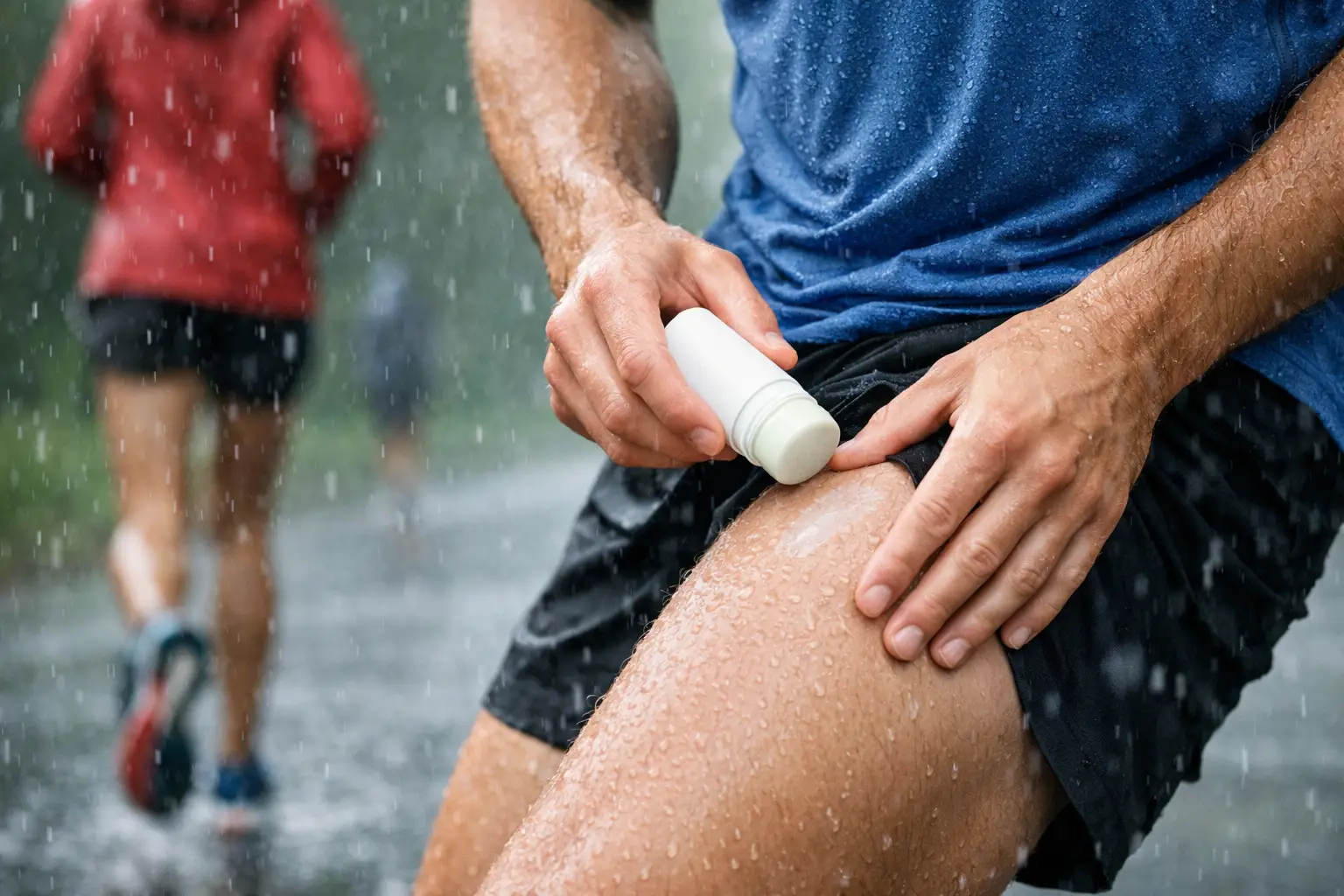
A dry run can expose a weak spot by mile ten. Rain can find it in the first ten minutes. If you are asking what anti chafe balm works in rain, look for a product that creates a durable friction barrier, rather than one that simply feels slippery when first applied.
Wet-weather training changes the problem. Rain-soaked kit clings and shifts. Water makes skin softer, while mud, sweat and movement add more abrasion. A balm cannot stop your clothes getting wet, but the right one can reduce the rubbing that turns an enjoyable rainy run, hike or ride into a painful finish.
What anti chafe balm works in rain?
The best choice is a solid, wax-based anti-chafe balm applied directly to clean, dry skin before you head out. It should feel like a protective layer, not a wet lotion, and it needs enough grip to remain between your skin and damp fabric as you move.
There is a useful distinction here: water-resistant is not the same as waterproof. No topical balm can promise to stay untouched through hours of torrential rain, stream crossings and saturated clothing. But a properly formulated stick balm is far less likely to disappear immediately than a thin cream, body oil or product designed to rinse off easily.
For endurance sessions, choose a balm made specifically for friction prevention. A product such as Runglide RG Anti Chafe Balm is designed to be applied where repeated movement causes trouble, without petroleum or oils that can leave a heavy, messy feel. The stick format also makes it practical to carry for a top-up if conditions become properly wet.
Why rain makes chafing worse
Chafing is caused by repeated friction, but moisture makes the skin more vulnerable. When the outer layer of skin is wet for a long period, it can become soft and fragile. Add a damp waistband, wet shorts between the thighs, a running vest rubbing the shoulders or socks that have lost their shape, and the irritation can build quickly.
This is why a balm that worked for a short, dry gym session may not be enough evidence for a two-hour rainy run. The challenge is not just rain landing on your skin. It is the constant contact of wet material, sweat trapped beneath layers and grit picked up from the road or trail.
Cyclists often notice this around the inner thigh and seat area, where damp shorts stay in contact with the body. Runners may struggle at the bra line, underarms, inner thighs, waistband and around the toes. Hikers can find that wet socks turn a small hot spot into a blister before the next stop. The principle is the same: protect the places that move, press or rub.
Apply it before the first drop falls
A good balm works best as prevention, not rescue treatment. Once skin is raw, putting any product over it may sting and will not undo the damage already caused. Take a minute before getting dressed to apply the balm generously to likely friction zones.
Start with clean, fully dry skin. This matters more in rain than people expect. Applying balm over damp skin, lingering shower moisture or sweat can make the protective layer less even from the start. Let your skin dry, then swipe the stick directly over the area in a broad, consistent coating. You do not need to massage it in until it vanishes. The point is to leave a protective barrier where fabric and skin will meet.
For a run, that may mean both inner thighs, underarms, the waistband line, nipples and the edges of a sports bra. For hiking, add heels, toes and anywhere your pack straps or footwear repeatedly rub. If you use a stick on the feet, make sure your socks are dry when you put them on. Starting with damp socks defeats much of the preparation.
Do not forget the edges of your kit. A seam that feels fine while standing still can become abrasive once it is wet and loaded with movement. If a vest, shorts lining or bra band has irritated you before, treat that exact contact point as a priority.
Match the amount to the conditions
Light drizzle on a 30-minute run does not demand the same preparation as a three-hour trail outing in steady rain. Use a light but complete layer for shorter sessions. For longer events, rough weather or known problem areas, apply more deliberately and take the balm with you.
More is not always better. An excessively thick layer can transfer to clothing and feel uncomfortable, particularly around socks and tight cycling shorts. The goal is an even layer that lets the skin and fabric move with less drag.
Your kit matters as much as the balm
Think of anti-chafe balm as one part of a wet-weather system. It performs best when the rest of your kit is working with it.
Avoid cotton next to the skin for longer rain sessions. Once wet, it tends to hold moisture and can become heavy, cold and abrasive. Technical fabrics are not all equal either. Some dry quickly but have rough seams; others feel soft but hold water. Test your rainy-day favourites on shorter outings before trusting them for race day or an all-day walk.
Fit also changes in wet conditions. Shorts that are comfortable when dry may sag, bunch or ride up once soaked. A running top can cling in a way that exposes new rubbing points. Choose secure-fitting layers that do not shift excessively, and replace worn socks before they develop thin patches or hard seams.
If rain is expected, pack a dry spare pair of socks for longer hikes or events where you can change. This single move can make a bigger difference to blister prevention than trying to compensate for sodden footwear with extra balm alone.
When should you reapply?
Reapply based on duration and conditions, not a fixed timetable. On a wet run of under an hour, a thorough pre-application may be all you need. On a long hike, ultramarathon, sportive or day of repeated showers, check in at sensible stops.
Look for warning signs: a familiar hot spot, a bra band beginning to sting, shorts catching at the inner thigh or toes that feel rubbed rather than simply tired. Stop before the skin breaks down if you can. Dry the area gently with a clean cloth or tissue where possible, then reapply the balm. Putting more product straight over mud, grit or a soaking-wet layer of fabric is less useful and may trap the very debris causing the problem.
If the skin is already open or bleeding, step away from the friction. Clean the area and protect it appropriately. Anti-chafe balm is a prevention tool, not a substitute for wound care.
Common rainy-day mistakes
The first mistake is assuming rain will wash a balm away immediately. In most real sessions, the bigger threat is the constant rubbing of wet kit, so application coverage and clothing choice matter greatly. The second is applying balm only where chafing happened last time. Rain can create new pressure points, especially under straps, waistbands and seams.
Another mistake is saving the balm for race day. Try it during ordinary wet training so you know how your skin, socks and clothing behave together. Everyone sweats differently, moves differently and has their own repeat trouble spots. Your most reliable routine comes from noticing those patterns.
Finally, do not rely on a single product to fix poor kit fit. If one pair of shorts twists every time it gets wet, a better-fitting pair is the lasting answer. Balm can reduce friction; it cannot make unsuitable clothing behave.
Rain does not have to put your training on hold or leave you dreading the shower afterwards. Prepare dry skin, protect the places that repeatedly rub, wear kit that stays put and carry a stick for long, wet days. That small routine gives you more freedom to keep moving when the weather refuses to cooperate.