

Blog
Best Anti Chafe Products for Hybrid Athletes

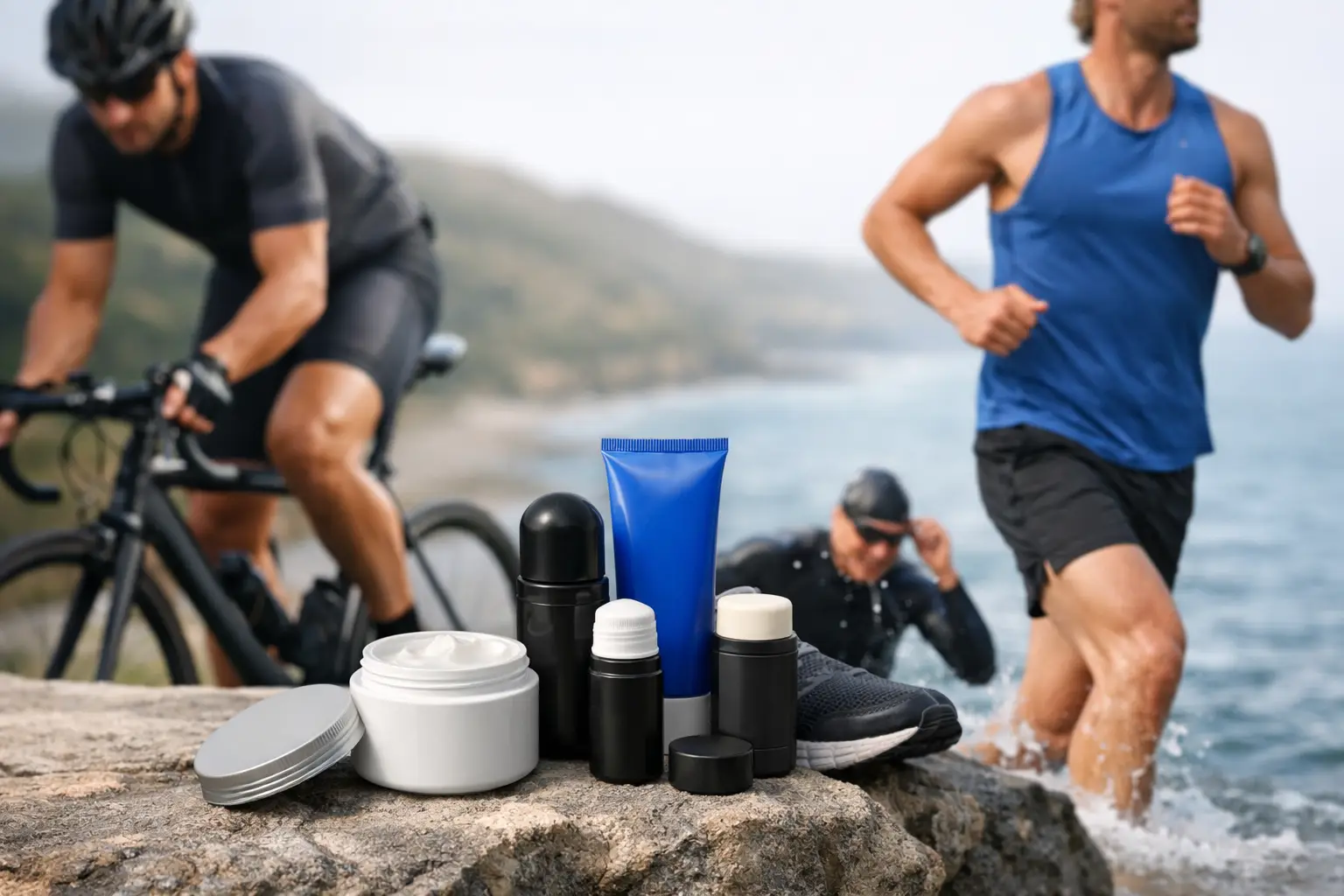
A long run followed by heavy squats asks a lot of your body. The last thing you need is burning inner thighs, rubbed-underarm skin or a blister forming halfway through your session. The right anti chafe products for hybrid athletes remove one small but disruptive barrier, so you can focus on building strength, fitness and consistency.
Hybrid training creates a particular friction problem. You may sweat through a run, change position under a barbell, sit on a bike or walk home in the same kit. Skin is exposed to repeated rubbing, moisture and heat across several types of movement. Prevention is far easier than trying to train through raw, irritated skin.
Why hybrid athletes chafe differently
A runner can usually predict where friction will appear: thighs, toes, nipples, underarms or the waistband. A cyclist may expect it around the saddle area and feet. Hybrid athletes have to account for all of those pressure points, plus the changes that happen when training moves from endurance work to lifting, circuits or mobility.
Sweat is a major factor. It softens the outer layer of skin and makes fabric more likely to drag rather than glide. Add tight shorts, compression layers, a weighted vest, a sports bra or a lifting belt, and a short hot spot can become a painful patch quickly.
Training volume matters too. A 20-minute easy run may cause no trouble at all, while a run-to-gym day, a long weekend session or a race simulation can expose a weak point in your clothing and skin-prep routine. Chafing is not a sign that you are doing something wrong. It is a friction problem, and it needs a practical friction solution.
What to look for in anti chafe products for hybrid athletes
For most hybrid athletes, an anti-chafe balm in a portable stick is the most useful starting point. It is quick to apply, clean to carry in a gym bag and easy to target exactly where you need protection. A quality balm should create a durable glide layer that reduces skin-on-skin and skin-on-fabric rubbing without leaving you feeling greasy or slippery under your kit.
Look for a formula that suits repeated use. If you train before work, lift at lunch or fit a walk into the evening, you need something comfortable enough for everyday movement as well as hard sessions. Many athletes also prefer products made without petroleum and heavy oils, particularly when applying them beneath close-fitting technical fabrics.
The format matters more than it might seem. Tubs can work well at home, but fingers, changing rooms and shared gym spaces are not always a convenient combination. A stick allows controlled, no-fuss application before you pull on your shorts or head out the door. It is the kind of small routine that is easy to repeat, which is what makes it effective.
Other options have a place, but they come with trade-offs. Powders can help manage dampness, though they may wear away quickly during a sweaty run. Creams can feel soothing, but may be messy to apply and less convenient to reapply. Tapes and patches can protect a very specific area, yet they are not ideal for broad areas such as inner thighs. For all-round, movement-friendly coverage, a balm is often the dependable choice.
Choose for your real training conditions
The best product is not necessarily the thickest or the strongest-smelling. It is the one you will actually use before the sessions that cause trouble. Consider your climate, the duration of your workouts, your kit and where you normally rub.
If you train outdoors in warm, humid weather, you may need to apply more generously and carry your stick for long days. If you train mainly indoors, friction from a sports bra band, waistband, lifting belt or rowing handle may be your biggest issue. On a long ride, saddle-area comfort needs thoughtful preparation, while runners may prioritise feet, toes and thighs.
Sensitivity also counts. Avoid applying a new product to broken or actively irritated skin. Patch test if you know your skin reacts easily, and follow the product directions. Anti-chafe products are designed to prevent friction, not to replace proper care for an open blister, rash or infection that needs medical advice.
Where to apply anti-chafe balm before training
Apply your balm to clean, dry skin before you start moving. Do not wait for the first sting. Once irritation has begun, rubbing can worsen rapidly, especially if your next training block includes sweat and repetitive movement.
Common areas for hybrid athletes include inner thighs, underarms, along sports bra or vest lines, under the waistband, between toes and at the heel. Depending on your kit and sport, you may also use it where a watch strap, hydration pack, lifting belt or cycling shorts repeatedly contact the skin.
Use enough product to create an even, light protective layer. A few quick passes are normally more useful than a tiny dab in the centre of the problem area. You are reducing friction across the full zone of movement, not just treating one spot.
For foot protection, think beyond the obvious blister site. If your little toe rubs during runs, apply balm around the toe and where it meets the shoe rather than only on the sore point. If your heel tends to blister, cover the area that moves against the back of the trainer. Then make sure your socks and shoes fit properly. No balm can fully compensate for worn-out trainers or footwear that is the wrong size.
Build friction prevention into your kit check
Anti-chafe protection works best alongside sensible clothing choices. Choose clean, well-fitting technical kit that does not bunch, sag or trap grit. Seams, labels and loose fabric edges can become a problem on longer sessions, even if they feel harmless during a warm-up.
Keep an eye on the condition of your gear. Old shorts can lose their shape, socks can thin out, and rough seams can start rubbing after dozens of washes. If chafing repeatedly appears in the same place, inspect your kit before assuming you simply need more product.
Hydration and changing out of damp clothing also help. Staying in soaked gear after a run, ride or class gives moisture and friction more time to work on your skin. If you are stacking sessions, a dry base layer and a quick reapplication can make the second half of the day far more comfortable.
Runglide RG Anti Chafe Balm fits naturally into this routine: apply it before training, keep it close for longer efforts, and move without overthinking every step, rep or stride.
Do not save it only for big days
Many athletes use anti-chafe balm for races, hikes and long rides, then skip it for normal gym sessions. That can be a mistake. Short sessions still create friction, and repeated low-level irritation can leave skin more vulnerable when your biggest workout arrives.
Use protection on the days that have caused issues before, even if the session looks easy on paper. A tempo run after leg day, a treadmill incline walk in new shorts or a conditioning circuit in humid weather can all be enough to trigger rubbing. Consistency is the real performance advantage.
When prevention needs more than a balm
If you develop a blister or sore area despite taking precautions, give it the attention it deserves. Clean the skin gently, keep it dry where appropriate and avoid repeatedly rubbing the same spot. Adjust your footwear, clothing or training plan until the area settles.
Persistent rashes, severe pain, swelling, spreading redness or signs of infection are not problems to push through. Seek advice from a qualified healthcare professional. Staying active for the long term sometimes means making a smart adjustment today.
Your training should test your engine, strength and discipline, not your tolerance for avoidable skin pain. Put your anti-chafe balm beside your trainers, grips or water bottle. When comfort becomes part of your preparation, you are freer to train hard, recover well and keep turning up for the work that matters.