

Blog
Trail Running Body Care Guide for Longer Miles

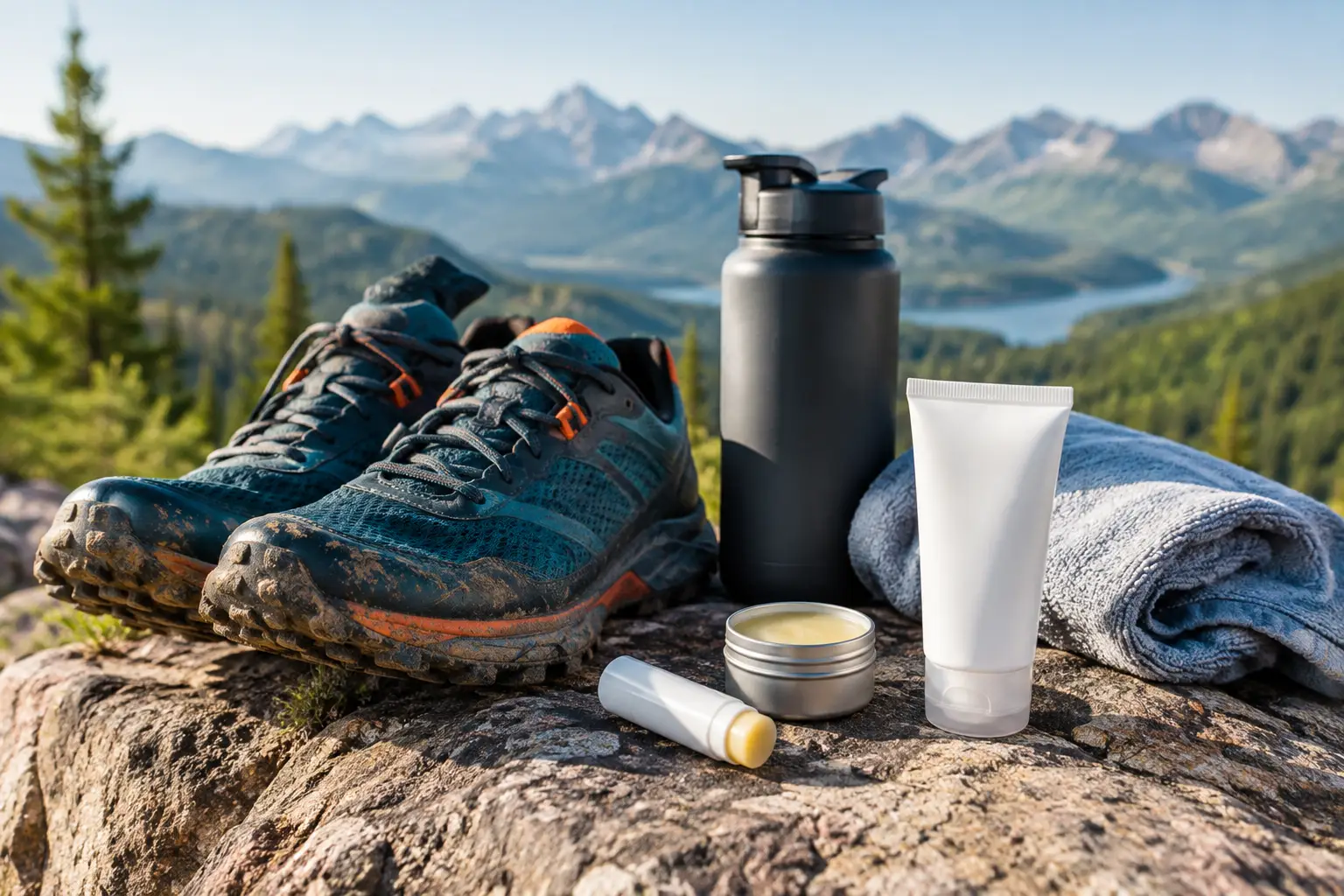
A great trail day can turn quickly when a rubbing waistband becomes raw, a wet sock creates a hot spot or grit finds its way into your shoes. This trail running body care guide is about protecting the parts of your body that take the quietest beating, so discomfort does not decide when your run ends.
Trail running asks more of your skin than a predictable road route. You sweat, climb, descend, cross uneven ground and often spend hours exposed to rain, heat, wind and mud. The goal is not to overthink every mile. It is to build a few simple habits that let you move freely and focus on the trail ahead.
Start with friction prevention, not damage control
Chafing is caused by repeated friction, usually made worse by sweat, salt, damp fabric and movement. On the trails, it often shows up where clothing or kit shifts over time: inner thighs, underarms, the bra line, around a hydration vest, the waistband, groin, toes and heels.
The best time to deal with friction is before you leave the house. Apply an anti-chafe balm to the areas you know are prone to rubbing, especially before long runs, warm-weather sessions and races. Think of it as invisible armour between your skin and the movement you are about to ask of it.
A stick format makes this quick and targeted. Runglide Anti Chafe Balm is designed for precisely this job: a portable layer of friction protection for active days, without petroleum or oils. Apply it to clean, dry skin, then take it with you for longer outings if you know heat, rain or distance will test your kit.
Do not wait for a sting to tell you there is a problem. Once skin is irritated, every step can make it worse. Prevention helps you stay relaxed in your stride and protects your recovery after the run too.
Learn your personal pressure points
Every runner has a different map of trouble spots. A runner in shorts may struggle with thigh rub, while someone using poles may notice irritation where wrist straps sit. If you wear a hydration vest, check your collarbones, lower back, ribs and the points where bottles or straps move as you descend.
After a run, take a minute to notice any tenderness, red marks or rubbing. That small review is useful training data. Adjust one thing next time: a seam, a layer, a strap position, your sock choice or where you apply balm.
Build a kit that respects changing conditions
The same trail can feel completely different after an hour of rain or a sudden rise in temperature. Body care begins with kit that works with your skin rather than against it.
Choose technical fabrics that move moisture away from the body and fit securely without digging in. Loose clothing is not always the answer, as fabric that flaps or bunches can rub just as much as clothing that is too tight. Test new shorts, bras, socks and packs on shorter runs before trusting them on a long day out.
Socks deserve special attention. A sock that slips, creases or stays saturated is a blister risk, particularly on steep descents. Make sure the heel sits properly, the toe box does not bunch and the sock height works with your shoe collar. Some runners prefer thin, close-fitting socks in warm conditions; others need more cushioning for rocky terrain. It depends on your footwear, foot shape and how much your feet swell over distance.
Your shoes should have enough room for natural foot expansion, especially for longer runs and hot conditions. Too little space can cause black toenails, compressed toes and painful rubbing. Too much movement can create the same result. Secure the midfoot and heel, but do not lace so tightly that your feet go numb on climbs.
Carry a small care kit on big days
For runs lasting several hours, races or remote routes, a few lightweight items can save the day. Carry spare socks if water crossings or prolonged rain are likely, plus plasters or blister dressings, anti-chafe balm, a small cloth and any personal skin-care essentials.
This is not about packing for every possible scenario. It is about giving yourself options when conditions change. A two-minute stop to remove grit, dry your feet and cover a hot spot can prevent a painful limp over the final miles.
Look after your feet before they become a problem
Blisters rarely appear without warning. They begin as heat, pressure or a tender spot. Pay attention when your stride changes or you feel a repeated rub. Stopping early may feel inconvenient, but pressing on usually costs more time and comfort later.
If you feel a hot spot, remove your shoe and sock somewhere safe. Clear out grit, check for a fold in the sock and dry the area as well as you can. Apply protection before putting everything back on. If the skin is intact, minimise further friction rather than trying to push through it.
Toenails also matter. Keep them trimmed straight across and not too short. Long nails can hit the front of the shoe on downhills, while sharp corners may irritate neighbouring toes. If you regularly lose toenails, consider whether your shoes are too short, your laces are allowing your foot to slide forward or your downhill technique needs a little more control.
Wet feet need extra attention. They soften, crease and become more vulnerable to friction. In British and Irish conditions, wet shoes are sometimes simply part of the experience. When that is the case, focus on reducing movement inside the shoe, using socks that perform well when damp and changing them when you can.
Treat sweat, salt and sun as part of the route
Sweat does useful work by cooling you, but dried salt can be abrasive. It can also make clothing feel rougher as the miles pass. Rinse or wash kit soon after a run, especially sports bras, shorts, socks and pack straps. Old sweat and detergent residue can irritate sensitive skin on the next outing.
On exposed trails, use sun protection on all skin that will be uncovered for the duration of the run. Remember the ears, back of the neck, calves and the parting of your hair. Reapply when needed, particularly during long events. A cap, sunglasses and breathable long sleeves can reduce the amount of product you need while protecting you from heat and exposure.
Cold weather creates different challenges. Windburn, dry lips and chafing under damp layers can all take the edge off a winter run. Keep a dry layer for after finishing where possible. Changing promptly helps your body warm up and prevents wet kit from rubbing against already sensitive skin.
Recovery starts when you stop moving
The shower after a trail run is more than a clean-up. Use lukewarm water and a gentle cleanser to remove mud, sweat, salt and balm without scrubbing irritated areas. Pat the skin dry rather than rubbing it hard with a towel.
For mild chafing, give the area a break from tight clothing and further friction. Wear loose, breathable fabrics until the skin settles. If the skin is broken, increasingly painful, swollen, hot or showing signs of infection, seek advice from a pharmacist or healthcare professional rather than trying to train through it.
Check your feet, too. Clean and dry carefully between the toes, assess any hot spots and let your shoes air out completely. Pull out insoles if they are soaked. A little care after a run makes your next session more comfortable and extends the life of your kit.
Make body care part of your pre-run routine
The strongest routine is the one you will actually repeat. Before heading out, check the weather, choose proven kit, trim any catching toenails, apply friction protection and pack the essentials that suit the route. It takes only a few minutes, but it removes a surprising number of avoidable distractions.
There will still be muddy crossings, unexpected rain and long climbs that test you. That is trail running. But sore skin and blisters do not have to be the price of getting outside. Protect your body with the same intention you give your shoes, fuelling and route plan, then let the trail ask the bigger questions.