

Blog
Best Marathon Race Day Essentials to Pack

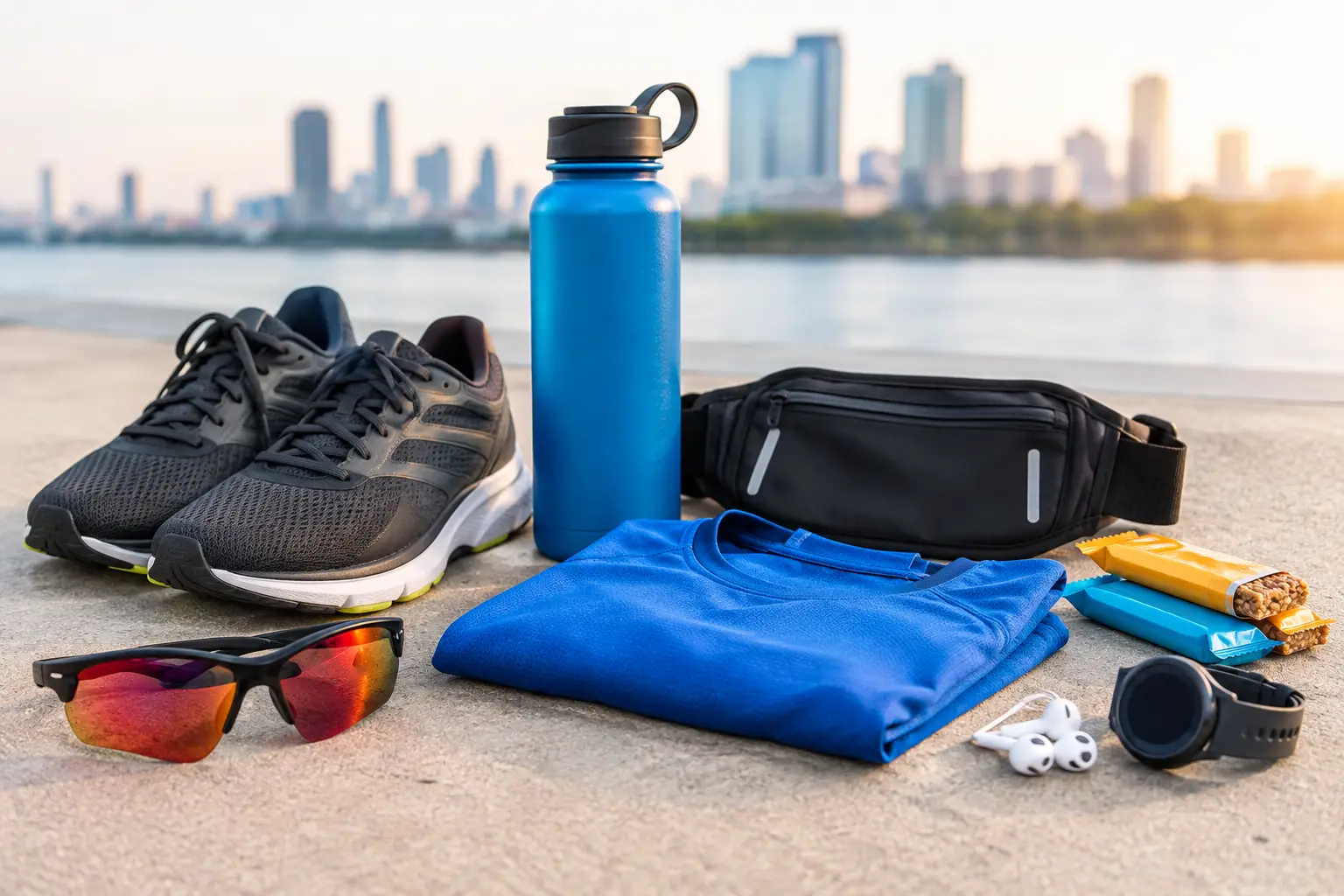
The best marathon race day essentials are not the flashiest bits of kit. They are the familiar, practical things that keep small problems from becoming big distractions at mile 18, 22 or 25. Your goal is simple: arrive prepared, stay comfortable and give your training the best possible chance to show up when it counts.
A marathon is long enough for tiny annoyances to grow teeth. A rubbing sports bra, a hot spot under a sock, an overstuffed belt or a gel you have never tried before can all pull attention away from your pacing and your finish. Pack for certainty, not novelty.
Best marathon race day essentials start with your kit
Race morning is not the time to test whether new shoes feel fast, whether a different sock thickness works or whether you like running with a cap. Wear the clothing and footwear that have already survived your longest training runs. If it was comfortable over 20 miles, it has earned a place on the start line.
Lay out your full kit the night before: shoes, socks, shorts or tights, top, sports bra where relevant, weather layer, race number, pins or clips, watch and any timing chip supplied by the organiser. This removes the early-morning scramble when nerves are already high.
Your race outfit should suit the forecast, but remember that you will warm up quickly once the field gets moving. A disposable outer layer can make the wait in a cool start pen far more comfortable. In rain, a cap can keep water out of your eyes. In bright conditions, sunscreen and sunglasses may be more useful than another layer of clothing.
Shoes and socks: protect the miles ahead
Marathon shoes need not be old, but they should be proven. A brand-new pair can feel perfect for five minutes and reveal an unexpected pressure point later. Ideally, race shoes have had several runs and at least one longer session, while still retaining plenty of life.
Socks deserve the same attention. Choose a pair that stays put, manages moisture and does not bunch around your toes or heel. Pack a spare pair in your post-race bag too. Pulling on dry socks after the finish can feel remarkably restorative.
Friction protection is performance protection
Chafing is one of the most preventable reasons a race turns miserable. Sweat, repetitive movement, seams and damp fabric create friction over thousands of strides. What begins as a slight rub can become painful enough to change your form or make every arm swing feel like work.
Apply anti-chafe balm before you leave for the start, not when irritation begins. Think about your personal friction zones: inner thighs, underarms, bra lines, waistbands, feet, toes and anywhere a hydration vest or belt sits. If you have had a hot spot there in training, protect it on race day.
A compact stick is easy to carry in your bag or hand to a supporter if you may need a top-up. Runglide anti-chafe balm is designed as portable, cruelty-free skin protection for the points where friction tries to interfere with your run. It is not an extra luxury. For many runners, it is the invisible armour that lets them focus on moving forward.
Nipple protection is also worth considering for runners prone to rubbing, particularly in wet weather. Use the method that has worked in training, whether that is balm, tape or a specific garment choice. The rule remains the same: no experiments on race day.
Fuel your plan, not the panic
A marathon needs energy, but your fuelling strategy should already be familiar. Pack the gels, chews, drinks or other carbohydrate sources you used during long runs. Even when an event provides nutrition on course, carrying your preferred option gives you control if a station is crowded, missed or stocked with something you dislike.
Start fuelling before you feel empty. Many runners take carbohydrates at regular intervals, often every 30 to 40 minutes, but the right approach depends on your pace, stomach tolerance, conditions and what you practised. Follow the plan you trained with rather than reacting to what the runner beside you is doing.
Bring enough for the distance, plus one or two extras for delays or dropped fuel. Store them where they are easy to reach without stopping or wrestling with a zip. Tear tabs or open packaging in advance if that helps, while keeping the contents secure.
Hydration also depends on the race, weather and your own needs. Check where water stations are placed and decide whether you will carry a bottle, use the course support or combine both. In warmer weather, your plan may need more fluid and electrolytes. In cold weather, it is still easy to underdrink because thirst is less obvious.
The small items that save race morning
Keep these essentials together in one visible place rather than scattered across pockets and kitchen counters:
- Race number, pins or clips, and timing chip if supplied separately
- Running watch fully charged, plus headphones only if the event permits them
- Photo ID, travel details, payment card and a little cash
- Mobile phone, portable charger and a meeting plan for family or friends
- Weather-specific protection such as sunscreen, cap, gloves or a light throwaway layer
Your mobile phone is useful for logistics, but do not let it become another task. Put it on a battery-saving setting, arrange your post-race meeting point in advance and keep it secure. The finish area can be busy, noisy and confusing when you are tired.
If you use a watch, check that it is charged and set up with the screens you actually need. Most runners benefit from seeing elapsed time, current pace and distance. Constantly chasing a fluctuating instant pace can create stress, especially through tunnels, tall buildings or crowded sections where GPS can wobble.
Breakfast and pre-race comfort matter
Eat the breakfast you practised. That may be porridge, toast with a familiar topping, a bagel, banana or another simple meal that settles well. The exact food matters less than predictability. Give yourself enough time to digest, use the toilet and travel without rushing.
Pack a pre-race snack for later if your start wave is hours after breakfast. A banana, plain bar or other trusted option can prevent you arriving at the line hungry. Avoid turning the expo, hotel buffet or café queue into a last-minute experiment.
Plan for the wait as carefully as the race itself. Start areas can involve long walks, security checks and queues for loos. Arrive with time to spare, but not so early that you spend hours standing in the cold. A small rubbish bag can protect your shoes if the ground is wet, while an old jumper or poncho keeps your muscles warmer until the final call-up.
Build a finish-line bag you will be glad to see
The best marathon race day essentials do not stop at the finish. Your body temperature can drop quickly when you stop moving, and your feet may be tender. Put comfortable clothes, a warm layer, dry socks and easy shoes in your bag where the event allows bag drop.
Include something to eat and drink after the race, even if you expect official recovery supplies. A familiar snack can be welcome when appetite is low but your body needs replenishment. If you use recovery sandals, compression clothing or specific skincare after long runs, pack what you know feels good.
Most importantly, make the finish line your only required appointment. A personal best would be brilliant. So would a steady run, a hard-earned survival effort or simply reaching the medal after months of consistent training. The marathon asks a lot, and preparation gives you the freedom to meet it one stride at a time.
Pack early, protect the areas that usually rub, trust the fuelling you have rehearsed and leave room for the unexpected. Then step onto that start line knowing you have done the practical work – now you can run your race.