

Blog
Anti Chafe Stick vs Anti Chafe Shorts Compared

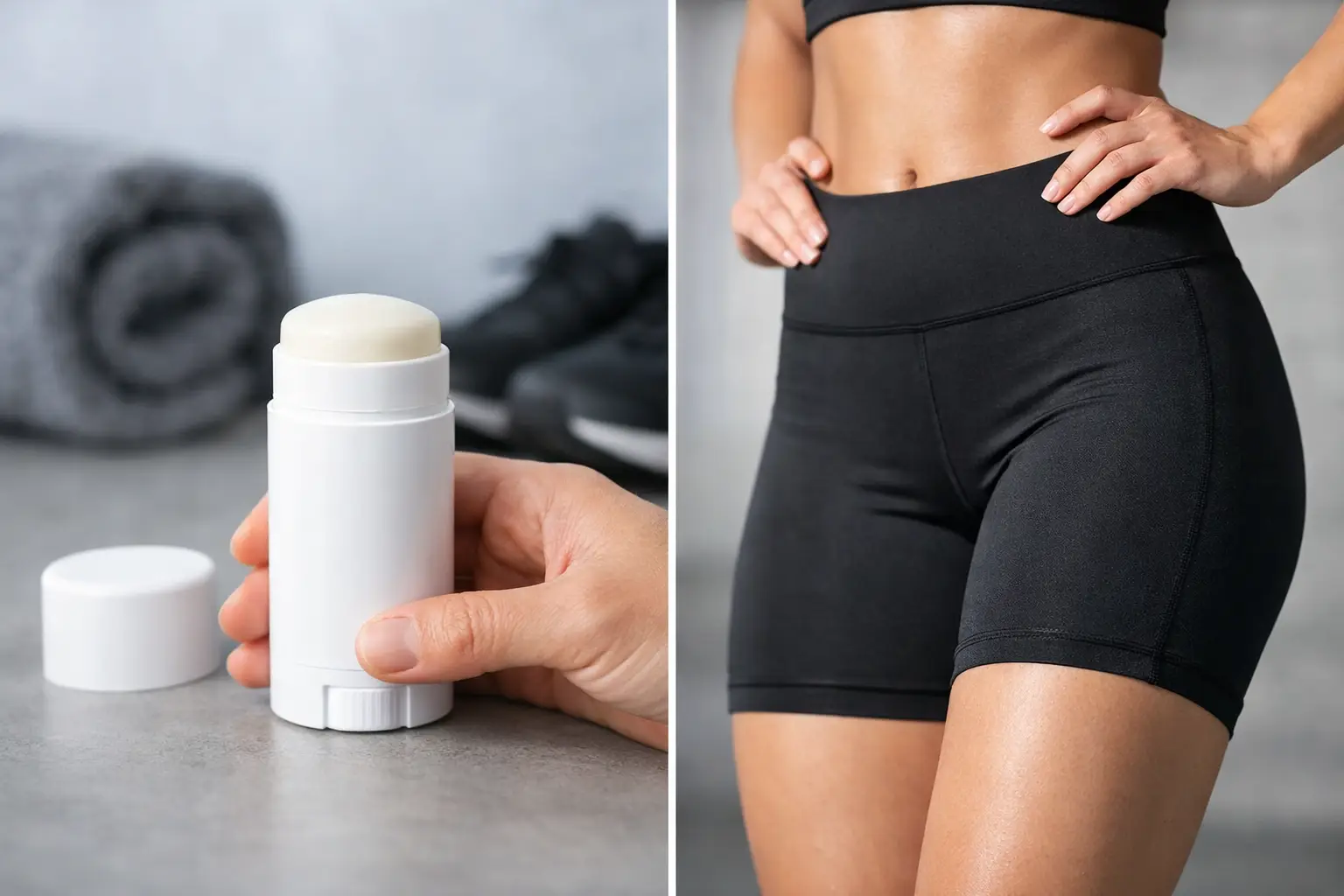
A long run can be going brilliantly until the inside of your thighs starts to sting. The same can happen halfway through a hike, during a humid commute or after hours in the saddle. When choosing between an anti chafe stick vs anti chafe shorts, the best answer is rarely about which option is universally better. It is about where friction happens, how long you will be moving and what feels comfortable enough to use every time.
Anti-chafe shorts create a physical layer between skin and clothing. An anti-chafe stick reduces friction directly on the skin. Both can be effective invisible armour, but they solve the problem in different ways.
What anti-chafe shorts do well
Anti-chafe shorts, sometimes called thigh bands or slip shorts, are designed to stop skin-on-skin rubbing by placing fabric between the thighs. For people whose chafing is concentrated on the inner thigh, that barrier can make an immediate difference.
They are particularly useful under dresses, skirts, loose shorts and everyday outfits where the fabric would otherwise leave the upper thighs exposed. On warm-weather holidays, city walks and long days on your feet, a well-fitting pair can offer reliable coverage without needing to reapply anything.
The strongest argument for shorts is consistency. Once they are on, the protective layer stays in place, assuming the fit is right. There is no need to think about a top-up at the 10-kilometre mark or search through a running belt for a stick.
That said, fit is everything. Shorts that are too loose can roll or bunch, creating new friction points. Shorts that are too tight can feel restrictive, trap heat or dig into the waist and leg openings. Fabric also matters. A breathable, moisture-managing pair is usually more comfortable than a heavy synthetic layer, especially for runners, walkers and travellers in warm conditions.
Where anti-chafe shorts fall short
Shorts provide coverage, not total friction protection. They cannot reach the areas where kit, footwear or equipment rubs: toes, heels, underarms, bra lines, nipples, waistbands, backpack straps and cycling contact points. If your problem is a hot spot in a hiking boot, a pair of thigh shorts will not help.
They can also be impractical depending on the activity. Some runners dislike extra layers under compression tights or fitted running shorts. Cyclists may already wear padded shorts and not want another garment underneath. Swimmers, gym-goers and people wearing formal or close-fitting clothes may find that shorts change the fit or feel of their outfit.
There is the washing question too. Shorts need laundering after use, particularly after a sweaty session. Owning several pairs helps, but it adds another item to pack, wash and remember.
What an anti-chafe stick does well
An anti-chafe stick is a targeted solution. You apply it precisely where rubbing tends to start, creating a protective glide layer before movement begins. This makes it useful far beyond the inner thighs.
Runners often apply it to their thighs, underarms, bra bands and anywhere a seam repeatedly catches. Hikers can use it on feet before putting on socks and boots, as well as around pack-contact areas. Cyclists may use it where skin meets clothing or the saddle. It also earns its place on a travel day, when lots of walking and warm weather can turn a small rub into a painful patch of skin.
Portability is the other major advantage. A stick takes up very little room in a kit bag, coat pocket or hand luggage. You can apply it before leaving home, then carry it for a quick top-up if your session runs long, the weather turns warmer or your plans change.
Runglide Anti Chafe Balm is made for this kind of practical protection: a simple, portable barrier for the places friction tries to interrupt your day. For active people, that matters. You should not have to abandon a run, cut a walk short or endure an uncomfortable journey because one small area of skin is rubbing raw.
The trade-off with anti-chafe sticks
A stick needs correct application. If you miss an area that normally rubs, it cannot protect it. It can also need reapplying during very long events, heavy sweating, swimming or all-day activity. The exact timing varies with your skin, clothing, weather and movement, so it is worth testing your routine before race day or a big trek.
Some people also prefer the feeling of a fabric barrier and do not want anything applied to their skin. That is a personal comfort choice, not a failure of the product. The most effective anti-chafe approach is the one you will actually use consistently.
It is also wise to apply only to clean, dry, unbroken skin. If chafing has already caused broken skin, give the area time to recover and seek professional medical advice if pain, swelling, heat, discharge or worsening irritation is involved.
Anti chafe stick vs anti chafe shorts by activity
For running, your clothing choice often decides the starting point. If thigh rub is your only issue and you enjoy wearing fitted shorts, anti-chafe shorts may be enough for shorter runs. If you get rubbing at multiple points, train for longer distances or race in changing conditions, a stick offers more flexible protection. Many runners use both: shorts for the thighs and balm for underarms, bra lines or other known trouble spots.
For hiking and trekking, a stick usually has the edge because friction can occur almost anywhere. Boots create foot hot spots, backpacks rub shoulders and waistbands can shift over hours of climbing. Shorts can still help with thigh chafing, particularly under loose walking trousers or dresses, but they are only one part of the picture.
For cycling, consider your existing kit. Proper cycling shorts are already designed to reduce friction and support comfort in the saddle. Adding another pair underneath may interfere with their fit. A targeted anti-chafe product can be the more adaptable option for skin-contact areas, although individual preference, ride length and saddle setup all play a part.
For everyday wear, it depends on your outfit. Anti-chafe shorts are excellent under a dress or skirt when you want all-day thigh coverage without thinking about reapplication. A stick is easier when you are wearing jeans, gym kit, workwear or anything where another layer would feel too warm or bulky.
For holidays and travelling, bring the stick even if you pack shorts. Airports, sightseeing, heat, unfamiliar shoes and long stretches of walking create friction in places you may not predict. A small stick gives you options without taking up valuable bag space.
How to choose without overthinking it
Start with the source of the friction. If it is mainly skin-on-skin rubbing between your thighs, anti-chafe shorts can be a comfortable, dependable choice. If it comes from shoes, seams, equipment or several areas at once, an anti-chafe stick is more versatile.
Next, think about duration and conditions. For a short walk in mild weather, either may be all you need. For a marathon, a mountain day or a humid holiday, the ability to apply protection exactly where you need it and reapply if necessary becomes more valuable.
Finally, test your choice in training or during an ordinary day out. Do not wait for a race, a hiking trip or a wedding to learn that a hem rolls, a waistband rubs or an area needs extra protection. Your skin gives useful feedback. Listen early, adjust your routine and keep moving.
The real win is not choosing sides in the anti-chafe stick versus anti-chafe shorts debate. It is building a friction-prevention routine that lets you focus on the road, trail, ride or day ahead instead of the discomfort trying to hold you back.