

Blog
How to Apply Foot Balm for Blister-Free Miles

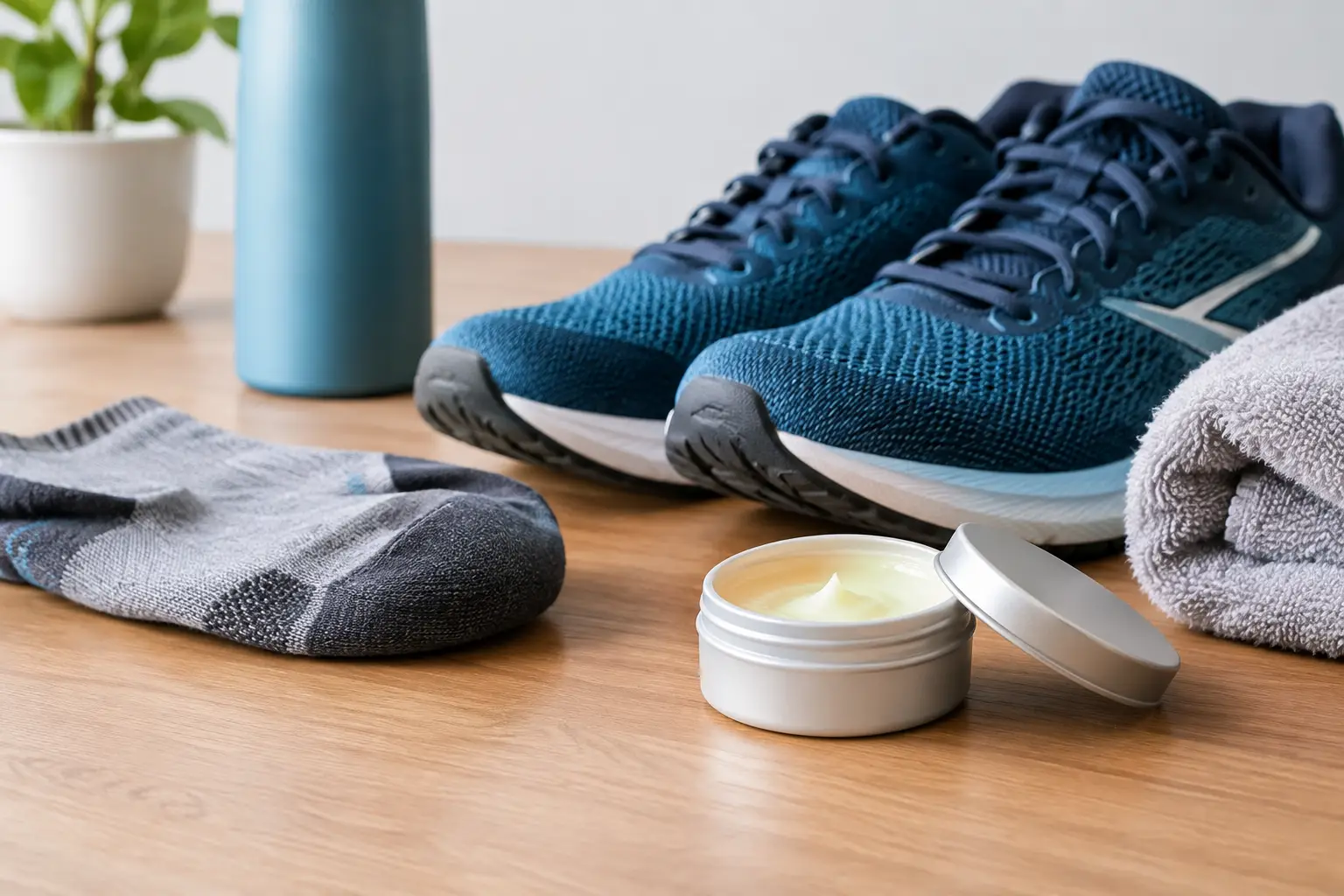
A blister rarely arrives without warning. It often starts as a warm patch beneath the ball of your foot, a rubbing heel, or a toe that feels slightly crowded in your shoe. Knowing how to apply foot balm before that small irritation becomes a painful problem can keep your training, hike, commute or holiday walk on track.
Foot balm works by creating a protective layer where skin, socks and footwear create repeated friction. The goal is not to coat your entire foot until it feels slippery. It is to target the places that rub, apply enough product to stay protected, and pair it with socks and shoes that fit your activity.
How to apply foot balm before activity
Start with clean, fully dry feet. Moisture from a shower, sweat or damp socks can change how a balm sits on the skin and can soften the skin over time. Towel carefully between your toes, around the heel and across the sole before applying.
Twist up the balm stick and glide it directly onto the skin using a few controlled passes. You want a light, even layer that covers the friction zone without leaving thick clumps. If you are using a balm in a tin or tube, use clean hands and spread it into a thin film.
Put on your socks straight afterwards, then lace up your shoes. Walk around for a minute before heading out. Your footwear should feel secure and comfortable, not as though your feet are sliding inside it. If it does feel too slick, you have probably used more balm than you need.
For runners, hikers and walkers, apply it just before you leave rather than hours in advance. This gives the barrier its best chance to stay where it is needed while you move.
Target the friction points, not every inch
Your hot spots are personal. A runner who gets rubbing under the big toe may have no issue at the heel, while a hiker in stiff boots may need protection around the ankle collar first. Pay attention to where you normally notice heat, rubbing or tender skin after activity.
The most common areas to apply foot balm are the back and sides of the heel, the ball of the foot, the base and sides of the toes, the big toe, and the outer edge of the forefoot. For longer days, it can also help around the ankle where a shoe collar or boot cuff repeatedly catches.
Do not overlook toe-on-toe friction. If your toes rub together during longer runs or warm-weather walks, apply a small amount along the sides of the affected toes. Use a lighter touch here than on the heel or sole. Too much product between the toes can feel uncomfortable, particularly if your socks are already damp.
For heel rubbing
Apply balm in a broad band across the back of the heel and slightly around both sides. Extend the application a little above the point where the shoe’s heel counter meets your skin. This is useful when breaking in footwear, but it should not be a substitute for a shoe that is clearly the wrong size or shape.
For balls of the feet and forefoot hot spots
Apply a smooth layer beneath the ball of the foot and along the outer edge if that is where you push off. This is especially relevant for runners, gym users and anyone spending long periods on hard pavements. A thin layer is usually enough – the pressure and movement will spread it naturally.
For toes
Apply sparingly to the sides of toes that touch or rub. If a particular toe repeatedly catches the front of your shoe, add a small amount to its tip as well. Persistent toe pressure may point to a shoe with too little room in the toe box, so treat the balm as protection, not permission to ignore the fit.
Match your application to the day ahead
A short dog walk and a wet, hilly trail are not the same job. The longer, hotter or wetter the session, the more worthwhile it is to apply balm carefully and to bring it with you for a top-up.
For a 5K run or everyday walking, one pre-activity application is commonly enough. For a half marathon, all-day hike, trekking holiday or a day spent sightseeing, carry the stick in your kit bag, running belt or jacket pocket. Reapply if you change socks, if rain soaks your footwear, or if you begin to feel a familiar rub developing.
That said, do not wait until a blister has fully formed. Friction balm is designed to reduce rubbing before skin breaks down. If the area is already raw, open or bleeding, stop applying fragranced or active products to damaged skin and protect it appropriately. Seek advice from a pharmacist or healthcare professional if there are signs of infection, significant pain, or a blister that is not healing.
Your socks and shoes still matter
Foot balm is powerful preparation, but it works best as part of a sensible system. The wrong socks can hold sweat, bunch under the arch or slip down at the heel. The wrong shoes can squeeze the toes, lift at the heel or create pressure exactly where you are trying to prevent it.
Choose socks suited to the activity and conditions, with a secure fit and minimal bunching. For longer runs and hikes, many people prefer technical fabrics that move moisture away from the skin. Test new socks, insoles and shoes on shorter outings before trusting them for race day or a big mountain route.
Check your shoe fit later in the day too. Feet can swell during long runs, warm weather and travel, so a shoe that feels fine for ten minutes indoors may feel cramped after several miles. Balm can reduce friction, but it cannot fix constant pressure from a narrow toe box or a heel that lifts on every stride.
Common foot balm mistakes to avoid
The first mistake is applying balm over damp feet. Dry skin gives you a more controlled application and helps you spot existing hot spots before they become worse.
The second is using it only after discomfort begins. Prevention is the point. Build balm into the same pre-session routine as filling your water bottle, checking your laces and starting your watch.
The third is testing everything on a big day. A new pair of socks, new shoes and a different balm can each change how your feet feel. Use training sessions to learn what works for your skin, gait and footwear.
Finally, do not assume more is always better. A generous-looking layer may migrate, make socks feel unstable or create a greasy sensation. A targeted, even glide gives reliable coverage with less fuss.
Make it part of your movement routine
The best anti-blister routine is the one you will actually repeat. Keep your foot balm beside your running shoes, hiking boots or everyday trainers so it becomes an easy final step before you head out. If you train early, pack it with your socks the night before. If you travel often, keep a stick in your wash bag or hand luggage for airport miles, city walks and unfamiliar footwear.
Runglide Anti Chafe Balm is made for these real-world friction points: portable protection for the runner chasing a new distance, the hiker with a full day ahead, and anyone who simply wants to walk without skin irritation dictating the plan.
Your feet carry every mile. Give the areas that work hardest a few seconds of preparation, then get on with the part that matters: moving freely and enjoying where your next step takes you.