

Blog
A Runner Used Anti Chafe Balm for an Ultra Race

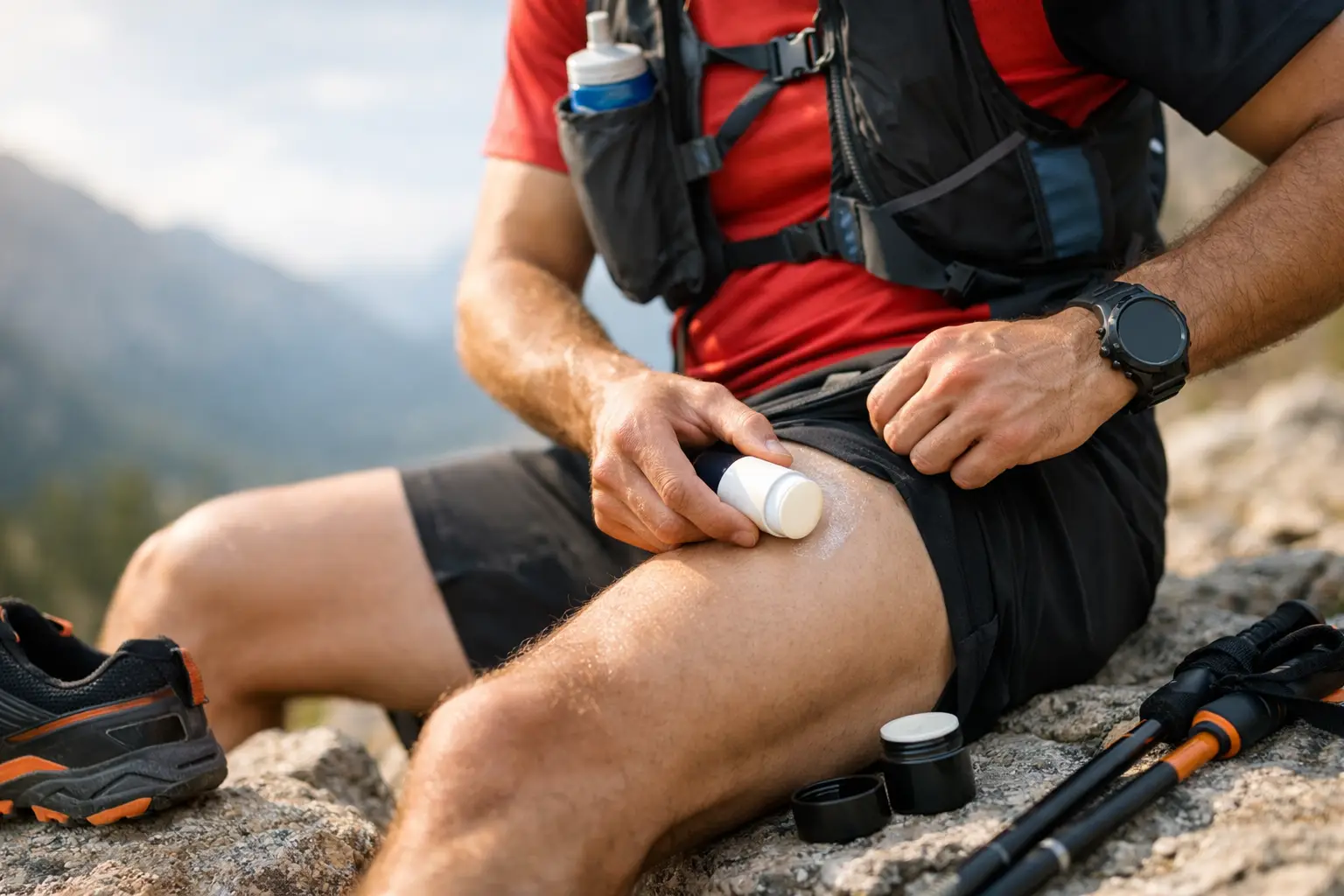
At kilometre 62, an ultra runner should be thinking about pacing, food, weather and the next climb – not the raw patch forming beneath their running vest. That is why a runner used anti chafe balm for an ultra race: not as a luxury, but as part of the kit that helps the body keep moving when heat, sweat and repetition start to add up.
Ultra running is wonderfully simple on paper. Put one foot in front of the other for a very long time. In practice, it is a test of small decisions. Socks that felt perfect at the start may be soaked by hour four. A waistband that never bothered you on a Sunday 10K can rub with every stride once sweat dries into salt. A little friction can become the thing that changes your gait, mood and race plan.
Anti-chafe balm will not make the hills flatter or replace sensible training. It can, however, provide a protective barrier in the places where skin, fabric, footwear and kit repeatedly meet. For an endurance day, that is a meaningful advantage.
Why a runner used anti chafe balm for an ultra race
Chafing is caused by friction, but the race-day picture is rarely that simple. Moisture softens skin, salt crystals can increase abrasion, and a runner’s body changes as fatigue builds. Shorts shift. A vest bounces differently after refilling soft flasks. Feet swell. Even a small seam can become irritating after tens of thousands of repetitions.
The best time to think about these problems is before the start line. Once the skin is broken, applying balm may reduce further rubbing, but it cannot erase the sting already there. Prevention is the win.
For many runners, the first priority is skin-on-skin contact: inner thighs, groin and underarms. Others are more affected by kit contact, especially under a hydration vest, around the sports bra line, beneath waistbands or where a watch strap and arm sleeve meet. Foot protection matters too, although the right approach depends on your shoe fit, sock choice, terrain and tendency to blister.
A balm stick earns its place in an ultra kit because it is quick, clean and targeted. You can apply it without coating your hands in product, then carry it for a later top-up. That simplicity matters when you are trying to organise nutrition at an aid station with tired hands and a busy head.
Build friction prevention into your race plan
Treat your pre-race application like charging your watch or packing your gels. Do it deliberately, in good light, before you are rushed into the start pen.
Start with clean, dry skin. Apply a generous, even layer to the places that have rubbed in training, plus any predictable pressure points from your race kit. Do not wait for discomfort as your cue. If an area has been vulnerable on long runs, wet-weather outings or hot days, protect it from the beginning.
The right amount is enough to leave a clear protective layer, not so much that it feels messy or causes clothing to slide where you need it to stay put. A few passes of a stick are often more useful than one hurried swipe. Pay attention to the edges of your shorts and underwear, because friction often develops where fabric moves rather than at the centre of the contact area.
For feet, trial everything beforehand. Some runners apply balm to toes, heels and the ball of the foot; others find that sock fabric, foot moisture and shoe volume make a different strategy better. If balm makes your feet feel as though they move too freely in the shoe, use less, apply only to known hot spots, or focus on changing socks at a planned point. There is no prize for copying someone else’s routine if it does not suit your feet.
The places runners most often overlook
The obvious areas deserve attention, but ultra-distance friction has a habit of appearing in less obvious places. Consider the lower back where a pack sits, the sides of the torso under vest straps, the back of the neck beneath a collar, and the line where a cap, headband or sunglasses rest.
For women, the under-bust area and the edges of a sports bra can be major friction zones, particularly in warm or wet conditions. For men, nipple chafing can turn a comfortable opening hour into a genuinely painful day. The useful rule is not gender-specific: look at every point where your body and equipment repeatedly touch.
Reapply before a hot spot becomes a problem
How often you reapply depends on the event. A cool, dry trail race may require only a strong pre-race application. A humid summer ultra, a rainy mountain day or a race with river crossings may call for a top-up during the event. Sweat, rain, towel-drying, changing clothes and the gradual movement of fabric can all reduce the protection you began with.
Plan a check-in at an aid station rather than leaving it to chance. When you refill bottles or change socks, take 30 seconds to assess your usual risk areas. A faint warmth, tightness or tingling sensation is an early warning. Stop, dry the area gently if possible, and reapply. This is far easier than trying to manage an angry, raw patch later.
Carrying a compact stick is practical for self-supported stretches. If you have a crew, add it to your drop-bag checklist alongside spare socks, anti-blister supplies and a dry top. If you do not have crew, decide which stop makes sense for a quick kit reset and place it in a labelled bag if the race permits drop bags.
Be realistic about hygiene too. Do not share a personal balm stick at an aid station. Keep yours in a small, accessible pocket or bag so it is protected from mud, grit and accidental loss.
Test it under race conditions, not just on easy runs
A product can feel great on a 30-minute jog and still need adjustment for an eight-hour effort. Use long training runs to test your friction plan with the exact shorts, underwear, socks, vest and nutrition setup you expect to race in. Wear the kit in rain if you can. Test it on a warmer day. Practice taking the vest on and off after applying balm, because that movement can expose areas you missed.
Keep a short note after each long run. If you felt rubbing, record where it began, what you wore and when it appeared. Patterns soon become clear. Perhaps it only happens after a second bottle refill, in wet socks, or when a particular pair of shorts is washed one too many times. That is valuable information, not a minor inconvenience to ignore.
Runglide RG Anti Chafe Balm is designed as portable, petroleum-free friction protection for the points that can derail a run. Its stick format makes it easy to include in a training bag, race vest or drop bag, so comfort does not have to depend on remembering a bulky bottle on the morning of an event.
Friction prevention works best with the rest of your kit
Balm is one part of a larger comfort system. Clothing should fit well without bunching, seams should be familiar, and shoes should allow for foot swelling over long distances. Avoid debuting new kit on race day, even if it looks like the answer to every problem. An ultra is not the place to discover that your new vest rubs at the collarbone or your fresh socks trap more moisture than your usual pair.
Weather can change the calculation. In heat, prioritise breathable fabrics and expect sweat to increase. In rain, dry socks and foot care may become more important than adding extra balm everywhere. In cold conditions, layers can create new rubbing points at cuffs, waistbands and pack straps. Adapt your plan to the course rather than relying on one fixed routine.
There is also a difference between normal discomfort and a problem that needs attention. General muscular fatigue is part of an ultra. Sharp skin pain, bleeding, a blister that changes your stride, or signs of infection are not badges of honour. Address them early, use race medical support when needed, and protect your ability to keep moving safely.
The strongest ultra performances are often built on unglamorous habits: tested shoes, steady fuelling, sensible pacing and skin protection applied before it is needed. Give friction the respect it deserves, pack your invisible armour, and leave more of your energy for the miles that matter.