

Blog
How to Avoid Chafing in Summer

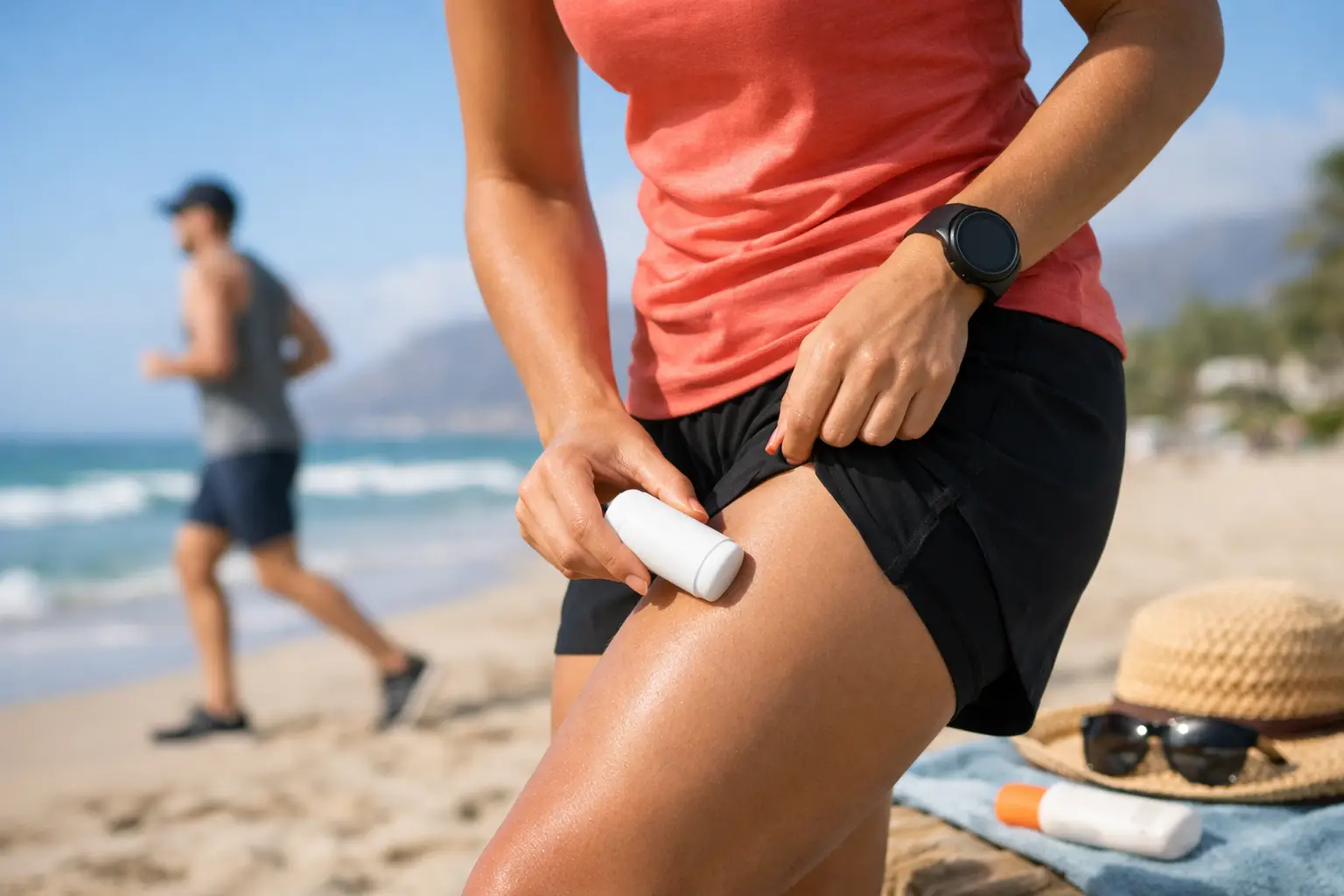
A hot day can turn a good run, long walk or commute into a slow burn. One minute you feel strong, the next your inner thighs, underarms or sports bra line are on fire. If you are wondering how to avoid chafing in summer, the answer is not to move less. It is to reduce friction before heat, sweat and repetition have a chance to win.
Chafing is one of those problems people tend to put up with for too long. They change their stride, cut a session short or avoid certain clothes altogether. That is a poor trade. Summer should expand your options, not shrink them. With the right prep, kit and timing, you can stay comfortable through training, travel and everyday movement.
Why summer makes chafing worse
Chafing happens when skin rubs against skin or fabric over and over again. Summer adds three things that make the problem more likely: heat, moisture and longer periods of exposed movement. Sweat softens the top layer of the skin, salt can make it sting, and warm-weather clothing often leaves areas like the thighs, underarms and chest more vulnerable to repeated rubbing.
It is not only a runner’s problem. Hikers get it on long ascents. Cyclists can feel it where seams and sweat build up. Gym users notice it on rowers, bikes and treadmills. And plenty of people get thigh chafing simply from walking around town in shorts or a dress. If your body moves, friction is part of the deal.
How to avoid chafing in summer before it starts
The best time to deal with chafing is before the first step, not when your skin is already irritated. Prevention works because it lowers friction from the start, rather than asking damaged skin to cope for another hour.
Start with clean, dry skin. If you apply anything over damp skin, it can feel patchy and wear off faster. Focus on the places that usually catch first – inner thighs, groin, buttocks, underarms, nipples, bra band, sports bra line, waistband and anywhere a pack or strap rubs. If you know your hot spots, trust that knowledge. Chafing tends to repeat in the same places.
An anti-chafe balm is usually the simplest option because it creates a light protective layer without the mess of thick creams or the slip of oil-heavy products. A portable stick is especially useful in summer because it is quick to apply before a run and easy to carry if you need a top-up. If you are out for hours, that convenience matters.
Powders can help some people in low-sweat situations, but they are less reliable once moisture builds. They can also cake in skin folds, which is not ideal if you are moving hard. Thick creams may soothe, but not all of them are built for performance. The right choice depends on how much you sweat, how long you are active and whether your friction comes from skin-on-skin contact or kit.
Target the right areas
People often under-apply because they only think about the obvious spots. Inner thighs are common, but they are far from the whole story. Summer chafing also shows up around heart rate straps, hydration vest edges, bra hooks, waistband seams and even along the sides of the feet if socks and shoes are not working together.
If an area has rubbed before, protect it before every activity in similar conditions. It is better to be slightly generous than to miss a spot and pay for it later.
Clothing can help or hurt
Your kit should reduce friction, not add to it. That sounds basic, but plenty of summer gear is designed to look light rather than perform well under sweat and repetition.
Choose technical fabrics that move moisture away from the skin and dry quickly. Cotton feels soft at first, then holds sweat and rubs once it is wet. Seams matter too. Flat seams or seamless construction usually behave better than bulky stitching, especially in high-friction areas.
Fit is where things get nuanced. Loose clothing can flap and rub. Tight clothing can pinch if the fabric is rough or the fit is too compressive. In many cases, close-fitting shorts or base layers work best for thigh chafing because they stop skin-on-skin contact altogether. But if they ride up, they can create a new problem. Test them in motion, not just in the mirror.
For bras, tops and packs, look for stable fit rather than constant adjustment. If you find yourself tugging straps back into place every ten minutes, that friction is adding up. For feet, moisture-wicking socks and properly fitted shoes are your first defence. A good anti-friction product around the toes, heel or arch can make a big difference if you are prone to blisters in hot weather.
Sweat management matters more than most people think
You do not need to stay perfectly dry to stay comfortable. You just need to stop sweat from turning friction into skin damage.
If you are planning a long session, think in phases. What works for a 5K may not hold up for a three-hour hike. Reapplying can be the difference between finishing strong and spending the evening walking sideways. A small anti-chafe stick earns its place in a running belt, backpack or gym bag because summer conditions change fast.
It also helps to avoid starting an activity already overheated. Train earlier or later if you can. Light colours, breathable fabrics and sensible pacing all reduce the amount of sweat your skin has to deal with. This is not about wrapping yourself in cotton wool. It is about giving your body a fair chance to perform.
When weather changes the plan
Humidity is often worse than dry heat for chafing. Sweat does not evaporate as easily, so skin stays damp for longer. On those days, prevention needs to be more deliberate. Apply protection before you leave, wear your most reliable kit and assume that a backup application may be needed.
If you are travelling, sightseeing or spending the day outdoors, the same rule applies. Chafing is not only a training issue. Long days on your feet in summer clothes can create just as much friction as a workout.
Shaving, hair and sensitive skin
Freshly shaved skin can be more reactive in summer, especially where sweat and rubbing meet. If you know an area tends to sting after shaving, avoid doing it immediately before a long run or warm day out. Give the skin time to settle.
Body hair is not automatically the enemy either. For some people it reduces direct skin friction. For others it traps sweat and increases irritation. It depends on the area, your clothing and how your skin behaves. The useful question is not what you should do in theory, but what reliably works for your body.
If your skin is sensitive, patch-test anything new. A product that feels fine on your forearm can behave differently on high-friction areas. Look for options designed specifically to reduce rubbing rather than general moisturisers that may not hold up under effort.
What to do if you are already chafed
Once skin is irritated, the priority changes. At that point, the goal is to calm the area down, keep it clean and stop further rubbing. Wash gently, pat dry and avoid anything harsh or heavily fragranced. If you keep training through active chafing, you may need to cover the area, adjust your kit or switch activities until the skin settles.
This is where honesty helps. Sometimes pushing through is fine. Sometimes it turns a small hot spot into cracked, raw skin that affects the next several days. If the area is badly broken, unusually painful or showing signs of infection, get proper medical advice.
The real strategy is consistency
The people who seem unaffected by summer chafing usually are not lucky. They have a system. They know which shorts work, where they need protection, what weather changes the equation and what goes in the bag every time. That routine saves a lot of trial and error.
If you want a simple starting point, use friction protection before activity, wear kit that stays put and respects sweat, and reapply for longer efforts. That alone solves most of the problem. Runglide was built around exactly that kind of practical prevention – not fuss, not overthinking, just reliable comfort where movement happens.
Summer asks more from your skin, but it should not stop you moving well. Get ahead of friction, back your body with the right prep, and let the season feel as good at mile ten as it did at mile one.