

Blog
Best Blister Prevention for Marathon Running

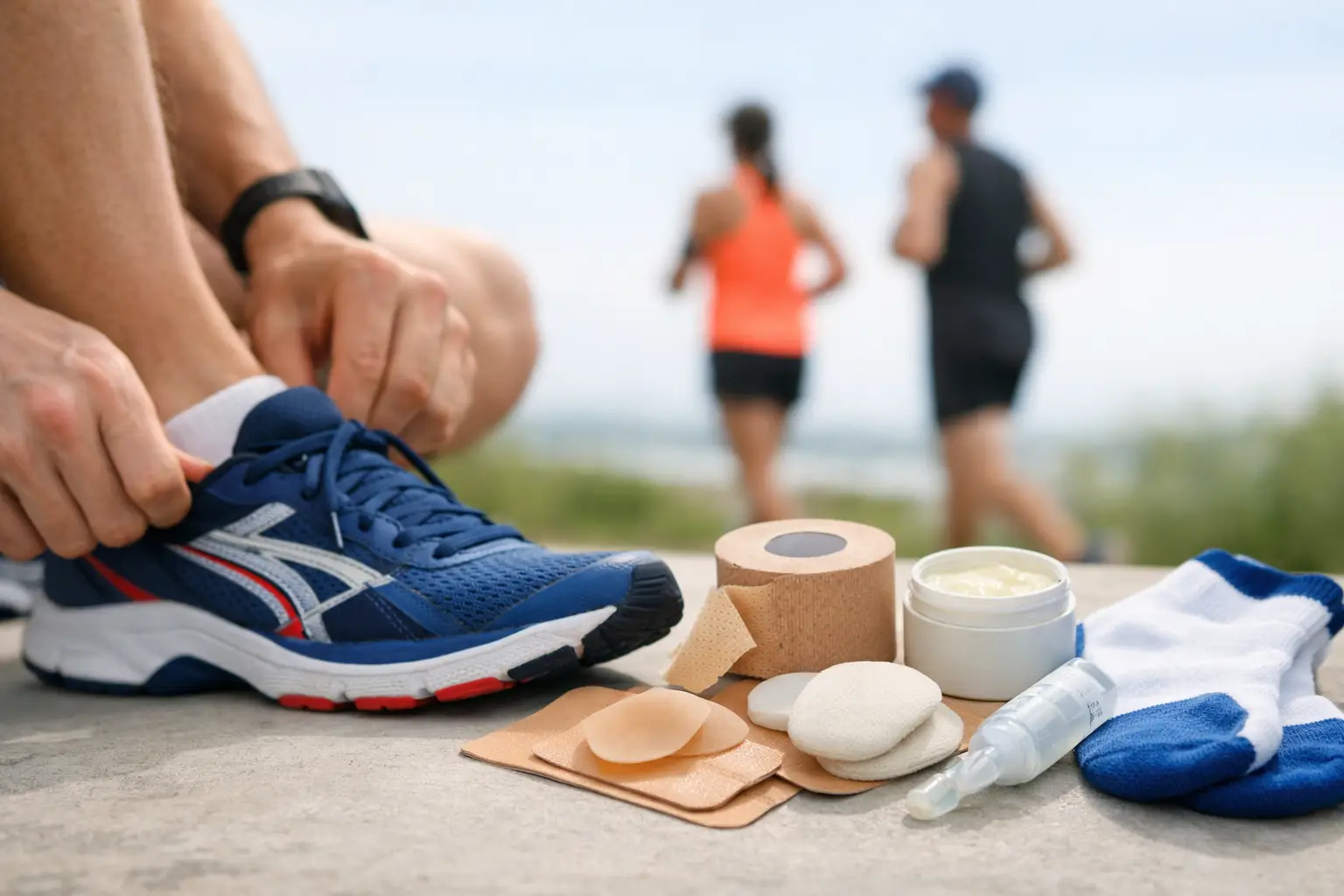
Twenty miles into a marathon, fitness is only part of the story. If a hot spot starts rubbing with every stride, even the strongest pacing plan can unravel fast. The best blister prevention for marathon runners is not one magic product or trick – it is a system that reduces friction, controls moisture and removes small problems before they turn painful.
That matters because blisters rarely appear out of nowhere. They build from repeated rubbing, pressure and damp skin over hours on the road. Get your setup right before race day and you give yourself a much better chance of finishing strong, instead of negotiating with every step over the final 10K.
What actually causes marathon blisters?
A blister forms when the top layers of skin are stressed by friction and shear. In marathon conditions, that usually means your foot is moving slightly inside the shoe while sweat softens the skin. Add swelling, heat and thousands of repeated foot strikes, and a small irritation can become a real problem.
The most common trouble spots are the heel, the ball of the foot, the sides of the big toe and the tips of the toes. Where your blister appears tells you something useful. Heel blisters often point to slippage. Toe blisters can mean your toe box is too tight or your nails are catching. Blisters under the forefoot often suggest pressure, moisture or sock bunching.
That is why the best approach is specific. If your shoes fit well but your feet run hot, moisture control may be the answer. If your heel lifts slightly, lacing changes might do more than switching socks.
Best blister prevention for marathon training starts early
If you only think about blisters the night before the race, you are late. Your long runs are where you test everything – shoes, socks, lubrication, lacing, pacing and fuelling. Race day should feel familiar, not experimental.
Start by noticing patterns. Do you always get rubbing after 90 minutes? Only in wet weather? Only on downhills? Those details matter. Marathon prep is about removing variables, and foot comfort is one of the easiest performance gains available. A runner who is not distracted by foot pain can hold form better, pace more consistently and recover with less damage.
There is also a balance to strike. Some runners try to toughen their feet by ignoring early irritation. That can work to a point, but repeated damage is not the same as smart conditioning. You want resilient skin, not broken skin.
Shoes should fit your marathon, not just the shop floor
The first rule is simple: do not run a marathon in shoes that are merely fine. They need to be comfortably secure in the heel, roomy in the toe box and stable enough that your foot is not sliding around when you tire.
A common mistake is choosing a snug fit because it feels fast for short efforts. Over marathon distance, feet often swell. That means a shoe that feels race-ready for 5K can feel cramped by mile 18. Many runners do better with a little extra room in front of the toes, especially if they are prone to black nails or toe blisters.
But more space is not automatically better. If your foot is swimming inside the shoe, friction goes up. The goal is controlled space, not looseness.
Socks are not an afterthought
Good marathon socks help manage moisture, reduce rubbing and maintain shape when wet. Cotton is usually the weak link because it holds moisture and stays damp. Technical fibres or well-made blends tend to perform better over long distances.
Thickness depends on the runner and the shoe. A thicker sock can cushion pressure and reduce rubbing for some people, but it can also create a tighter fit and more heat. Thin socks feel faster and cooler, yet they may offer less protection if your shoe fit is not spot on. Test both in training, not in theory.
Seams matter too. If you can feel a seam when you put the sock on, you will probably feel it more at mile 22.
The best blister prevention for marathon day is friction control
Once your shoe and sock choice are sorted, friction control becomes the difference-maker. This is where many runners save their race.
An anti-friction balm creates a protective glide on high-risk areas so skin is less likely to catch, drag and break down. Applied before the run, it can help at the heel, toes, sides of the foot and anywhere you know tends to rub. For marathon runners, the appeal is simple: less friction means fewer hot spots and fewer late-race surprises.
The key is to apply it deliberately, not vaguely. Cover the exact areas that usually cause trouble. If you have never had a blister on the arch, there is no need to treat the whole foot like a science project. Be targeted and practical.
Some runners prefer powders or tapes, and they can work well in the right situation. Powder may help with moisture, but it can lose effectiveness over a long, sweaty race. Tape can protect a known problem area, but only if it is applied cleanly and stays in place. For many runners, a balm is the easiest option to use consistently because it is quick, portable and easy to build into a pre-run routine.
That is why products designed specifically for friction prevention, such as Runglide, fit naturally into marathon prep. They solve one problem clearly – reducing skin-on-sock or skin-on-shoe rubbing before it becomes race-limiting discomfort.
Small adjustments that make a big difference
Lacing is one of the most overlooked fixes. If your heel slips, a more secure top-eyelet lacing pattern can reduce movement without crushing the forefoot. If the top of your foot feels pressured, loosening one section may improve comfort across the whole run.
Toenails should be trimmed, but not aggressively hacked down the night before. Too short can be as irritating as too long. Smooth edges are what you are after.
If you know you are vulnerable in wet races, think ahead. Rain, puddles and sponges can all change the blister equation quickly. What works on a dry training run may not be enough in damp conditions. That does not mean panic – it means test your wet-weather setup at least once before race day.
What to do when you feel a hot spot mid-race
A hot spot is your warning light. Ignore it and you may be dealing with a full blister before the next water station.
If the sensation is mild and your setup is otherwise solid, easing your pace briefly and adjusting your stride can sometimes stop it escalating. If it is clearly getting worse, the smartest move may be to stop for a quick fix if you have the means. That could be smoothing a sock, reapplying friction protection or adding tape if you carry it.
This is where experience matters. Competitive runners sometimes push on because every second counts. Recreational runners may be better off spending 30 seconds solving the problem instead of suffering for the next hour. It depends on your goal, your pain tolerance and how early the issue appears.
Common mistakes runners make
The biggest mistake is changing multiple things at once. New shoes, new socks and a different lubrication strategy on race day make it impossible to know what is helping or hurting.
The second is assuming blisters are just bad luck. Usually they are feedback. Your feet are telling you something about fit, movement, moisture or pressure.
The third is overcorrecting. More tape, thicker socks and tighter laces do not always equal more protection. Sometimes they create the friction you were trying to avoid.
Build a routine you can trust
The best blister prevention for marathon performance is repeatable. Use your long runs to lock in a routine: check your shoes, wear the socks that have proved themselves, apply anti-friction protection to known trouble spots and keep your pre-race decisions boring.
That might sound less exciting than chasing the latest race-day hack, but that is exactly the point. Comfort is a performance tool. When your feet are protected, your mind stays on rhythm, fuelling and the finish line – not on every painful landing.
Marathons ask a lot of you. Your blister prevention should give something back: confidence, control and the freedom to keep moving when the miles get serious.