

Blog
Anti Chafe Stick for Dresses That Lets You Move

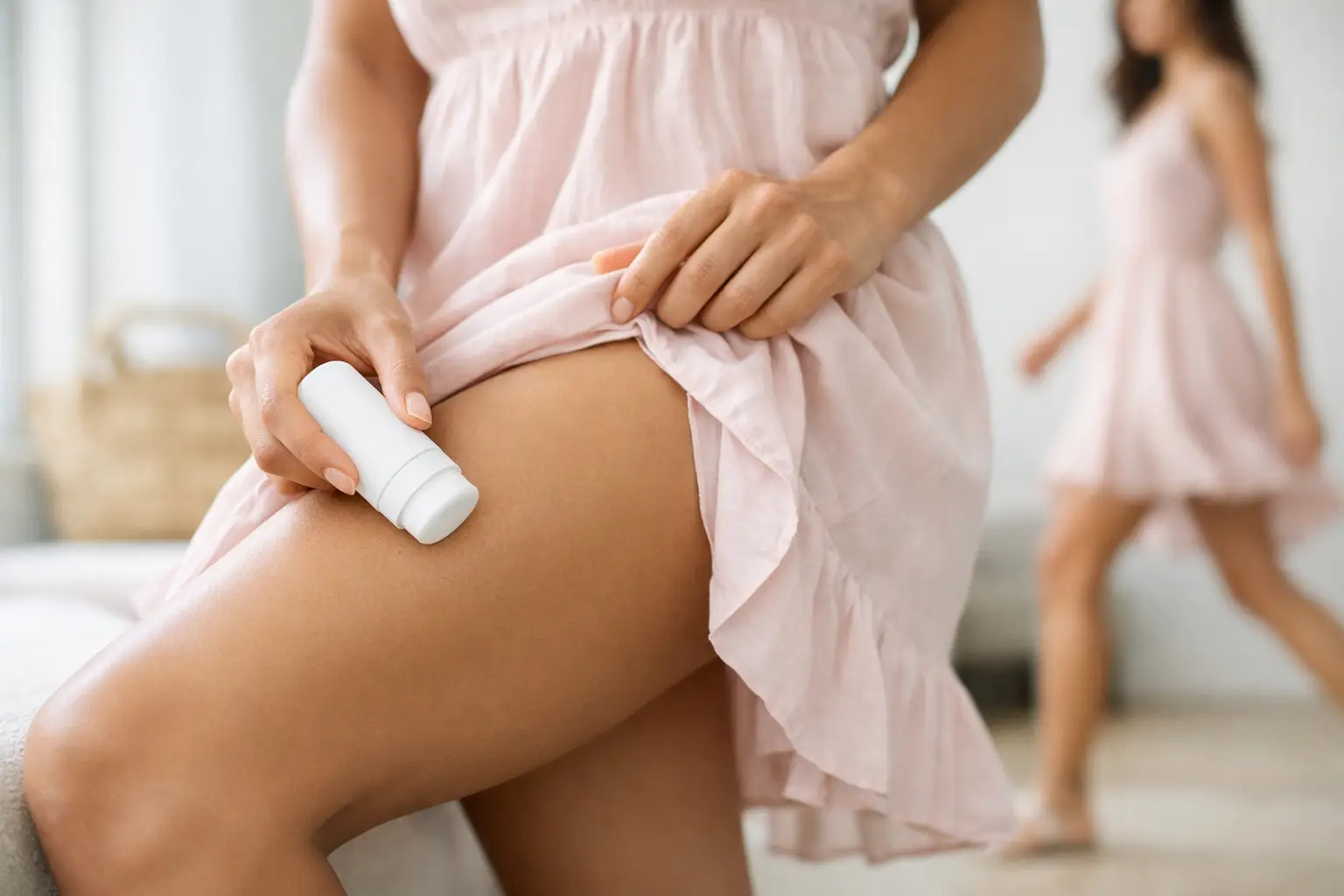
The dress is perfect. The weather is finally on your side. Then, halfway through the walk to lunch, that familiar inner-thigh sting starts. An anti chafe stick for dresses is the small, practical step that keeps friction from deciding when your day is over.
Whether you are dressing for a wedding, a work event, a city break or a warm afternoon in the garden, chafing can turn an outfit you love into one you cannot wait to take off. The good news is that prevention is straightforward. A few seconds of preparation can help your skin stay comfortable while you walk, sit, dance and get on with the plans you made.
Why dresses can cause chafing
Chafing happens when skin repeatedly rubs against skin, fabric or a seam. Heat, sweat and humidity can make that friction more intense, which is why it often appears on summer days, holidays and long event days. It is not a fitness-only problem, either. You can experience it during a gentle stroll, commuting across town or standing at a celebration for hours.
Inner thighs are the most common trouble spot with dresses and skirts, especially when you are bare-legged. But friction can also affect the underarms, the area beneath a bra band, the sides of the torso and anywhere a strap, seam or shapewear edge keeps moving against the skin.
Body shape is not the issue. Movement is. If two areas touch or clothing repeatedly rubs the same patch of skin, friction has an opportunity to build. That is why a reliable barrier belongs in the same getting-ready routine as sun cream, deodorant and the shoes you have already broken in.
What an anti chafe stick for dresses actually does
An anti-chafe balm creates a protective, low-friction layer on the skin. Instead of skin catching, rubbing and becoming irritated, the areas can move more freely against each other. Think of it as invisible armour for the parts of your body that do the most work when you are on the move.
A stick format makes this especially useful for dress days. It is compact, clean to apply and easy to keep in a handbag for a top-up if your plans run long. You can apply it directly where you need it without getting product all over your hands or feeling as though you have added another complicated step to your routine.
The goal is not to make your skin feel coated. A good anti-chafe stick should feel light, reduce drag and let you forget it is there. If a product feels overly greasy, transfers easily to clothing or leaves you worrying about marks on a favourite dress, it is unlikely to become the dependable everyday essential you need.
Where to apply it before putting on a dress
Start with clean, dry skin. This gives the balm the best chance to form an even protective layer before heat and movement enter the picture. Apply a few firm swipes rather than one very light pass, then allow a brief moment for the product to settle before getting dressed.
For most people, the inner thighs are the priority. Apply from the highest point where your thighs meet down to the point where rubbing normally stops. Do not only treat the exact spot that hurt last time. Chafing can travel as your stride changes, your dress shifts or the day gets warmer.
If your dress has narrow straps or fitted armholes, apply a small amount at the underarms where fabric tends to rub. A strapless dress, a close-fitting bodice or supportive shapewear may also create friction around the bra line, ribs or waistband. Use a light layer in these areas and check that it feels comfortable against the garment before you leave.
If you are wearing heels, sandals or new shoes with your dress, the stick can earn its place there too. Apply it to known rubbing points such as the backs of the heels, the sides of the feet and between the toes. Preventing a blister before the first dance is far easier than trying to manage one afterwards.
Less is not always more
A common mistake is applying too little product because you want to avoid residue. A thin, patchy layer may disappear quickly once you begin walking. Use enough balm to create an even barrier across the whole friction zone, but there is no need to press hard or leave visible buildup.
Your ideal amount depends on the weather, your skin, the length of your day and how far you are walking. A quick lunch near home may need only one application. A humid wedding, a sightseeing day or an outdoor festival may call for a discreet reapplication later on.
Choosing a stick that suits dress days
Not every product marketed for comfort feels right under occasionwear. When choosing an anti-chafe stick, look beyond the label and consider how it will behave against your skin and clothing.
First, favour a formula designed specifically to reduce friction rather than a general moisturiser. Moisturisers can be useful for dry skin, but they may not stay in place or offer enough glide through hours of movement. Powders can help with dampness for some people, yet they do not always provide the same durable friction barrier and can feel messy in warm conditions.
Second, consider the finish. A balm should be comfortable against bare skin and suitable for use under lightweight fabrics. If you have sensitive skin, check the ingredient list carefully and patch test before an important event. Fragrance, botanical extracts and other ingredients can be pleasant for one person and irritating for another.
Finally, choose something you will genuinely carry and use. A portable stick removes the excuse of leaving it at home. Runglide RG Anti Chafe Balm is made for this kind of real-world movement, with a petroleum-free, oil-free and cruelty-free approach that fits easily into active routines and dress-up days alike.
Make it part of your getting-ready routine
The best time to use anti-chafe protection is before you feel any discomfort. Once skin is red, raw or broken, adding more friction protection will not undo the irritation already there. Give the area time to recover, keep it clean and avoid further rubbing where possible. Seek advice from a healthcare professional if irritation is severe, persistent or shows signs of infection.
For prevention, build the stick into a simple sequence. Apply it after you have dried off and before underwear, shapewear or your dress. Put it next to the items you use every morning in summer, or leave one in your event bag alongside plasters, lip balm and hair grips. The easier it is to reach, the more likely you are to use it before friction becomes a problem.
There is also no rule that says you need to save it for formal plans. Use it with a casual linen dress on a long walk, a midi skirt for the commute or a gym dress on an active weekend. Comfort is not reserved for special occasions.
Dress confidently, not cautiously
A dress should not make you plan your route around how far you can walk, keep you seated when you want to dance or make warm weather feel like a challenge. The right anti-chafe protection gives you one less thing to manage, which leaves more room for the moment in front of you.
Apply before the first step, keep your stick close when the day is long, and wear the dress that makes you feel ready to move.