

Blog
Toe Blister Prevention for Football Boots

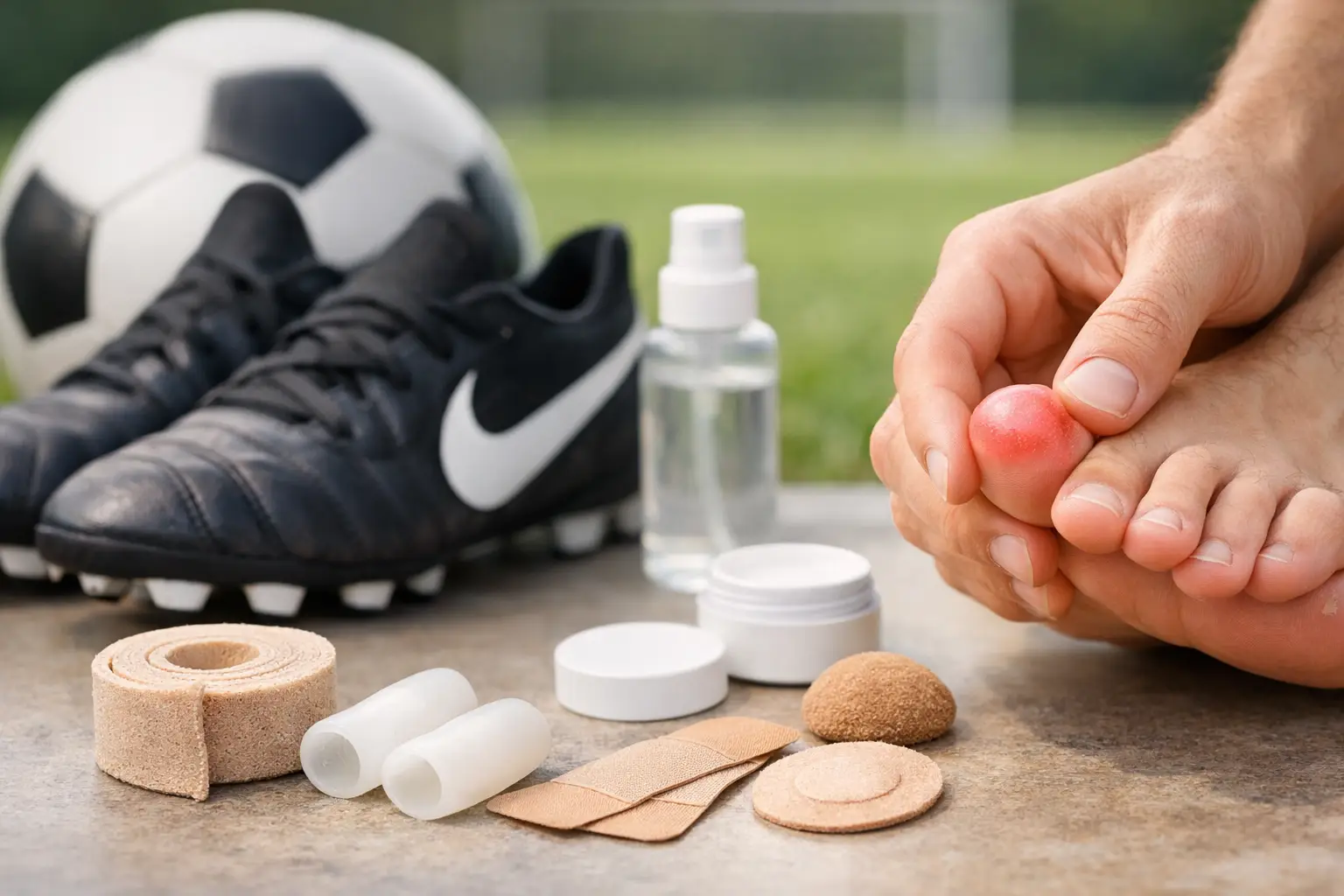
A toe blister rarely arrives out of nowhere. It usually starts as a tiny hot spot in the first few sprints, then becomes a sharp reminder every time you strike, turn or chase back. Effective toe blister prevention for football boots is about dealing with friction before it builds, not trying to tough it out once your skin is already rubbing raw.
Football asks a lot of your feet. You accelerate, stop suddenly, change direction, receive the ball on the move and spend long spells pressing into the front of the boot. A pair that feels fine standing in the changing room can feel very different after 40 minutes on a wet pitch. The good news is that most football toe blisters are preventable with a smarter pre-match routine.
Why football boots cause toe blisters
A blister forms when repeated rubbing separates layers of skin and fluid fills the space. In boots, that rubbing is usually caused by your toe sliding forward, pressing repeatedly against the upper, or catching against a seam. Moisture makes the problem worse because damp skin is softer and more vulnerable to friction.
The big mistake is blaming the boot alone. Sometimes the fit is wrong, but socks, lacing, sweat, wet weather and suddenly increasing your playing time can all be part of the problem. Your position can matter too. Wide players and midfielders who cover ground may notice hot spots from constant movement, while defenders and strikers can get pressure blisters after repeated sharp stops and powerful strikes.
Start with football boots that fit your foot
Boots should feel secure around the heel and midfoot, with enough room for your toes to sit naturally. They should not be so tight that your toenails or toe joints feel compressed, and they should not be so loose that your foot slides forward every time you brake.
There is a balance here. Leather boots can give slightly as they break in, whereas many modern synthetic boots retain a closer, more structured shape. Do not buy a painfully tight pair on the assumption that they will transform after a few sessions. A close fit is useful for touch and responsiveness, but pain, numbness and repeated rubbing are signs that the shape is not working for you.
Try boots on late in the day or after a short walk, when your feet are closer to their playing size. Wear the socks you actually play in. Then jog, turn and push up onto your toes rather than judging the fit from a chair. If your toes hit the front straight away, size or shape needs reconsidering.
Break in new boots gradually
Never make a brand-new pair your first choice for a cup final, tournament or long away day. Wear them around the house first, then for light training, before using them in a full match. This gives the upper time to settle and reveals any pressure points while you can still act on them.
If one toe keeps rubbing in the same place, do not assume more sessions will fix it. Check for a stiff edge, internal seam, curled insole or a boot that is too narrow through the forefoot. A small fit issue becomes a much bigger problem once sweat and fatigue enter the picture.
Toe blister prevention for football boots starts with socks
Your socks are the layer between skin and boot, so they do more than complete the kit. A good football sock helps manage moisture and limits movement inside the boot. Thin, worn-out socks can bunch around the toes and create exactly the friction you are trying to avoid.
Choose clean, well-fitting technical socks that stay in place. Look for a fabric that moves sweat away from the foot rather than holding onto it. The right thickness depends on your boot fit: a slightly cushioned sock can help if there is room, but forcing a thick sock into already tight boots can create extra pressure.
For players prone to toe blisters, a thin liner sock under a football sock can be worth testing in training. The two layers can move against each other instead of allowing all the friction to happen on your skin. It is not ideal for every player, particularly if your boots are a close fit, so trial it before match day.
Bring a spare pair of socks for wet sessions. Changing into dry socks at half-time or before extra time may feel like a small detail, but it can be the difference between finishing comfortably and limping through the final stages.
Control friction before you feel a hot spot
The best time to apply anti-friction protection is before warm-up. Once you feel that familiar burning spot on a toe, the skin has already begun to take damage.
Apply an anti-chafe balm directly to clean, dry skin where you usually rub: the tips of the toes, sides of the big toe, little toe and the area beneath the toes are common trouble spots. A light, even layer is enough. The aim is to reduce drag between your skin, sock and boot, not leave your foot feeling greasy.
Runglide RG Anti Chafe Balm is an easy addition to a pre-match bag because the stick applies directly where you need it, without the mess of a loose cream. It is useful for training, five-a-side, weekend matches and long tournament days when your feet are under repeated pressure.
Prevention works best as a combination. Balm helps reduce friction, but it cannot fully compensate for boots that are too small or socks that are soaked through. Think of it as invisible armour in a routine that starts with the right fit.
Lace for lockdown, not pressure
A secure heel helps stop your foot sliding towards the front of the boot. That forward movement is a major cause of blisters on the tips of the toes, especially during deceleration.
Lace your boots firmly through the midfoot and ankle, but avoid cranking the forefoot down so tightly that your toes feel trapped. The goal is lockdown at the back of the foot with enough freedom for natural toe movement. If your boots have an extra top eyelet, use a heel-lock lacing method to reduce heel lift without overtightening the whole boot.
Check your laces after the warm-up. Boots, socks and feet can settle once you have started moving. A quick adjustment before kick-off is far easier than dealing with a toe that is sliding for the next 90 minutes.
Manage moisture on wet and high-volume days
Rainy pitches, soaked boots and hard pre-season sessions all raise blister risk. The longer your feet stay wet, the less resistance your skin has to rubbing. If you play several matches in a day, this is where your normal routine needs to become more deliberate.
Pack dry socks, a small towel and your friction protection. Take your boots off when you have a genuine break, dry your feet thoroughly and inspect any area that feels tender. If a hot spot is developing, cover and protect it before the next match rather than hoping it disappears.
There is also a training-load factor. The first intense session after time away, a move to firmer ground, or a sudden jump from one match a week to three can expose your feet to more rubbing than they are used to. Build up when possible, particularly with new boots.
Do not ignore early warning signs
A hot spot is useful information. Stop at the first realistic opportunity and deal with it. Dry the area, add friction protection if needed and use suitable blister tape or padding to reduce direct rubbing. Continuing without intervention can turn a small irritation into a blister that affects your running, striking and recovery for days.
If a blister has already formed, keep it clean and protected. Avoid deliberately popping it unless you have appropriate medical guidance, particularly if you have diabetes, poor circulation or signs of infection such as spreading redness, heat, swelling or discharge. In those cases, seek advice from a healthcare professional.
Make your routine repeatable
The players who avoid foot problems are not necessarily the ones with expensive boots. They are usually the ones who know their pressure points and prepare for them. Keep your toenails trimmed straight across, rotate out worn socks, dry your boots properly between sessions and make friction control part of getting changed.
Your feet carry every sprint, tackle and extra run into the box. Give them two minutes of attention before you play, and let your focus stay where it belongs: on the football, not the next painful step.