

Blog
Blister Prevention for Runners Guide to Run Free

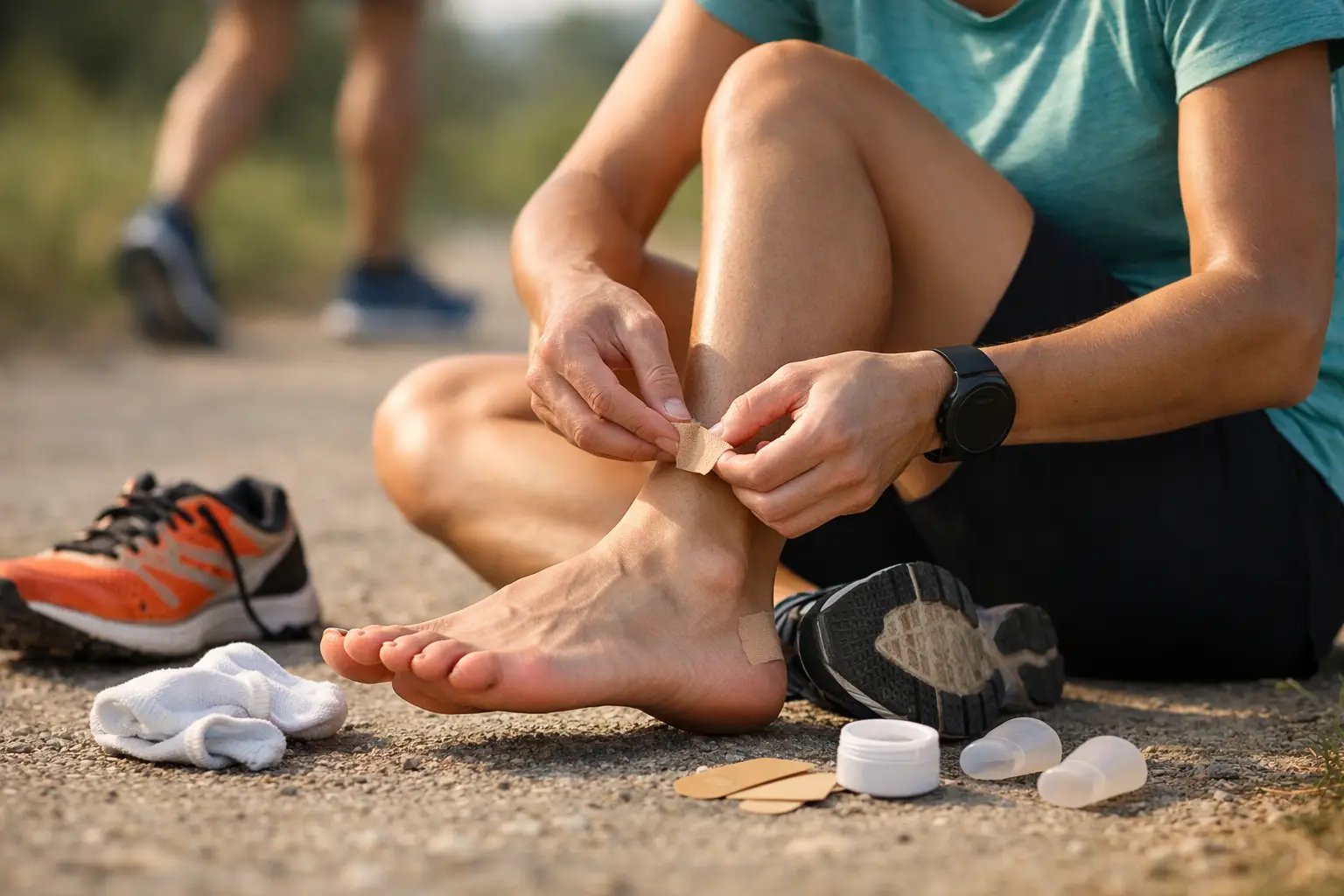
A hot spot at mile three can turn into a blister by mile six, and suddenly the run you planned feels like a problem to manage. This blister prevention for runners guide focuses on what actually causes rubbing, heat and skin damage – then shows how to stop them before they interrupt your training.
Blisters are not a toughness test. They are a friction issue, often made worse by moisture, poor fit or a change in routine. The goal is simple: protect your skin so you can focus on your pace, your breathing and the freedom of moving well.
Why runners get blisters
A blister forms when repeated rubbing separates layers of skin and fluid fills the gap. On a run, that rubbing usually comes from the sock sliding against your foot, your foot moving inside the shoe, or a seam and pressure point making contact thousands of times.
Heat and sweat speed up the process. Damp skin becomes softer and more vulnerable, which is why a shoe that feels fine on a short, cool run may cause trouble during a humid half marathon or a long trail session. Rain, stream crossings and soaked socks create the same challenge.
Your risk also rises when something changes. New shoes, thicker socks, longer mileage, hill work, orthotics or a faster-than-usual pace can all alter how your foot lands and moves. That does not mean you need to avoid change. It means your skin needs time, and your kit needs testing before race day.
Blister prevention for runners starts before the run
The most useful prevention happens while you are getting dressed. Treat it as part of your warm-up routine, not an afterthought reserved for big events.
Get the shoe fit right
Running shoes should feel secure at the heel and roomy around the toes. Your feet swell as you run, especially on long efforts and in warm conditions, so a shoe that feels comfortably close while standing may become restrictive later. Leave roughly a thumb’s width of room at the front, but avoid so much space that your foot slides forward on descents.
Pay attention to the shape as well as the size. A wide forefoot in a narrow toe box can create pressure along the little toe and ball of the foot. A shallow upper can rub the top of the toes. If your heel repeatedly lifts, experiment with a heel-lock lacing technique before assuming you need a new pair.
Do not save brand-new shoes for a race, hike or long run. Wear them for shorter sessions first, including at least one run that is long enough to reveal whether heat, swelling or downhill movement changes the fit.
Choose socks that manage moisture
Cotton holds onto moisture, which can leave skin soft and prone to rubbing. Technical running socks made from synthetic fibres or merino blends are generally a better choice because they move moisture away from the foot and dry more effectively.
There is no single best sock thickness. A thin sock may feel cooler but offer less cushioning; a thicker one may protect sensitive areas but make a snug shoe too tight. Match the sock to the shoe, then test the combination over your typical distance. If you regularly blister between the toes, toe socks may be worth trying, as they reduce skin-on-skin friction.
Also check for worn spots. Socks that have lost their structure, developed rough seams or become thin under the forefoot are not doing their job. Small kit details matter when every foot lands thousands of times.
Protect your known hot spots
Most runners have repeat offenders: the back of the heel, the side of the big toe, the arch, the ball of the foot or the area beneath a lace. If you know where friction begins, protect it before you leave home.
An anti-chafe balm creates a lubricating barrier that reduces drag where skin, socks and footwear meet. Apply it directly to clean, dry skin on your usual hot spots, including between toes if that is where you rub. A compact stick is easy to keep in a kit bag or take on longer days. Runglide Anti Chafe Balm is designed for this kind of targeted, on-the-go friction protection.
Tape, blister plasters and thin protective patches can also help, particularly if one precise area needs shielding. The trade-off is that tape must be applied smoothly and securely. A wrinkled edge can become a new source of friction, so practise with it before relying on it for an event.
Make your running plan kinder to your feet
Your feet adapt to training load just as your calves and lungs do. Jumping from 5K runs to a long weekend effort, or adding steep descents without preparation, can expose skin to more pressure and movement than it is used to handling.
Build distance progressively and use shorter runs to test new shoes, socks and protection methods. For a marathon, ultra or all-day hike, rehearse your full setup on long training sessions. Include the same socks, shoes, lacing, nutrition strategy and balm you expect to use on the day. Race day should not be an experiment.
Terrain matters, too. Road running tends to create predictable friction patterns. Trails bring mud, water, camber and downhill braking, all of which can make the foot move differently in the shoe. For wet routes, carry spare socks when practical. Changing out of saturated socks can be the difference between finishing comfortably and spending the final miles protecting a painful foot.
What to do when you feel a hot spot
A hot spot is your early warning system. It may feel warm, tender, itchy or slightly burning before a visible blister appears. Do not push through it blindly, especially on a long run. Stopping for two minutes is far better than losing several training days to broken skin.
If possible, take off your shoe and sock, dry the area and inspect it. Remove grit or a folded sock section, then apply friction protection or a smooth piece of tape or dressing. Re-lace the shoe if the problem comes from heel slip or pressure over the top of the foot.
If a blister has already formed, protect it from more rubbing. Intact skin over the blister is a useful natural cover, so avoid popping it unless you have a compelling reason and know how to keep the area clean. If it has burst, wash it gently, cover it with a sterile dressing and avoid further friction until it heals.
Seek medical advice if you notice spreading redness, increasing warmth, swelling, pus, red streaks or fever. People with diabetes, poor circulation or reduced sensation in their feet should be particularly cautious and get professional guidance early.
A simple pre-run routine that pays off
Before longer runs, give your feet a quick check. Trim nails straight across so they do not catch or press into neighbouring toes. Make sure your feet are dry, put on clean technical socks, and inspect the inside of each shoe for grit, damaged linings or a curled insole.
Then apply protection to the places that have caused trouble before. This is not over-preparation. It is the same smart consistency as charging your watch, filling your bottle or checking the weather. Small actions remove avoidable distractions.
The best blister prevention is personal. Your ideal shoe, sock thickness and protection method may not match your running partner’s, and that is fine. Notice patterns, test one change at a time, and build a routine that lets your feet carry you farther with less fuss. When friction no longer gets a vote, you are free to run the run you came for.