
Uncategorized
Running Anti Chafe: The Ultimate Guide to Pain-Free Miles

Feb
You push your limits. You conquer the miles. But a silent enemy can stop even the most seasoned athlete in their tracks: chafing. It’s that fiery sting that cuts your distance short, turning a triumphant finish into a painful hobble home. What if you had a secret weapon? Finding the right running anti chafe solution is your key to unlocking pain-free performance, acting as invisible armor against the friction and irritation holding you back.
This is your ultimate guide to reclaiming your run. Forget the confusion over greasy creams that fail and powders that disappear after the first mile. We’re breaking down everything you need to know-from the root causes to choosing the best protection-to arm you with a reliable, sweat-proof strategy. It’s time to focus on your pace, not the pain. Let’s get you protected and ready to surpass your limits.
Key Takeaways
- Master the “why” behind chafing-the combination of moisture, friction, and salt-to build an effective defense.
- Proper application is your secret weapon. Discover the right technique to make your running anti chafe protection last for miles.
- Build your ultimate chafe-proof armor by combining the right product with smart gear and personal care choices.
- Chafing already struck? Learn the correct way to treat irritated skin to reduce pain and speed up your recovery.
Understanding the Enemy: What Causes Chafing When You Run?
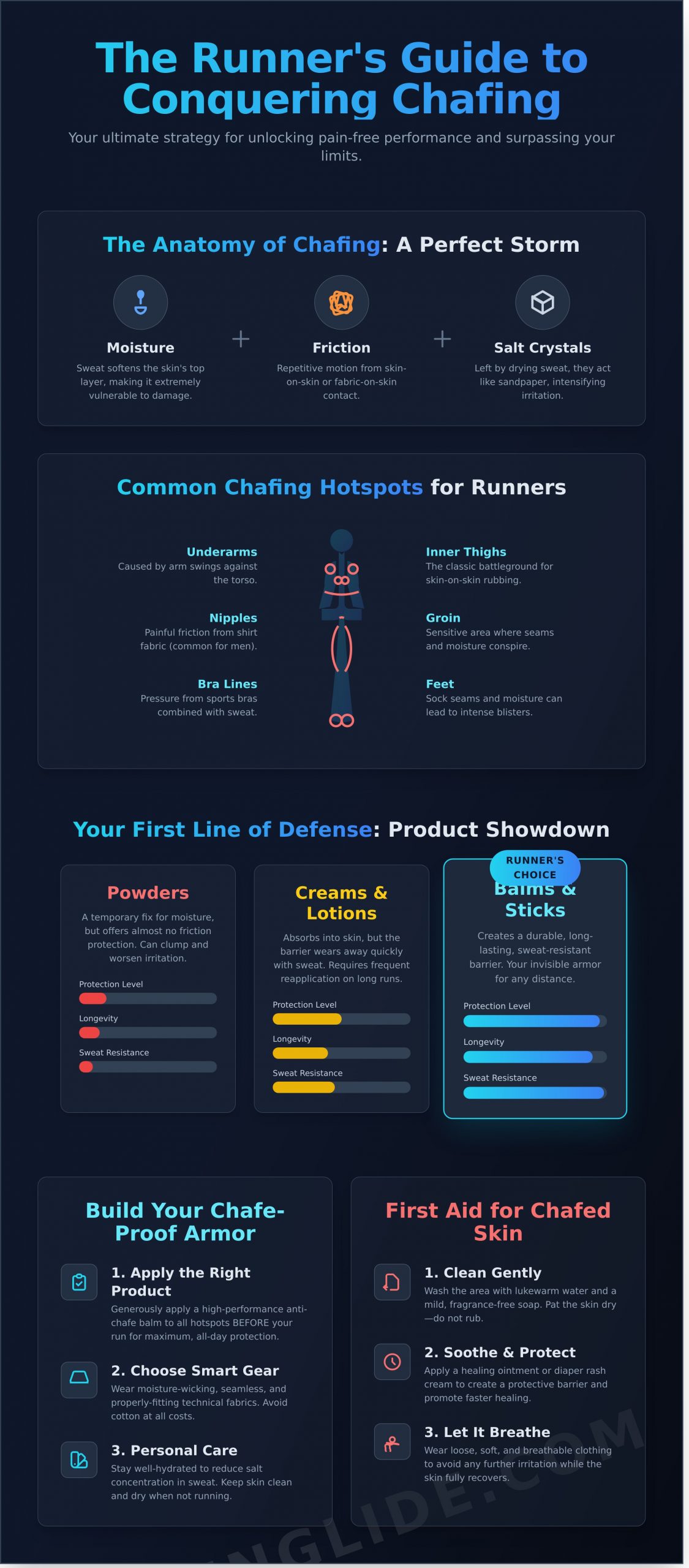
Every runner knows the feeling: that nagging sting that turns into a raw, painful burn. This is chafing, a friction-induced skin irritation that can stop even the most determined athlete in their tracks. But what is chafing at its core? It’s a perfect storm of moisture (sweat), repetitive friction from skin or fabric, and the abrasive salt crystals left behind. This isn’t an issue reserved for beginners; it can strike any runner, on any day. The key to conquering it is understanding the enemy and deploying your secret weapon: a protective barrier. A powerful running anti chafe solution acts as your invisible armor, letting you focus on your pace, not your pain.
The Science of Friction: Skin, Sweat, and Fabric
Your skin is resilient, but it has a breaking point. When you sweat, moisture softens the top layer of your skin, making it far more susceptible to damage. As that sweat dries, it leaves behind tiny salt crystals that act like sandpaper, grinding against your vulnerable skin with every step. The repetitive motion of running-the constant arm swings and leg strides-is the trigger that turns this friction into full-blown irritation and raw skin.
Common Chafing Hotspots for Runners
Friction doesn’t play fair. It targets specific areas where movement and moisture conspire against you. Stay vigilant and protect these common hotspots:
- Inner Thighs: The classic battleground for skin-on-skin rubbing.
- Underarms: Caused by the relentless swing of your arms against your torso.
- Nipples: A notoriously painful issue, especially for men, from shirt fabric friction.
- Bra Lines: Where pressure from a sports bra meets sweat, creating raw, angry lines.
- Groin & Feet: Sensitive areas where seams and socks can lead to intense irritation and blisters.
How Weather and Distance Amplify the Problem
Your running environment is a major factor. Hot, humid days mean more sweat, which accelerates the entire chafing process. Likewise, longer distances multiply the damage; a minor rub at mile 3 can become an unbearable wound by mile 13. Even a cool, rainy day offers no escape. Saturated clothing becomes heavier and more abrasive, creating new friction points. To surpass your limits, your running anti chafe strategy must be ready for any condition.
Your First Line of Defense: Choosing the Right Anti-Chafe Product
When it comes to conquering your run, the battle against chafing is won before you even start. Proactive application is your secret weapon, and choosing the right product is critical for staying comfortable and focused. While many options exist, not all are created equal for the demands of a serious runner. Let’s break down the main types of running anti chafe products to find your ultimate protection.
Anti-Chafe Balms & Sticks: The Runner’s Invisible Armor
Think of a high-performance anti-chafe balm as your invisible armor. These products glide on smoothly to create a durable, sweat-resistant barrier on the skin’s surface. This layer drastically reduces friction without feeling greasy or heavy. The best part? They are long-lasting, easy to apply without mess, and won’t clog your pores, allowing your skin to breathe and sweat naturally. They are the go-to choice for marathoners and trail runners who demand reliable, all-day protection. Find the perfect protective layer in our online shop.
Creams and Lotions: Absorption vs. Protection
Unlike balms that sit on top of the skin, most anti-chafe creams and lotions are designed to be absorbed. While this provides initial moisture, it means the protective surface barrier is less robust and can wear away quickly with sweat and movement. For runners, this often leads to the need for frequent reapplication on longer distances. Once a cream’s protection fails mid-run, you’re not just losing momentum-you might be searching for how to treat chafed skin later.
Powders: A Temporary Fix for Moisture
Talcum and other body powders work by absorbing moisture, which can provide temporary relief from that sticky feeling. However, they offer very little in terms of actual friction reduction. During an intense run, powder mixes with heavy sweat and can clump together, creating a gritty paste that can actually worsen irritation. For any serious running anti chafe strategy, powders are best left for short, low-intensity workouts, not your next 10K.
Beyond the Balm: A Complete Strategy to Prevent Running Chafe
A quality anti-chafe balm is your secret weapon, but true freedom from friction comes from a complete strategy. Think of it as building your personal armor against irritation. By combining the right product with smart gear and hydration habits, you take full control. This proactive approach turns running anti chafe prevention into a powerful routine, ensuring every run is about performance, not pain. It’s the ultimate defense, so you can focus on the finish line instead of searching for tips on how to treat chafed skin.
To build this armor, many athletes turn to dedicated health and wellness e-commerce stores. For instance, VigourMoves offers a wide range of premium products that can support a runner’s complete toolkit, from protective balms to hydration aids.
Gear Up Right: The Power of Technical Fabrics
Your clothing is the first layer of your defense. The wrong fabric can sabotage your run before you even start. Ditch cotton-it acts like a sponge, holding sweat against your skin and creating the perfect environment for friction. Instead, gear up with high-performance technical fabrics that work as hard as you do.
- Choose This: Moisture-wicking materials like polyester, nylon, or merino wool pull sweat away from your body, keeping you dry.
- Avoid This: Cotton, which becomes heavy, abrasive, and saturated when wet.
Also, look for gear with flatlock or seamless construction to eliminate irritating stitches in high-friction zones like your underarms and inner thighs.
The Perfect Fit: Why Your Clothing’s Cut Matters
Fit is everything. Clothing that’s too loose can flap and rub with every stride, while gear that’s too tight can dig into your skin, creating painful pressure points. Aim for a streamlined fit that moves with you, not against you. For chafe-prone areas, compression shorts or form-fitting tights are a game-changer, creating a smooth, protective barrier that stops friction before it starts.
Hydration’s Hidden Role in Chafe Prevention
What you drink has a direct impact on your skin’s comfort. When you’re dehydrated, your sweat becomes more concentrated with salt. As the sweat evaporates, it leaves behind abrasive salt crystals that intensify irritation. Proper hydration dilutes this salt, making your sweat less abrasive. This simple step is a key part of any effective running anti chafe strategy. Make it a habit: drink plenty of water throughout the day before your run and sip consistently during longer efforts. Your skin will thank you.
How to Apply Anti-Chafe Balm for Maximum, All-Day Protection
You’ve chosen the right tool for the job, but your application technique is what turns a great product into your secret weapon against irritation. Think of your anti-chafe balm as invisible armor; applying it correctly ensures that armor holds strong from your first step to your last. Proper application is the key to unlocking a truly frictionless run, every single time.
Follow these simple steps to build a durable, protective barrier that lasts for your entire workout.
Step 1: Start with Clean, Dry Skin
The golden rule of chafe prevention is to apply your balm before you start moving, not after. Applying to clean, dry skin allows the protective ingredients to properly bond and form a resilient, sweat-resistant layer. Applying balm over sweat, lotions, or oils can interfere with its performance and reduce its effectiveness. Make it the first step in your pre-run ritual.
Step 2: Be Generous and Target Hotspots
This is not the time to be shy. To build a robust barrier, you need to apply a liberal amount directly to all your known problem areas. Glide the stick back and forth several times to ensure complete coverage. A high-quality running anti chafe balm should feel smooth, not sticky. Pay close attention to these common hotspots:
- Inner thighs
- Underarms and armpits
- Nipple area (crucial for long runs)
- Along sports bra lines and straps
- Anywhere your pack or gear might rub
Step 3: Long-Distance and Race-Day Strategy
When you’re pushing your limits, you need protection that can keep up. For marathons, ultras, or runs in extreme heat and humidity, your strategy might need a small adjustment. While a superior balm is designed to last for hours, having a travel-sized stick in your drop bag or pocket provides peace of mind. A quick reapplication at an aid station can be the difference-maker, ensuring your focus stays on the finish line, not on friction. Get a balm that goes the distance. Explore our collection now.
First Aid for Chafing: How to Treat Irritated Skin After a Run
Even the most prepared runners sometimes face the sting of chafing. It happens. The battle isn’t lost when irritation strikes-it’s won in how you recover. Ignoring chafed skin can lead to prolonged pain and even infection, keeping you sidelined when you want to be conquering your next goal. Don’t let a minor setback stop your momentum. Follow these simple steps to soothe your skin and get back to running stronger than ever.
Immediate Post-Run Care: Cleanse and Calm
The moment you finish your run, your recovery begins. That burning sensation needs immediate, gentle attention. The goal is to clean the area without causing more pain. Your first steps are crucial:
- Take a lukewarm shower. Hot water will feel like fire on irritated skin, so keep the temperature cool and soothing.
- Use a mild, fragrance-free soap. Lather it in your hands and gently apply it to the area. Avoid any harsh scrubbing.
- Pat the skin dry. Use a soft, clean towel and gently pat the area instead of rubbing, which will only increase the damage.
Soothe and Heal: Your Recovery Armor
Once your skin is clean and dry, the next mission is to calm the inflammation and build a protective healing barrier. Apply a fragrance-free moisturizing cream or a specialized healing ointment. Look for products with natural, soothing ingredients like aloe vera or calendula to help reduce redness and discomfort. After application, let the area breathe. Opt for loose, soft clothing made from natural fibers like cotton to prevent further friction.
In addition to traditional ointments, many athletes are incorporating CBD-infused topicals into their recovery routines to help manage inflammation and soothe skin. If you’re interested in learning more about this option, you can discover CBD Health Collection for a range of quality products.
Recovery and Prevention: Don’t Run on Raw Skin
This is critical: do not run on raw, chafed skin. Pushing through the pain will only tear the skin further, delaying your recovery and increasing your risk of infection. Your body needs time to repair. Take a day or two off to let the skin heal completely. When you’re ready to hit the pavement again, make prevention your top priority. A high-quality running anti chafe balm is your secret weapon. Be diligent with your application, ensuring you create an invisible shield in all your usual hotspots. Your best performance relies on smart recovery, so make sure your running anti chafe strategy includes both pre-run protection and post-run care.
Conquer Every Mile, Chafe-Free
You now hold the strategy to end the painful friction that holds you back. The key takeaways are simple: prevention is your best defense, and a holistic approach combining the right gear with a powerful, protective balm is your ticket to freedom. A complete running anti chafe plan empowers you to focus on your performance, not your pain.
Stop letting irritation dictate your distance. It’s time to arm yourself with your secret weapon. Trusted by runners and athletes worldwide, RG Anti Chafe Balm is your invisible armor. Its sweat and water-resistant formula, made with natural ingredients, provides the reliable, all-day protection you need to push past your limits and achieve your goals. Don’t just endure your run-enjoy it.
Unleash your potential. Shop RG Anti Chafe Balm and run pain-free!
Frequently Asked Questions About Running Anti Chafe Balm
Can I just use Vaseline or petroleum jelly to prevent chafing?
While you can, it’s not your best weapon against friction. Petroleum jelly is greasy, can trap heat, and may break down the technical fibers in your expensive running gear over time. Purpose-built anti-chafe balms provide a breathable, durable, and less messy barrier. They are designed to work with your skin and your apparel, offering superior protection that lets you perform without compromise. Your gear is an investment; protect it.
Does deodorant work as an anti-chafe product for running?
Deodorant is made to control odor and sweat, not to combat intense friction. While it may provide minimal, short-term relief, it’s not formulated for the demands of a long run and often contains fragrances or alcohol that can irritate sensitive skin. A dedicated running anti chafe product is your secret weapon, creating a robust, long-lasting barrier that is specifically designed to glide and protect your skin mile after mile.
How long does a typical application of anti-chafe balm last?
Your anti-chafe balm should be as resilient as you are. One application of a high-performance balm is engineered to last for hours, easily protecting you through a long run or half-marathon. For ultra-marathons or runs in extreme heat and humidity, a quick reapplication might be necessary for ultimate protection. This ensures your invisible armor stays strong, keeping you focused on surpassing your limits, not on painful irritation.
Will anti-chafe balm stain my technical running clothes?
Protect your gear as fiercely as you protect your skin. Unlike petroleum-based products, quality anti-chafe balms are formulated to wash out of performance fabrics easily. They create a clear, non-greasy shield that won’t leave oily residue on your favorite shorts or jersey. You can apply it with confidence, knowing your apparel will come out of the wash clean and ready for your next challenge. Always choose a balm designed for athletes.
Is it possible to stop chafing permanently?
You can’t permanently alter your skin, but you can permanently stop chafing from sidelining you. The solution is consistent prevention. By making a reliable anti-chafe balm a key part of your pre-run routine, you effectively eliminate the threat of friction burn. This proactive strategy is the key to conquering chafing for good, giving you the freedom to run any distance without pain or hesitation. Make protection a habit.
What’s the difference between chafing and a heat rash?
Knowing your opponent is the first step to victory. Chafing is a friction injury caused by skin rubbing against skin or fabric, resulting in red, raw, and sometimes stinging patches. Heat rash is caused by blocked sweat ducts, appearing as clusters of small, itchy red bumps or blisters. Chafing is from rubbing; heat rash is from trapped moisture. A good balm prevents friction, while moisture-wicking clothes help prevent heat rash.
