
Uncategorized
How to Reduce Skin Friction During Exercise
Apr
That hot, stinging patch on your inner thighs or the first rub on your heel can turn a solid session into a countdown to stopping. If you are searching for how to reduce skin friction exercise creates, the good news is that most chafing and blister problems are preventable with a few smart changes before you start moving.
Skin friction during exercise is rarely about one thing alone. It usually comes from a mix of repeated movement, sweat, heat, fabric seams and pressure points. Running, walking, cycling, hiking and gym sessions all create rubbing in different ways, which is why what works for one person may need adjusting for another. The aim is simple – reduce the rubbing, manage the moisture and protect the areas that take the most stress.
Why skin friction gets worse when you exercise
Exercise creates ideal conditions for skin irritation. You move in repeated patterns, your body temperature rises, sweat builds and clothing starts to shift. Once skin becomes damp, it softens and becomes more vulnerable to rubbing. Add tight straps, poor sock choice or rough seams, and that small irritation can build fast.
Some body areas are more prone than others. Inner thighs, underarms, under the bra line, around the waistband, nipples and feet are common hotspots. Cyclists may struggle where shorts and saddle contact overlap. Runners often notice thigh chafing, sports bra rub or heel blisters. Walkers and hikers may feel friction build over time, especially in warm weather or on longer routes.
This is why prevention matters more than rescue. Once skin is already raw, every step feels worse.
How to reduce skin friction exercise creates
The most effective approach is to treat friction as part of your training routine, not an afterthought. You do not wait until halfway through a run to think about your shoes, and skin protection deserves the same mindset.
Start with fit. Clothes that bunch, shift or dig in create repeated rubbing. Very loose kit can be just as irritating as overly tight kit because it moves around more. Look for activewear that stays in place and feels smooth against the skin, especially around the thighs, underarms and chest. Flat seams help, but fit still matters more than marketing.
Next, think about moisture. Sweat is normal, but trapped moisture increases drag. Technical fabrics can help by moving sweat away from the skin, while cotton often stays damp and heavy. For feet, moisture control is especially important because damp skin and shoe pressure are a fast route to blisters.
Then there is direct friction protection. A purpose-made anti-chafe or anti-blister balm creates a protective glide on vulnerable areas before activity. This is often the missing step for people who have already tried better shorts or better socks but still get irritation on longer efforts. Applied in the right places, it helps skin move more freely instead of rubbing itself raw.
Dress for less rubbing, not just for style
What you wear can either support your movement or work against it. If you are dealing with regular chafing, your exercise kit is the first place to look.
For thigh chafing, shorts that stay put tend to outperform styles that ride up with every stride. For upper-body chafing, pay attention to armholes, chest panels and sports bra bands. A top that feels fine standing still can become a problem after thirty minutes of repetitive movement.
Footwear deserves the same attention. Shoes that are too tight create pressure and rubbing, but shoes that are too loose allow the foot to slide. Neither is ideal. Socks should fit close without bunching, and the fabric should help keep feet dry. If one area always blisters, that is a clue that the problem may be mechanical, not just skin-deep.
There is always a trade-off here. Compression-style clothing can reduce movement and friction, but if it traps too much heat or presses on the wrong spot, it may create a new issue. The best choice is the one that feels stable, breathable and comfortable through your actual activity.
Use targeted protection before the workout starts
If you only apply friction protection after irritation begins, you are already behind. The best time to protect skin is before your first step, pedal stroke or rep.
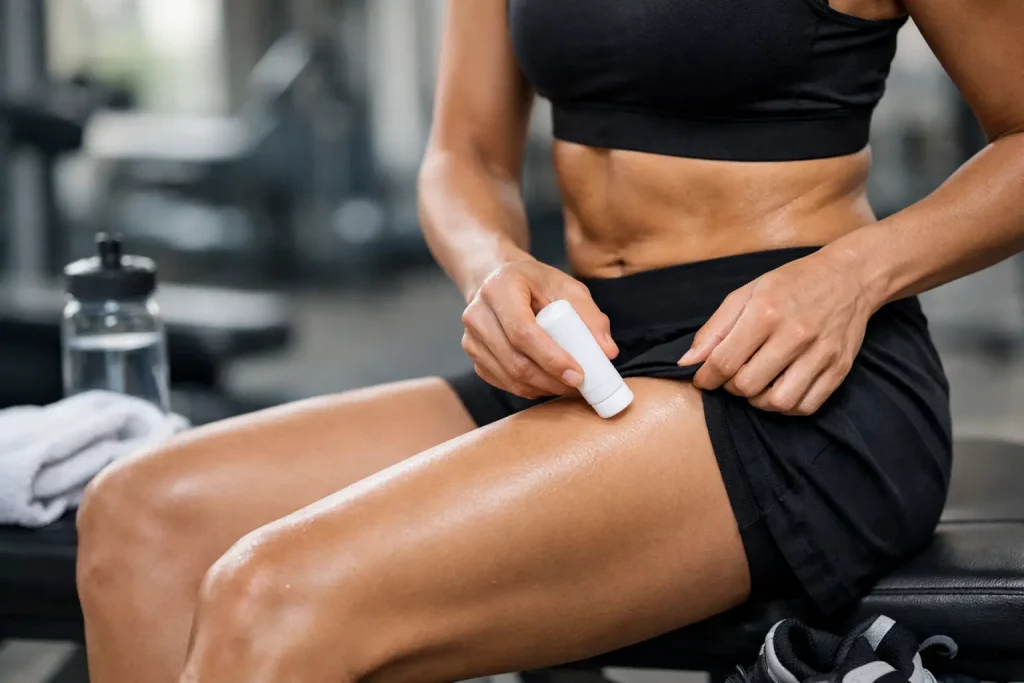
Apply an anti-chafe balm to areas that regularly rub – commonly the inner thighs, underarms, bra line, chest, waistband line or anywhere clothing seams catch. For feet, apply an anti-blister product where socks and shoes create repeated contact, such as heels, toes or the sides of the forefoot.
A stick format makes this easy because it is quick, clean and portable. That matters more than it sounds. If protection is messy or awkward, people skip it. A simple swipe before training is much easier to turn into a daily habit.
One mention is enough here: products such as those from RunGlide are built for exactly this kind of routine – quick application, targeted protection and easy carry for training, commuting or travel.
Sweat management makes a bigger difference than most people think
Many people blame chafing on clothing alone when sweat is the real amplifier. The more moisture sits on the skin, the more fragile that skin becomes under repeated movement.
That means timing and conditions matter. A short cool-weather run may be fine in gear that becomes a problem during a humid gym session or a summer hike. If you exercise in heat, expect friction risk to rise and plan for it. Lightweight breathable kit, hydration and pre-applied protection all help keep irritation from building.
For longer sessions, reapplication can make sense. This depends on distance, intensity and how much you sweat. Someone heading out for a quick walk may not need to think twice. Someone training for a half marathon, tackling a long ride or spending all day on the trail probably should.
Do not ignore hotspots
A hotspot is your warning sign. It is the moment when skin feels warm, tender or slightly raw before visible damage appears. If you catch it early, you can often stop a full chafe or blister from developing.
If you feel a hotspot during exercise, adjust what you can straight away. Smooth your sock, shift a seam, reapply protection if you have it with you, or take a minute to dry the area. Pushing through rarely works in your favour. Small irritation tends to become a big problem once repetition takes over.
This matters even more during races, long hikes or all-day walking on holiday. Skin breakdown early in the day has plenty of time to get worse.
Common mistakes that keep friction coming back
One of the biggest mistakes is assuming pain is just part of training. Discomfort from effort is one thing. Chafing and blisters are preventable problems, and treating them as normal often means repeating the same avoidable setup.
Another mistake is only changing one variable. If you swap your shorts but keep the same damp cotton underwear, you may not solve much. If you buy new shoes but wear poor socks, you may still blister. Friction is usually a system issue, so the fix often needs two or three small changes working together.
People also tend to underestimate repeat problem areas. If the same spot flares up every time, make it part of your pre-workout routine. Do not wait to see if this session will be different.
When skin friction needs a different solution
Sometimes persistent rubbing points to a deeper fit issue or a change in training load. A sudden jump in mileage, a new saddle, different shoes or warmer conditions can all trigger irritation even if your usual setup was fine before.
Body changes can play a role too. Weight fluctuations, muscle gain and hormonal changes may alter how clothes fit and where skin meets skin. That does not mean anything is wrong. It just means your friction strategy may need updating.
If skin is already broken, give it time to recover and avoid further rubbing where possible. Prevention products work best on intact skin. If irritation looks severe, keeps returning in the same place despite good prevention, or shows signs of infection, it is worth speaking to a healthcare professional.
The goal is not to overcomplicate it. It is to make comfort consistent enough that your focus stays on the session, not the sting. A better fit, drier fabrics and the right protection in the right places can change how far and how freely you move. Give your skin the same attention you give your trainers, and your next workout is far more likely to feel strong from start to finish.
