
Uncategorized
How to Avoid Blisters on Long Walks
Apr
A blister rarely starts as a big problem. It starts as a warm spot on your heel, a rub under the ball of your foot, or that slight sting on your little toe that you hope will settle down. If you want to know how to avoid blisters on long walks, the answer is not one magic trick. It is a combination of fit, friction control, moisture management and catching trouble early enough that it never gets a chance to build.
Long walks should leave you pleasantly tired, not limping home and peeling off your shoes with regret. Whether you are building up weekend mileage, training for a charity trek or simply walking more for fitness, blister prevention is one of the easiest ways to stay comfortable and keep your momentum going.
Why blisters happen on long walks
Blisters form when your skin is exposed to repeated friction and pressure. Add heat and sweat, and the top layers of skin start to separate. Fluid collects, and suddenly a small hot spot turns into a painful pocket that changes the way you walk.
That is why blisters are not only about bad shoes. They can come from socks that hold moisture, laces that let your foot slide, steep descents that push your toes forward, or even a perfectly decent pair of shoes worn on a much longer route than usual. The more time your foot spends rubbing in the same place, the more likely you are to feel it later.
How to avoid blisters on long walks before you leave home
The biggest mistake is treating blister prevention as something to think about after your feet start hurting. Good preparation gives you a much better chance of finishing strong.
Start with footwear that actually fits the job. Walking shoes or boots should feel secure through the midfoot and heel without crushing your toes. Your feet naturally swell on longer walks, so a fit that feels perfect for twenty minutes indoors can become tight after a couple of hours outside. You want enough room in the toe box for movement, but not so much space that your foot slides around.
Socks matter more than many walkers realise. A soft cotton sock may feel fine at first, but once it gets damp it tends to hold moisture against the skin. Technical walking socks are usually better because they help move sweat away and reduce friction. Some people do well with thin socks, while others need more cushioning. It depends on your shoe fit and where you usually rub.
If you know you are prone to hot spots, add friction protection before the walk begins, not halfway through. An anti-blister balm applied to the heels, toes or forefoot can help reduce rubbing in the areas that usually cause trouble. That kind of simple habit can make a big difference, especially on repeat training walks or warm-weather routes where sweat builds quickly.
Nail care plays a part too. Toenails that are too long can hit the front of the shoe on descents and create pressure you will feel later. Keep them trimmed, but not so short that the edges dig into the skin.
The right shoe fit is your first line of defence
If your shoes are wrong, the rest of your blister strategy has to work twice as hard. That does not always mean the shoes are poor quality. Often they are just the wrong shape for your foot.
A slipping heel is one of the most common causes of blisters on long walks. If your heel lifts with every step, the skin gets rubbed over and over again. In that case, different lacing can help, especially heel-lock lacing, which improves hold around the ankle. If the shoe still moves too much, the fit may simply be off.
Toe blisters often point to a cramped toe box or too much forward slide. This becomes more obvious on downhill sections, where your toes repeatedly press into the front of the shoe. A better fit or lacing adjustment can reduce that pressure.
There is also a trade-off with breaking in footwear. New shoes should not feel harsh or stiff enough to damage your feet, but even a good pair can behave differently on a ten-mile walk than on a short trip to the shops. Build distance gradually. Test shoes and socks together, because the combination matters as much as the individual pieces.
Keep feet drier to reduce friction
Moisture softens the skin and makes blistering more likely. On long walks, especially in warm conditions or wet weather, keeping feet as dry as possible is one of the simplest ways to protect them.
Choose socks designed to manage sweat rather than trap it. If you are out for several hours, carrying a spare pair can be worth it. Changing into dry socks mid-walk is not glamorous, but it can reset your comfort level and stop small rubbing from turning into a full blister.
If your feet sweat heavily, think about your whole system, not only the socks. Breathable shoes can help in dry weather, while in wet conditions you may need to accept that keeping feet perfectly dry is unrealistic. In that case, reducing friction becomes even more important. A protective balm or blister-prevention product gives you another layer of defence when conditions are working against you.
Hot spots are your early warning sign
If there is one habit that separates comfortable walkers from miserable ones, it is this: do not ignore a hot spot.
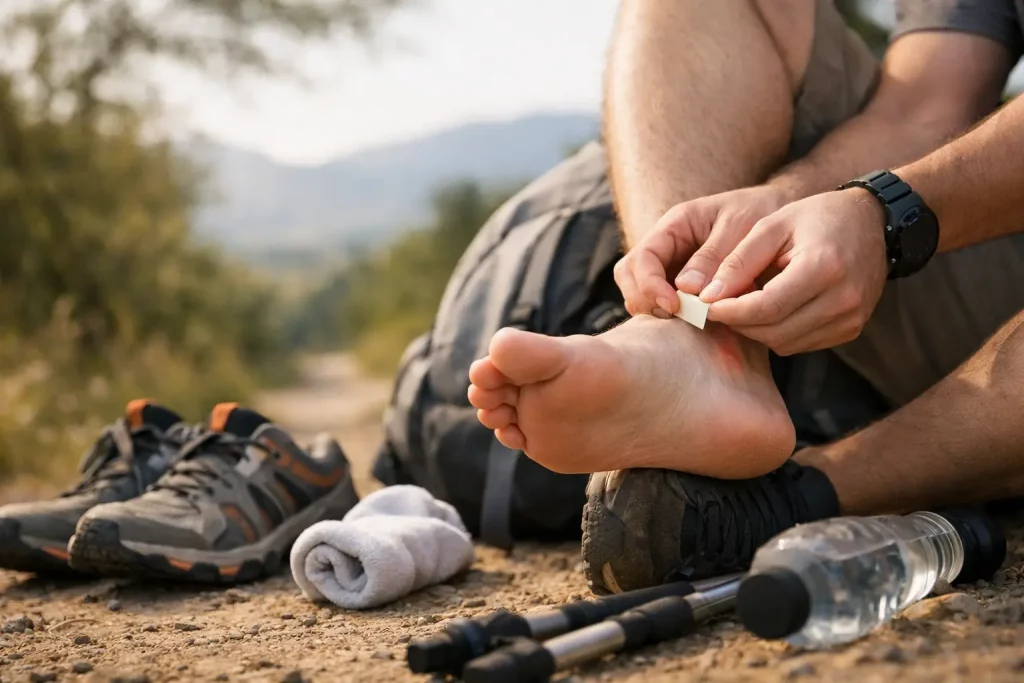
A hot spot is the moment before a blister forms. You feel rubbing, warmth or tenderness in one specific area. That is your chance to act while the skin is still intact. Stop, take off your shoe, and deal with it straight away. Waiting another mile usually makes the problem harder to manage.
This is where carrying a small foot care kit makes sense. You do not need a full expedition setup. A blister plaster, a bit of tape, spare socks and a compact anti-friction stick will handle most early problems. Because stick products are quick and tidy to apply, they are easy to keep in a day bag or jacket pocket. If you already know your usual trouble spots, you can top up protection before the rubbing gets worse.
Skin prep: useful, but not overcomplicated
Some walkers try to toughen their feet with all sorts of rituals. A little preparation helps, but there is no need to turn it into a full-time job.
Healthy skin generally performs better than neglected skin. If your heels are very dry and cracked, friction can catch on rough edges more easily. Using a foot cream in your regular routine can help keep skin supple, but avoid leaving feet greasy just before a walk because that can create a different kind of slipping.
It also helps to be realistic about so-called tough feet. Calluses are not always protective. Thick, hard skin can create pressure points of its own. If you have heavy callusing, gentle maintenance is better than either ignoring it or stripping it back aggressively.
When conditions change, your blister risk changes too
The longer the walk, the more variables come into play. Heat increases sweat. Rain leaves your socks damp. Cold weather can make feet numb, which means you may notice rubbing later than usual. Hillier routes change the pressure pattern inside your shoes, and carrying a heavier pack can alter your gait enough to create new hot spots.
That is why the right setup for a casual flat walk might not be the right one for a long countryside route. Your blister prevention plan should match the walk you are actually doing. For some people, that means more cushioned socks. For others, it means lighter footwear, different lacing or more generous use of friction protection.
If you always get blisters in the same place
Recurring blisters usually point to a repeatable issue. It may be the shape of your shoe, the seam of a sock, a bunion, your walking pattern or one area of skin that takes more load than the rest.
Do not just keep hoping it will sort itself out. If the same toe or heel keeps blistering, look closely at what is happening there. Sometimes a very small change solves a stubborn problem – a different sock thickness, a re-lace, an insole adjustment, or applying a protective product to that exact spot before every walk.
If you are training regularly, consistency matters. Prevention works best when it becomes part of your routine rather than an emergency fix. That is one reason products such as those from RG are useful for active people – easy to apply, easy to carry, and built around stopping friction before it stops you.
Long walks feel better when your feet are an afterthought. Give them the right fit, keep friction under control, pay attention to early warning signs and make prevention part of the plan. A comfortable stride is not luck. It is preparation that lets you keep going.
