
Uncategorized
Groin Chafing: Your Complete Guide to Prevention and Treatment

Feb
The burn starts low. A distracting sting that quickly escalates into a raw, fiery pain, forcing you to cut your workout short. Again. This isn’t just discomfort; it’s groin chafing, the performance-killer that can sideline even the most dedicated athlete. It’s a sensitive issue, often endured in silence, fueled by the fear of it derailing your big race day or turning a triumphant finish into a painful shuffle.
But your performance shouldn’t be dictated by painful friction. It’s time to fight back. This guide is your complete game plan for preventing and treating groin chafing for good. We’ll arm you with the simple, reliable routines to stop irritation before it starts and the expert tips to safely heal your skin when it does. Forget the burn. Reclaim your confidence and unlock your true potential with every stride, pedal, and rep. Let’s get you back to focusing on what matters: your goals.
Key Takeaways
- Understand the key factors-friction and moisture-that cause irritation, giving you the power to stop it before it starts.
- Learn a simple, 4-step proactive routine that acts as your daily armor to make chafing a thing of the past.
- Turn your apparel into your first line of defense against groin chafing by mastering the three critical elements of chafe-proof gear.
- Discover a safe and effective recovery plan to quickly soothe irritated skin and get back to your training faster.
Understanding Groin Chafing: What It Is and Why It Happens
Nothing sidelines an athlete faster than the raw, stinging pain of chafing. It’s the enemy of endurance and a direct barrier to your best performance. At its core, groin chafing is a skin irritation caused by repetitive friction. But what is chafing on a deeper level? It’s the mechanical breakdown of your skin’s protective barrier, common in high-movement activities like running, cycling, and hiking. This damage comes from two sources: skin rubbing against skin, or fabric rubbing against skin.
The Anatomy of the Problem
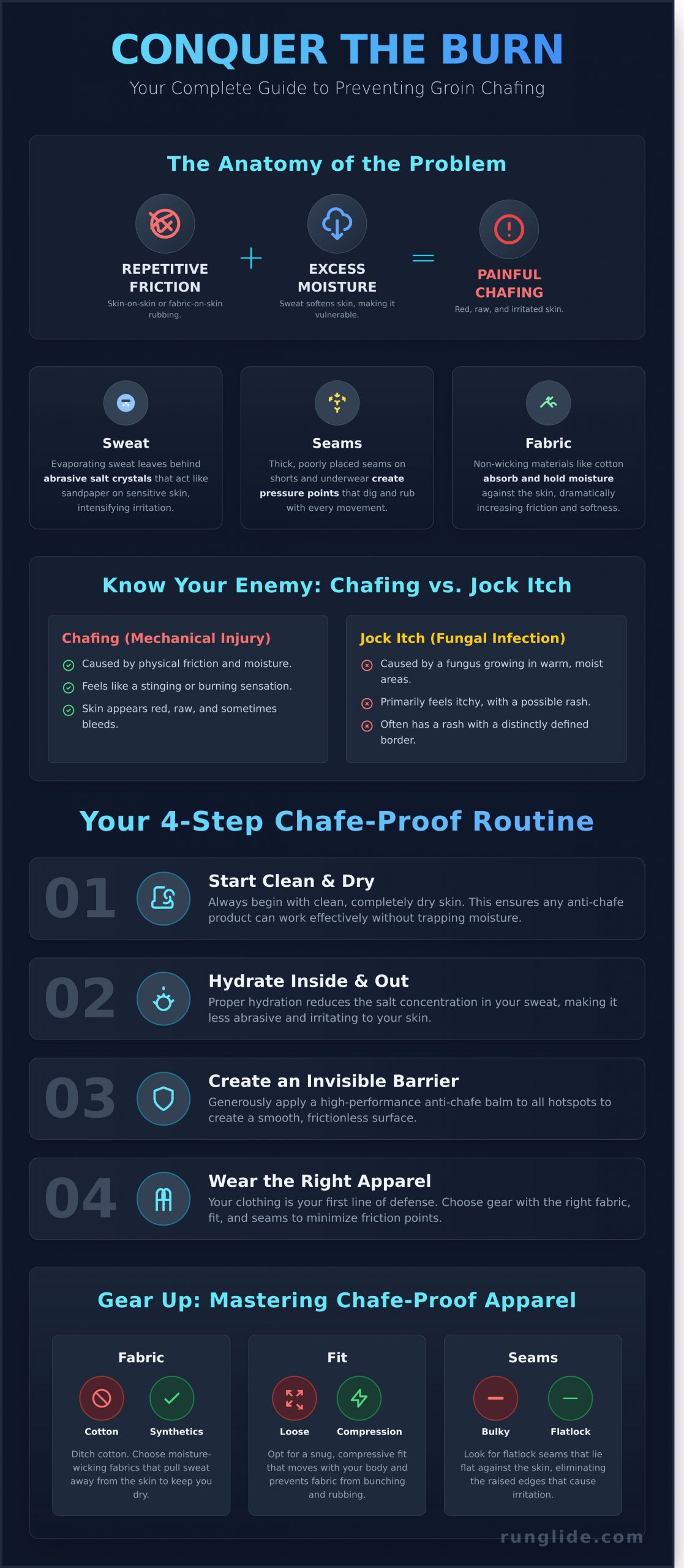
The groin area is a perfect storm for irritation. The natural anatomy of your upper inner thighs creates constant friction points with every step, stride, or pedal. This area is also dense with sweat glands and hair follicles, a combination that traps heat and moisture. This warm, damp environment softens the skin, making it incredibly vulnerable to the relentless rubbing that leads to painful, raw patches.
Key Culprits: Sweat, Seams, and Fabric
Three main factors turn simple friction into a performance-killing problem. Understanding them is the key to building your defense.
- Sweat: As your sweat evaporates, it leaves behind abrasive salt crystals. These tiny crystals act like sandpaper, grinding against your already-sensitive skin and intensifying the irritation.
- Seams: Thick, poorly placed seams on athletic shorts or underwear create pressure points. With every movement, these seams dig and rub, concentrating the force of friction on one small line.
- Fabric: Non-wicking materials like cotton are a major offender. They absorb moisture and hold it directly against your skin, creating a damp, heavy layer that dramatically increases friction.
Is It Chafing or Something Else?
It’s crucial to know your enemy. While the symptoms can seem similar, simple groin chafing is different from a fungal infection like jock itch. Chafing is a mechanical issue-a physical injury-not an infection. Look for these tell-tale signs of chafing:
- Red, inflamed skin that feels hot to the touch.
- A distinct stinging or burning sensation.
- Skin that looks raw or worn, sometimes with mild bleeding in severe cases.
Understanding these causes is the first step to conquering chafing. It’s a battle of friction and moisture, and with the right strategy, you can win.
Proactive Prevention: Your 4-Step Chafe-Proof Routine
Think of chafing prevention as your most essential piece of gear. Just like you wouldn’t run a marathon in bad shoes, you shouldn’t start a workout without prepping your skin. The best way to stop painful groin chafing is to prevent it from ever starting. This simple, repeatable routine is your secret weapon, empowering you to take control and focus on your performance, not the pain. Consistency is your key to conquering irritation, especially during long or intense sessions.
Step 1: Start Clean and Dry
Always begin your workout with clean, completely dry skin. Applying products to damp skin creates a barrier that traps moisture, reducing the effectiveness of any protective balm or powder. For an extra layer of defense, especially in humid conditions, lightly dust the area with a non-talc powder to absorb any initial sweat and ensure a perfect canvas for your anti-chafe balm.
Step 2: Hydrate Inside and Out
What you drink is just as important as what you wear. Proper hydration helps regulate the salt concentration in your sweat. When you’re well-hydrated, your sweat is less salty and therefore less abrasive and irritating to your skin. Make it a non-negotiable part of your routine to drink water before, during, and after every workout. Your skin will thank you.
Step 3: Create an Invisible Barrier
This is your most powerful move against friction. A high-performance anti-chafe balm is the ultimate protective layer, creating a smooth, invisible surface that allows skin to glide effortlessly. Before you even think about getting dressed, apply the balm generously to all potential hotspots-inner thighs, groin, and any other area prone to rubbing. This is your chafe-proof armor. Find the perfect protection for your performance in the Runglide shop.
Gear Up for Success: Choosing the Right Anti-Chafe Apparel
Your apparel is more than just clothing; it’s your first layer of armor against painful irritation. Before you even think about balms or powders, the gear you choose can make or break your performance. Winning the battle against groin chafing starts in your closet. Focus on three critical elements: the fabric you wear, the way it fits, and the seams that hold it together.
The Magic of Moisture-Wicking Fabrics
Moisture is the enemy of comfortable movement. When sweat lingers, it softens the skin and creates the perfect environment for friction. This is why material choice is non-negotiable. As confirmed by medical resources like this clinical overview of intertrigo, keeping skin dry is a key preventative measure. Ditch the cotton and gear up with high-performance synthetics that act like a second skin.
- Polyester: Durable, hydrophobic, and excellent at wicking.
- Nylon: Lightweight, smooth, and resilient.
- Spandex (or Lycra/Elastane): Provides the essential stretch for a snug, supportive fit.
These fabrics pull sweat away from your body to the surface, where it can evaporate. The result? You stay drier, cooler, and chafe-free for longer.
Fit is Everything: Compression vs. Loose
To stop skin from rubbing against skin, you have to create a barrier. Compression shorts are the ultimate secret weapon for this. They provide a snug, protective layer that eliminates skin-on-skin contact and holds everything securely in place, drastically reducing the friction that causes groin chafing. If you prefer a looser fit, you can still succeed by pairing baggy outer shorts with a high-quality pair of moisture-wicking boxer briefs or compression liners underneath. The key is to never leave skin unprotected.
Scrutinize Your Seams
Even the best fabric and fit can be betrayed by bad seams. Thick, raised seams are like tiny strips of sandpaper rubbing against your skin with every step. Look for gear with flatlock seams, which lie flat to minimize irritation. For the ultimate in comfort, choose seamless underwear and shorts. Pro-Tip: Before buying, turn a garment inside out. If the seams feel rough or bulky, leave it on the rack.
Your gear is your foundational armor. Once you’ve built your defense with the right apparel, you can lock in total protection. Combining smart gear choices with a powerful anti-chafe balm from Runglide creates an unbeatable defense, giving you the freedom to conquer any challenge.
How to Treat Groin Chafing: A Soothing Recovery Guide
Even with the best preparation, friction can sometimes win the battle. When painful groin chafing strikes, don’t let it sideline you. Taking immediate and effective action is your secret weapon to a fast recovery. The goal is simple: soothe the sting, protect your skin as it heals, and prevent infection so you can get back to conquering your goals. Remember, rest is not a setback-it’s a critical part of your training plan.
Immediate Post-Workout Care
Your recovery starts the moment you stop moving. Treat the irritated skin with care to avoid making it worse. First, gently cleanse the area with lukewarm water and a mild, fragrance-free soap. Next, pat the skin completely dry with a clean, soft towel. Do not rub, as this will only increase irritation. Finally, allow the area to air out for 10-15 minutes to ensure it’s totally dry before you get dressed.
Promoting Healing and Reducing Pain
Once the area is clean and dry, it’s time to create a healing environment. Apply a thin layer of a soothing ointment like a diaper rash cream containing zinc oxide or a petroleum-free healing balm. This creates a protective barrier against moisture and bacteria. Ditch the tight synthetics and wear loose, breathable cotton underwear and clothing to maximize airflow and minimize friction. Give your body the time it needs-avoid any activity that causes rubbing until the skin is fully healed.
While these methods support the body’s natural healing process, some athletes are also exploring advanced research into compounds that may accelerate recovery. For those interested in the science of tissue repair, specialized suppliers like Peptide Research AU provide materials for the research community.
When to See a Doctor
Your body is your ultimate performance machine, and you need to know when to call in for professional support. While most cases of chafing heal within a few days with proper care, it’s crucial to watch for signs of infection. Seek medical advice if you notice:
- Worsening pain, swelling, or redness
- Pus or yellow discharge from the area
- Skin that feels hot to the touch
- A fever
If the rash doesn’t start improving after two to three days, consult a doctor. There’s no shame in seeking expert help; it’s the smartest move any dedicated athlete can make to ensure a safe and speedy return to action. Once you’re healed, make our RG Anti Chafe Balm your invisible armor to stay protected on every run, ride, and trek.
Conquer Chafing and Unleash Your Potential
You’re now armed with the knowledge to fight back against the burn. We’ve covered everything from understanding the causes to building a chafe-proof routine and choosing the right gear. Remember, proactive prevention is your strongest defense, and knowing how to treat irritation properly ensures you get back in the game faster. These strategies are your foundation for comfortable, confident movement.
But the ultimate secret weapon in this fight is stopping groin chafing before it ever starts. Don’t just manage irritation-eliminate it. Runglide Anti-Chafe Balm is your invisible armor, engineered for peak performance. Trusted by athletes to conquer any challenge, our formula provides a durable, friction-free barrier. It’s made with natural, skin-safe ingredients and is sweat and water-resistant, delivering long-lasting protection that keeps you going for longer.
Embrace the freedom of chafe-free living and surpass your limits. Stop chafing before it starts. Get your Runglide Anti-Chafe Balm now! Your next personal best is waiting.
Frequently Asked Questions
Is groin chafing the same as jock itch?
They are different, but one can lead to the other. Chafing is a physical irritation caused by skin-on-skin or fabric-on-skin friction, resulting in a red, raw rash. Jock itch is a fungal infection that thrives in warm, moist areas and often has a distinct, itchy border. Damaged skin from chafing can make you more vulnerable to infection, so it’s crucial to protect your skin from friction before it starts.
How long does it take for chafed skin in the groin area to heal?
Healing time depends on the severity, but you can get back in the game quickly with the right care. Mild redness might resolve in a day or two, while more severe, broken skin can take a week or more to fully heal. The key is to keep the area clean, dry, and protected from further friction. Give your skin the break it needs to repair itself, and you’ll be ready to conquer your next goal.
Can I still run or work out if I have mild groin chafing?
Pushing through the pain isn’t always the best strategy. Working out with existing groin chafing can worsen the irritation and delay your recovery. If you absolutely must train, create a protective barrier with an anti-chafe balm. This “invisible armor” will reduce friction and help prevent further damage. Listen to your body-if the pain increases, it’s a clear signal to stop and allow your skin time to heal for long-term performance.
Does Vaseline or petroleum jelly work for preventing groin chafing?
While petroleum jelly can provide a temporary barrier, it’s not the ideal secret weapon for athletes. It often feels greasy, can break down synthetic performance fabrics, and traps heat and moisture, which may lead to other skin issues. For long-lasting, breathable protection that won’t stain your gear, look for a dedicated anti-chafe balm formulated with natural ingredients designed to withstand sweat and keep you moving freely for longer.
What’s the best type of underwear to prevent chafing for men and women?
Your first line of defense is the right gear. For both men and women, choose snug-fitting underwear made from moisture-wicking synthetic materials like polyester or nylon. Look for styles with minimal seams, such as compression shorts or boxer briefs for men, and boy shorts or seamless briefs for women. This combination pulls sweat away from the skin and provides a smooth barrier, preventing the friction that leads to painful irritation during your workout.
Will losing weight completely stop my groin from chafing?
Losing weight can certainly help reduce skin-on-skin friction, a major cause of chafing for many. However, it’s not a guaranteed fix. Chafing is also caused by moisture, fabric, and repetitive motion-factors that affect athletes of all sizes. The best approach is a comprehensive one: pursue your fitness goals while also using protective balms and wearing the right performance apparel to stay comfortable and chafe-free on your journey to peak performance.
Not at all. While chafing is common in high-movement activities, other endurance pursuits have their own physical challenges. For example, long hours of sitting during competitive gaming can lead to significant back and neck strain without the proper ergonomic support. Investing in the right gear, like a supportive chair, is just as crucial for gamers as the right apparel is for runners. To explore this topic further, you can read more.
Does this kind of physical strain only happen in sports?
