
Uncategorized
Blister Prevention for New Shoes That Works
Apr
That first walk in a new pair can go one of two ways. You either forget they are on your feet, or you spend the journey home wincing at your heels and wondering how something that looked so good turned into a blister machine. Blister prevention for new shoes is not about luck. It is about reducing friction before your skin starts paying the price.
If you are running, commuting, travelling or simply trying to make a fresh pair wearable without a painful break-in period, a few smart moves make a big difference. The goal is simple – keep your feet comfortable, keep your skin intact, and keep moving.
Why new shoes cause blisters so quickly
Blisters are usually a friction problem, not just a shoe problem. New shoes tend to have stiffer materials, less flex, and pressure points that have not yet adapted to your foot shape. Even a good fit can create rubbing in the early wears because the upper, heel counter or seams have not softened yet.
Moisture makes it worse. Warm feet, sweaty socks and longer time on your feet all increase the chance that rubbing turns into a hot spot, then into a full blister. That is why a pair that feels fine for ten minutes indoors can become a problem on a city walk, treadmill session or day out.
It also depends on the type of shoe. Leather trainers may ease up over time, while rigid hiking shoes or smart work shoes can stay unforgiving in the same area wear after wear. The answer is not always to push through. Often, it is better to prepare properly and wear them in with intention.
Blister prevention for new shoes starts before you leave home
The best time to prevent a blister is before you feel one coming on. Once skin is already irritated, every step adds more rubbing. A little prep before first wear is usually far easier than dealing with torn skin later.
Start with fit. Your foot should feel secure without being squeezed. If your heel slips, your toes hit the front, or the shoe pinches across the forefoot, friction is almost guaranteed. New shoes do not need to feel painful to be worth keeping. Slight firmness is normal. Persistent rubbing is not.
Socks matter more than most people think. A soft, moisture-wicking sock can cut down friction straight away, especially in trainers, walking shoes and boots. Thin fashion socks may look neat, but they often do very little to protect the heel, toes or ball of the foot. For longer wear, choose socks that stay dry and do not bunch up.
Before wearing the shoes outside, try them indoors for short periods. Wear them around the house for twenty to thirty minutes at a time and pay attention to where pressure builds. This gives you a chance to catch hot spots early, when they are still easy to manage.
The most effective ways to stop rubbing
If a new pair is likely to rub, you want a barrier that lowers skin-on-shoe friction from the first step. This is where anti-blister balm earns its place in your routine. Applied to high-risk areas such as the heel, sides of the toes or ball of the foot, it helps the shoe glide over the skin instead of dragging against it.
For active people, that matters. A shoe that only rubs a little on a short errand can become a real problem during a run, hike or long day of walking. A friction barrier is quick to apply, easy to carry and much less disruptive than waiting until your skin is already raw. RG builds products around that exact need, helping you stay active longer without discomfort cutting the session short.
If you already know your trouble spots, protect them before every wear until the shoe settles. This is especially useful with stiff heel tabs, narrow toe boxes and formal shoes worn for events or workdays. You do not need to coat the whole foot. Focus on the places that usually flare up.
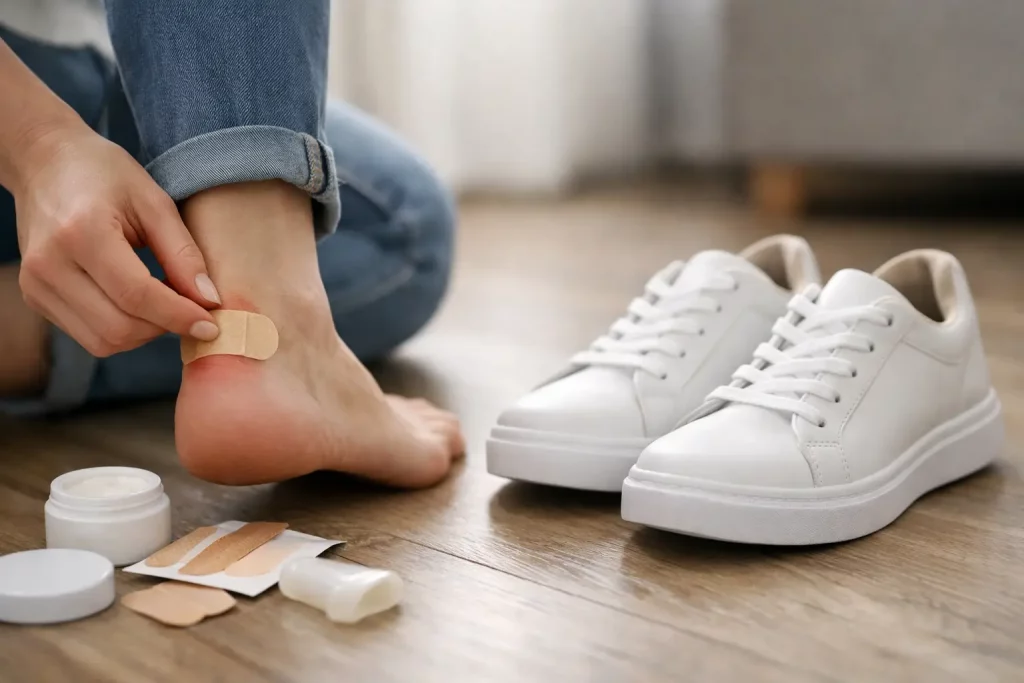
Some people prefer plasters or blister patches, and they can help in specific cases. The trade-off is that they may shift, peel or create extra bulk inside a close-fitting shoe. If the shoe is already snug, a smoother anti-friction layer often feels better than adding padding.
How to break in new shoes without wrecking your feet
There is a difference between breaking shoes in and letting them beat your feet up. A gradual approach nearly always works better than wearing a brand-new pair for an all-day outing and hoping for the best.
Start with short, low-stakes wear. A quick walk, a trip to the shops or an hour at your desk is enough for the first few outings. Then build from there. This gives the shoe time to soften and your foot time to adapt without forcing the issue.
If the material is especially firm, wear thicker socks indoors for a short period to create a little extra pressure while the shoe loosens slightly. This can help, but only if the fit is already close. If the shoe is genuinely too tight, thicker socks will just make it worse.
Lacing can help more than expected. A small adjustment changes how your foot sits and whether your heel lifts. If you feel rubbing at the back, try securing the heel more firmly. If the top of the foot feels pressured, loosening the middle eyelets may reduce movement elsewhere. It is not a magic fix, but it can solve minor fit issues.
Be realistic, though. Some shoes do not break in enough to become comfortable. If the same spot keeps rubbing after several short wears and protective measures, the fit may simply be wrong for your foot shape. That is not failure. It is useful information.
Where blisters tend to form and what to do
The back of the heel is the usual suspect, especially with trainers, boots and smart shoes with stiff heel counters. If you know heel blisters are your pattern, apply anti-friction protection there before every wear until the shoe softens.
Toes are another common trouble area, especially in narrow shoes or during downhill walking and running. Here, moisture control matters as much as fit. Dry socks, trimmed nails and enough room in the toe box all help reduce repetitive rubbing.
The ball of the foot tends to flare up when the foot slides forward or when the insole creates extra heat. This is common in sandals, court shoes and any style that does not hold the foot securely. If you feel burning under the forefoot, that is your cue to act early, not power through.
Side blisters often come from seams, stiff edges or a shape mismatch between foot and shoe. They can be surprisingly stubborn because the rubbing is localised and repetitive. A friction-reducing balm is especially useful here because it targets the exact contact point without changing shoe fit.
Common mistakes that make blisters more likely
One of the biggest mistakes is saving new shoes for a big day. Weddings, holidays, race weekends and city breaks are exactly when people wear a new pair for hours on end, with no test run. It feels efficient until you are limping by lunchtime.
Another is ignoring the first sign of a hot spot. That warm, slightly stingy feeling is your warning. Stop if you can, adjust the fit, change socks or apply protection. Waiting until the skin has already lifted means recovery takes far longer than prevention ever would.
People also assume all discomfort is part of the break-in process. Some is. Some is your foot telling you the design does not work. If the rubbing is severe, if your toes are cramped, or if your heel slips no matter how you lace the shoe, forcing it rarely ends well.
A smarter routine for blister prevention for new shoes
The easiest routine is also the one most people actually stick to. Check fit before buying, wear the pair indoors first, use decent socks, and apply anti-friction protection to any area that usually rubs. That takes a minute or two and can save days of discomfort.
For runners, walkers and anyone clocking up serious time on their feet, consistency wins. Do not wait for pain to justify prevention. If you know a shoe is new or a route is long, protect your feet at the start. Comfort should not be something you gamble on.
The good news is that blister prevention does not need to be complicated. A bit of preparation, a bit of awareness, and the right friction defence can turn new shoes from a risk into something you actually want to wear again tomorrow.
Your feet carry every plan you have got – from quick errands to long training days. Look after them early, and the rest gets a lot easier.
