
Uncategorized
Best Foot Blister Prevention Balm for Active Days
Apr
A blister rarely starts as a big problem. It starts as that tiny hot spot on your heel, under the arch, or along the side of your big toe – the sort of irritation you try to ignore for another mile. Then it changes your stride, your pace and your mood. If you are looking for the best foot blister prevention balm, you are really looking for something simpler: a way to keep moving without your feet turning against you.
The good news is that blister prevention is not complicated. The less helpful news is that not every balm works the same way, and not every foot problem needs the same fix. The best choice depends on your activity, your footwear and how your skin behaves once heat, moisture and friction build up.
What makes the best foot blister prevention balm?
At its core, a blister prevention balm needs to reduce friction before friction turns into damage. That sounds obvious, but plenty of products miss the mark because they are too greasy, too messy or too short-lived. A balm that feels slippery for five minutes but disappears halfway through a run is not doing the job.
The best foot blister prevention balm usually comes in an easy stick format, applies cleanly and creates a durable glide where your skin or socks tend to rub. It should feel light rather than oily. That matters because overly slick products can sometimes shift too much inside the shoe, especially on longer efforts or in warm conditions.
You also want a balm that fits real life. If it is awkward to apply, leaks in your bag or leaves residue on your hands, most people simply stop using it. The best prevention routine is the one you will actually stick to before a walk, a long shift, a gym session or a weekend hike.
Why foot blisters happen in the first place
Blisters are not just about bad shoes. Shoes play a big part, but friction builds from several small factors working together.
Heat softens the skin. Moisture from sweat makes it more vulnerable. Repeated rubbing then causes the upper layer of skin to move against the layers beneath it. When that stress keeps going, fluid collects and a blister forms. This is why the same pair of trainers can feel fine on a short walk but cause problems during a half marathon or a long day sightseeing.
Fit matters, but so does movement. A shoe that is technically the right size can still create rubbing if your heel lifts, your forefoot slides or your socks bunch around the toes. That is also why some people blister in very specific spots every single time. Their gait, foot shape and pressure points create the same friction pattern again and again.
Best foot blister prevention balm vs powders and plasters
People often try to solve blister problems with whatever they already have at home. Sometimes that helps a bit. Often it only helps after the damage is done.
Powders can be useful if your main issue is moisture, but they do not always provide enough friction control on their own. Plasters and blister pads are handy once you have a hot spot or a developed blister, yet they are more of a rescue option than a true prevention strategy. Tapes can work well, especially for hikers and endurance athletes, but they take more time and skill to apply properly.
A good balm fills the gap between doing nothing and building a full foot-care system. It is quick, portable and easy to use before activity starts. For many runners, walkers and travellers, that makes it the most realistic first line of defence.
How to choose the right balm for your activity
The best balm for a quick 5K may not be the best one for a full day on your feet. The conditions matter.
Running and fast walking
If you run or walk briskly, look for a balm that stays put without feeling heavy. Heel rub, toe friction and pressure around the ball of the foot are common trouble spots. You need something that reduces drag but does not make your foot feel unstable inside the shoe.
Hiking and long-distance days
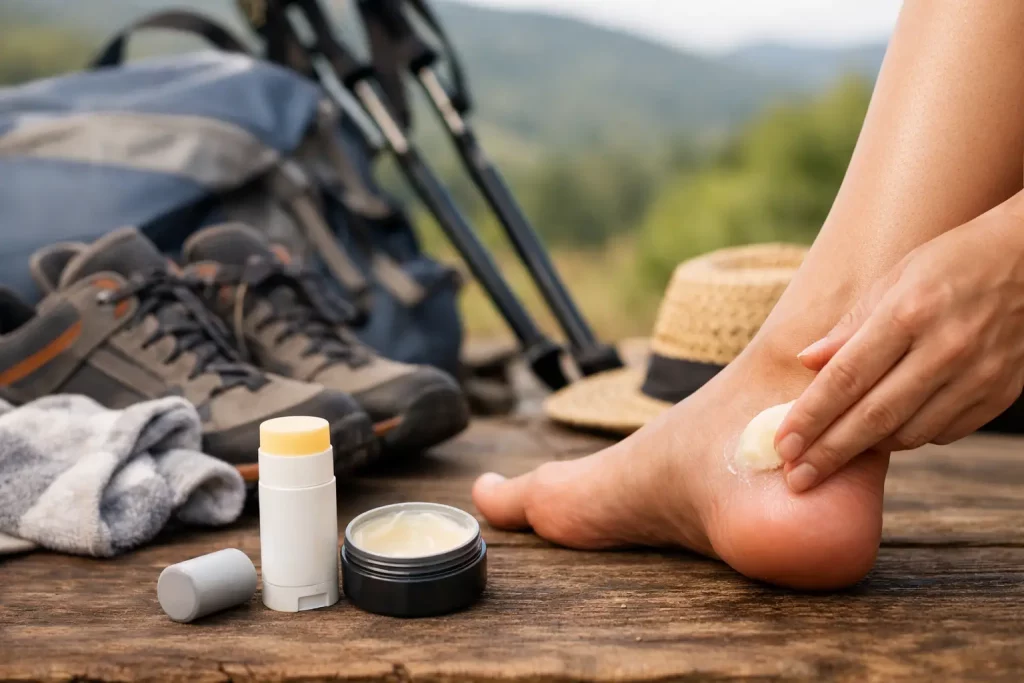
For hiking, longevity matters more. Your feet will face repeated pressure, changing terrain and often more heat build-up over time. In this case, the best foot blister prevention balm is one that can handle extended wear and still feel comfortable several hours in. Reapplication can be useful on multi-hour outings, especially in hot weather or after stream crossings.
Gym sessions and indoor training
In the gym, blister issues often show up during treadmill work, rowing, classes with repeated foot movement, or training in less structured footwear. Here, convenience is king. A balm stick you can swipe on in seconds before training is more likely to become part of your routine.
Travel and everyday wear
Not all blisters come from sport. New shoes, sandals, work footwear and long city walks can be just as punishing. For everyday use, the best product is usually the one you can keep in a handbag, gym bag or suitcase without any fuss.
Ingredients and texture – what to look for
You do not need a chemistry lesson to choose well, but a few details are worth noticing.
First, texture matters as much as ingredients. A balm should glide on smoothly and feel comfortable on the skin, not tacky or runny. Second, look for formulas designed specifically for friction reduction rather than heavy moisturising alone. Softening the skin can help, but if the product leaves too much oily residue, it may not perform well during movement.
Many active people also prefer formulas without petroleum or heavy oils because they feel cleaner and more wearable inside socks and shoes. That is one reason stick balms with a light, practical finish tend to be popular. They are made for movement rather than just skincare.
If you have sensitive skin, patch testing is sensible. Even a high-performing balm is not the right fit if it irritates your skin. Comfort and reliability have to work together.
How to apply blister prevention balm properly
A good product works best when you use it before discomfort starts. Once you feel rubbing, you are already playing catch-up.
Apply the balm directly to known hot spots before putting on socks and shoes. For most people, that means the back of the heel, the sides of the toes, the ball of the foot or the arch. Use enough to create a smooth layer, but do not overdo it. More is not always better.
Clean, dry skin is the ideal starting point. If your feet are damp before you begin, the balm may not settle as evenly. Pair it with moisture-wicking socks and footwear that fits properly. Even the best balm cannot fully compensate for shoes that are too loose, too tight or rubbing in all the wrong places.
For longer sessions, it can help to carry your balm and reapply if you know you are prone to blisters. That is especially true during hot weather, travel days and endurance events.
When a balm will help – and when it will not
This is where a bit of honesty matters. A blister prevention balm can make a huge difference, but it is not magic.
If your shoe fit is badly off, your socks hold sweat, or you are breaking in stiff footwear on a very long day, a balm will help but may not solve everything on its own. Think of it as part of a better system, not a licence to ignore obvious friction problems.
On the other hand, if your footwear is mostly right and you just get repeat hot spots in a few predictable places, a balm can be a game changer. That is often the sweet spot – taking a manageable problem and stopping it before it ruins your session.
For active people who want something simple, portable and easy to repeat, products built specifically for anti-blister use usually make the most sense. That is the value of a focused solution such as the anti-blister sticks from RG at https://www.runglide.com – they are made for movement, not for sitting in a bathroom cabinet waiting for a skincare moment.
The real test of the best foot blister prevention balm
The best product is not the one with the fanciest promise. It is the one you trust enough to use before the miles add up. It should fit into your routine, feel good on your skin and keep friction from taking over your day.
If a balm helps you finish the walk, keep the pace, enjoy the trip or train again tomorrow without that familiar sting, it is doing exactly what it should. Your feet do a lot for you. Giving them a bit of friction defence before you head out is one of the easiest wins going.
The next time you feel that first warning rub, do not wait for it to become a blister. A small habit before you move can be the difference between cutting the day short and carrying on comfortably.
