
Uncategorized
Best Anti Chafe Stick for Cycling
Mar
The ride can be going perfectly until one small hotspot starts demanding all your attention. A rubbing seam, damp shorts, or that familiar sting where skin keeps meeting skin can turn a strong session into a countdown to home. That is exactly where an anti chafe stick for cycling earns its place in your kit – not as a luxury, but as one of the simplest ways to stay comfortable and keep moving.
Cyclists tend to think first about the bike fit, the saddle, and the shorts. Fair enough. Those things matter. But friction builds from a mix of pressure, heat, moisture, and repeated movement, and even a well-set-up rider can still get caught out on longer miles, indoor sessions, humid weather, or back-to-back training days.
Why cycling causes chafing so easily
Cycling creates the perfect conditions for irritation. You are repeating the same motion thousands of times, often in close-fitting clothing, with sweat trapped in high-friction areas. That means even minor rubbing can build into a real problem surprisingly quickly.
The most common trouble spots are the inner thighs, groin, under the sports bra band, along bib strap edges, and around areas where seams or hems sit close to moving skin. Some riders also deal with irritation from heart rate straps, waistband pressure, or arm openings during long indoor sessions where sweat has nowhere to go.
It also depends on the ride. A short commute may not be enough to trigger anything. A two-hour turbo session or a long weekend ride in warm conditions is a different story. The longer you stay in the saddle, the more useful prevention becomes.
What an anti chafe stick for cycling actually does
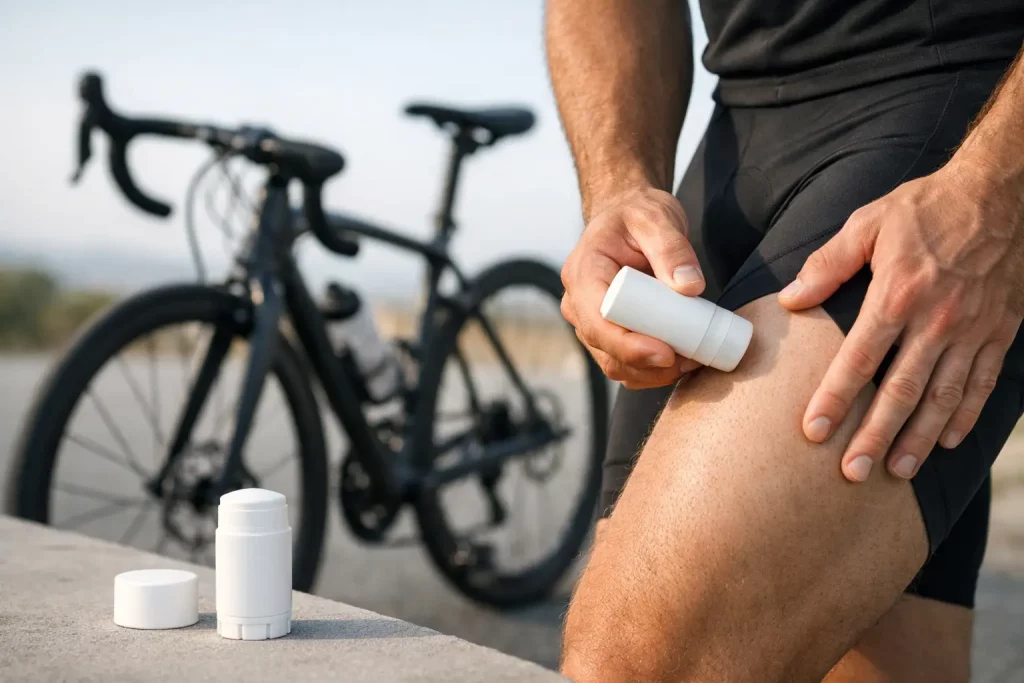
An anti chafe stick for cycling helps reduce the skin-on-skin and skin-on-fabric friction that leads to soreness, redness, and raw patches. The stick format matters because it is quick to apply, easy to target, and far less messy than creams that end up on your hands, clothing, and saddle bag.
A good stick creates a protective glide where you need it most. The aim is not to feel greasy or slippery all over. It is to help the skin move more comfortably under pressure, especially in places where heat and moisture make rubbing worse.
For cyclists, that practicality counts. You want something you can apply before heading out the door, reapply if needed, and carry easily on longer rides or multi-day trips. If it fits into your routine, you are more likely to use it consistently – and consistency is what keeps discomfort from cutting rides short.
Where to apply it before a ride
This is where a lot of riders either overdo it or miss the key areas entirely. You do not need to coat half your body. You need to apply it where friction is most likely.
For many cyclists, that means the inner thighs and groin crease first. If your shorts tend to rub at the leg opening, apply there too. Women may also want protection around the bra line or where a sports bra band sits during long efforts. Anyone riding indoors may need a bit more coverage because sweat tends to build faster without cooling airflow.
The best approach is simple: think about where you usually get a hotspot, or where clothing leaves a mark after a ride. That is often your clue. Apply to clean, dry skin before getting dressed so the product sits where it is meant to work.
There is a trade-off here. Too little and you may miss the problem area. Too much and you can feel overly coated, which some riders dislike. Start with a light, even layer and adjust based on distance, weather, and personal comfort.
What to look for in the best anti chafe stick for cycling
Not every anti-chafe product feels right on the bike. Cycling demands something that can handle heat, movement, and sweat without becoming messy or uncomfortable.
First, look for a stick that goes on cleanly and stays put. You want glide, not a heavy residue. If a product feels oily, it may not suit riders who prefer a clean finish under close-fitting kit.
Second, portability matters more than people think. A compact stick is easier to keep in a gym bag, jersey pocket, or travel wash bag. That is especially useful if you ride to work, train indoors, or head off for weekends away with limited kit space.
Third, pay attention to ingredients and skin feel. If you are using it often, a formula without petroleum or heavy oils can appeal to riders who want friction protection without that thick, greasy sensation. If you have sensitive skin, a simpler formula may also be a better fit.
Finally, think about how often you ride. If you cycle several times a week, daily usability matters. The best product is not the one with the fanciest promise. It is the one you will actually use before every ride that needs it.
Stick versus chamois cream
This is the obvious question, and the honest answer is that it depends on what kind of irritation you are trying to prevent.
Chamois cream is often used inside the shorts or directly around the saddle contact area. Many riders swear by it for long-distance comfort. But some people find it messy, over-applied, or less convenient for quick use. It can also feel like too much for shorter rides, commuting, spin classes, or general friction on the thighs and clothing lines.
A stick is often the easier, cleaner option for external hotspots and everyday use. It is quick, targeted, and portable. For some cyclists, that is enough on its own. For others, especially on very long rides, a stick and a chamois cream may each have a place depending on where the friction happens.
So it is not always a strict either-or. If your issue is rubbing thighs, bra lines, or leg grippers, a stick may be the smarter solution. If you are dealing with deeper saddle-area discomfort on all-day rides, you may prefer to combine strategies.
When a stick helps most
You do not need to wait until summer or an epic sportive to use friction protection. In practice, riders get the biggest benefit in a few familiar situations.
Long rides are an obvious one. More time in motion means more time for friction to build. Indoor cycling is another, because sweat accumulates fast and there is less cooling airflow. New kit can also catch you out – fresh bibs, different seams, or a slightly altered fit can create rubbing where you did not expect it.
It is also a smart move for multi-day riding. Even low-level irritation can compound if you are back in the saddle again the next morning. Preventing that first hotspot is often the difference between feeling strong on day two and riding distracted.
Common mistakes that make chafing worse
The biggest mistake is treating chafing after it starts instead of preventing it. Once skin is already sore, every pedal stroke feels sharper, and even the best product is working uphill.
Another common issue is applying to damp skin. If you have already started sweating heavily, the product may not sit as evenly as it would on clean, dry skin. Leaving application until the last rushed minute is not ideal either.
Then there is the kit problem. No anti-chafe product can fully rescue badly fitting shorts, rough seams, or old bibs that have lost their shape. Friction prevention works best as part of the full comfort setup, not as a fix for gear that no longer fits its job.
Building it into your pre-ride routine
The easiest wins are the ones that become automatic. Keep your anti-chafe stick where you get ready to ride, not buried in a drawer. Apply it at the same point you put on sunscreen, fill your bottles, or check your tyre pressure. That way, it becomes part of the ritual rather than an afterthought.
For riders who train regularly, this matters. Comfort is not a bonus. It is part of consistency. When you remove the distractions that make you cut rides short or dread the next session, you give yourself a better chance of training well and enjoying it.
That is why products like those from RG are built around practical use, easy application, and staying active with less interruption. The goal is simple: more comfort, fewer hotspots, and more freedom to focus on the ride.
Cycling asks a lot from your body, but skin irritation does not have to be part of the deal. A good anti-chafe stick will not make you faster on the climbs, but it can make it much easier to stay comfortable, stay confident, and keep turning the pedals when it counts.
