
Uncategorized
Best Anti Chafe Balm for Walking
Mar
That familiar burn usually starts small – a warm patch on the inner thigh, under the bra line, or around the heel – and by the time you notice it properly, your walk is no longer about fresh air or fitness. It is about getting home without wincing. If you are looking for the best anti chafe balm for walking, the right choice is the one that keeps friction low, stays put as you move, and fits so easily into your routine that you actually use it every time.
Walking may look gentler than running, but it creates the same repeated skin-on-skin and skin-on-fabric rubbing that causes trouble. Long dog walks, lunchtime miles, weekend hikes, warm commutes, sightseeing on holiday, and daily step goals can all leave skin sore. The good news is that a well-made balm can make a real difference before discomfort gets the chance to build.
What makes the best anti chafe balm for walking?
The short answer is simple: protection, comfort, and reliability. A balm for walkers needs to glide on quickly, reduce friction straight away, and keep working once body heat, sweat, and movement kick in.
That sounds obvious, but not every product does it well. Some feel greasy at first and then disappear too fast. Others are thick enough to protect, but leave a sticky layer that feels unpleasant under leggings, shorts, socks, or sports bras. The best anti chafe balm for walking should feel almost unremarkable once applied. You want to forget it is there and remember only that your skin stayed comfortable.
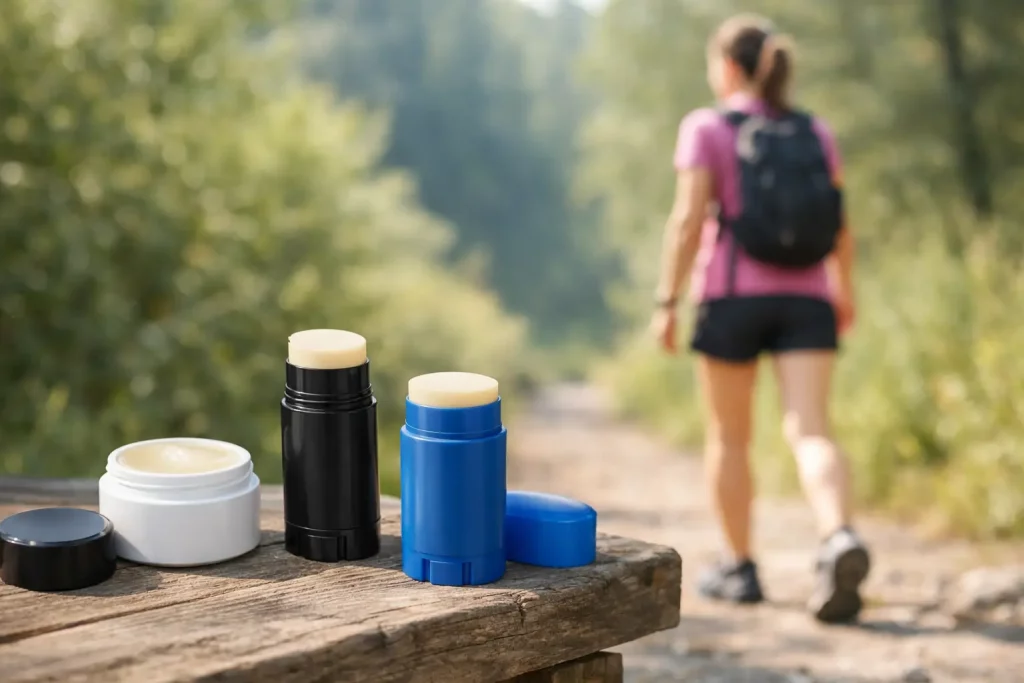
A stick format tends to work especially well for walking because it is clean, quick, and easy to carry. There is no messy squeeze tube in the bottom of your bag and no need to get product on your hands before setting off. If you walk regularly, that convenience matters more than people think. Products that are awkward to apply often end up unused.
Why walking causes chafing more often than people expect
Chafing is all about repetition. One rub does not do much. Thousands do. Walking creates a steady pattern of movement, and that can irritate any area where skin touches skin or fabric shifts back and forth.
For many people, the main hot spots are the inner thighs, groin, underarms, nipples, under the bust, and feet. In warmer weather, sweat increases friction. In colder weather, heavy layers can trap moisture and create rubbing in different places. Even fit, experienced walkers deal with it. Chafing is not a sign that you are doing something wrong. It is just what happens when skin meets repeated movement without enough protection.
Body shape, clothing choice, distance, pace, and weather all play a part. A short walk to the shops may be fine, while a full day on your feet around town can turn into a painful lesson. That is why prevention beats treatment every time.
How to choose the right balm for your walks
The best product for one walker is not always the best for another. It depends on where you chafe, how far you walk, and whether you need all-day coverage or just enough support for a quick daily route.
Start with texture. A good anti-chafe balm should apply smoothly without dragging at the skin. If it feels too hard, it can be annoying to use. If it feels too oily, it may transfer onto clothes or lose staying power. Many walkers prefer balms that strike a middle ground – smooth on application, but dry enough to feel clean.
Next comes staying power. A balm that works for a 20-minute stroll may not hold up on a five-hour ramble, a humid city break, or a hot day on coastal paths. If you are regularly out for long distances, choose a product designed for active use rather than a general beauty balm repurposed for sport.
Ingredients matter too, though mostly in practical terms. Many active people prefer formulas without petroleum or heavy oils because they want a cleaner feel on skin and clothing. If you have sensitive skin, a simpler formula can also be a smart move. The less a product interferes with your walk, the better.
Portability is the final piece. If you are training for a charity walk, commuting on foot, or spending weekends outdoors, a balm that slips into a pocket or small bag makes reapplication easy. That can be the difference between finishing strong and cutting the day short.
The trade-offs to keep in mind
There is no perfect balm for every scenario, and it helps to be honest about that. Some products are brilliant for thighs but less effective on feet. Others are ideal for heels and toes but feel too waxy for larger body areas. If your walking routine mixes pavement miles, hill walks, and travel days, you may value an all-rounder more than a specialist product.
There is also a trade-off between lightweight feel and long wear. Ultra-light formulas can feel lovely at first but may need topping up sooner. Heavier balms may last longer, especially in heat, but can feel more noticeable. The best choice depends on what bothers you more – frequent reapplication or a slightly richer feel.
If you walk in all seasons, expect your needs to shift. Summer usually calls for dependable sweat-resistant protection. Winter often brings friction from seams, thermal layers, and damp fabric. One balm can often cover both, but your application may need to change.
Where to apply anti-chafe balm before walking
Most people wait until they have already felt irritation, but balms work best before friction starts. Apply to any area that regularly rubs, even if it seems fine at the time.
Inner thighs are the classic zone, especially in shorts, skirts, or lightweight trousers. Underarms can flare up with sleeveless tops or backpack straps. Around the bra band or sports bra line is another common trouble spot. For walkers prone to blisters, heels, toes, and the sides of the feet often need attention too.
A light, even layer usually does the job. You do not need to cake it on. The goal is to create a protective glide, not a heavy coating. If you are heading out for a longer walk, reapplying before the first sign of rubbing can save you a lot of grief later.
Clothing still matters – even with the best anti chafe balm for walking
A good balm is powerful, but it is not magic. If your shorts bunch up, your socks slide down, or your top has rough seams in all the wrong places, friction will keep trying to win. The strongest results come from pairing prevention with sensible kit choices.
Look for breathable fabrics that move with you rather than against you. For longer walks, moisture-wicking socks and well-fitted shoes matter just as much as what you put on your skin. If one particular item of clothing always causes problems, believe the pattern. Balm can help, but replacing the culprit may help more.
That said, do not assume expensive gear solves everything. Plenty of walkers chafe in premium kit. The real goal is a system that works for your body, your route, and your conditions.
When a walking balm becomes part of your routine
The best anti-chafe products are often the ones that become automatic. You put them on with the same logic as tying your laces or filling your water bottle. No drama, no guesswork, just one small step that keeps you moving comfortably.
That is where a focused product design helps. A no-fuss stick you can swipe on in seconds stands a much better chance of becoming a habit than anything messy or awkward. For active people who want to walk more, train consistently, or simply enjoy daily movement without irritation, convenience is not a bonus. It is part of performance.
Brands built around friction prevention, such as RG at https://www.runglide.com, understand that comfort is not a luxury. It is what lets you stay out longer, walk farther, and keep your confidence intact when the miles add up.
So what should you actually look for?
If you want a practical answer, choose a balm that is designed for active movement, applies cleanly from a stick, feels comfortable on skin, and holds up through sweat and repeated motion. If it also suits sensitive skin and is easy to carry, even better.
You do not need the fanciest packaging or the longest ingredient list. You need a product that solves the real problem: skin irritation that turns a good walk into an uncomfortable one. Once you find a balm that handles that reliably, everything changes. You stop planning around chafing and start focusing on the walk itself.
Whether you are building up your daily steps, heading off on a walking holiday, or squeezing in miles before work, comfort gives you momentum. And when your skin is protected, it is much easier to keep going when the route gets longer, the weather gets warmer, or the day asks more of you.
