
Uncategorized
Armpit Chafing: How to Stop the Burn and Stay Active

Feb
There’s nothing more frustrating than being in the zone, only to be stopped by the raw, stinging burn under your arms. That painful friction is a performance killer. For too long, armpit chafing has been the unwelcome roadblock that cuts your workouts short and leaves you dealing with an angry, red rash instead of a sense of accomplishment. It’s a common problem, but it doesn’t have to be your reality.
Consider this your complete battle plan for conquering underarm irritation for good. We’re here to empower you with the knowledge to understand exactly what causes it, the best methods to treat it fast, and the pro-level strategies to prevent it from ever sidelining you again. It’s time to stop the burn, protect your skin, and unleash your best performance, completely irritation-free. Let’s get you moving with confidence.
Key Takeaways
- Understand the two key culprits behind underarm irritation to build a smarter defense against the burn.
- Discover immediate first-aid steps to safely soothe painful, raw skin and accelerate your recovery.
- Create your proactive ‘invisible armor’ to stop armpit chafing before it ever impacts your performance.
- Find targeted anti-chafing tips tailored specifically for your sport, whether you’re a runner, lifter, or cyclist.
What Causes Armpit Chafing? The 3 Main Culprits
That raw, stinging sensation under your arms can stop a great workout in its tracks. At its core, armpit chafing is a painful skin irritation caused by a destructive combination of friction and moisture. To understand the basics of what is chafing, think of it as your skin’s defense system being worn down by repetitive rubbing. The underarm area is a perfect storm for this problem: it’s a high-movement zone where skin touches skin and sweat often gets trapped. For athletes, the constant, repetitive motion of running, lifting, or cycling turns this sensitive area into a primary battleground.
Understanding these core issues is the first step to conquering them for good. Let’s break down the enemies you’re up against.
Friction: The Primary Enemy
Friction is the direct physical force that wears down your skin. It’s relentless and comes from multiple sources during any activity. Your goal is to create a barrier against it.
- Skin-on-Skin Contact: The natural swing of your arms creates constant rubbing between the skin of your inner arm and your torso.
- Fabric-on-Skin Abrasion: Rough materials, prominent seams, or even tags on your workout gear can act like sandpaper against your skin with every move.
- Improper Fit: Clothing that is too tight constricts movement and digs into the skin, while tops that are too loose can bunch up and create new friction points.
Moisture: Friction’s Destructive Partner
Sweat isn’t just water; it’s a catalyst that makes friction far more damaging. While a good sweat session is a sign of hard work, it also makes your skin incredibly vulnerable. Moisture softens the outer layer of your skin, making it fragile and easier to tear. It also increases the “drag” between surfaces, turning a simple glide into a grinding halt. As sweat dries, the salt crystals left behind create a gritty, abrasive surface that intensifies irritation with every movement.
Other Common Triggers
While friction and moisture are the main culprits, a few other factors can set the stage for painful armpit chafing or make an existing problem worse.
- Sensitive Skin: The skin is often extra sensitive and prone to irritation immediately after shaving or waxing. To help minimize this, it’s worth it to check out Reset Razor for high-quality, reusable razors that can reduce drag and irritation.
- Irritating Ingredients: Some deodorants and antiperspirants contain alcohol, fragrances, or other chemicals that can irritate the skin and compromise its natural barrier.
- Heat and Humidity: These environmental conditions increase sweating and create the ideal warm, damp environment for chafing to thrive.
Immediate Relief: How to Treat Sore, Chafed Underarms
The burn is real. You’ve pushed your limits, but now your skin is paying the price. When you’re dealing with the sting of raw, irritated underarms, your immediate goal is to calm the fire and start the healing process. Gentle care is your secret weapon here, as harsh treatment can worsen the damage and invite infection. Top health experts, like the Cleveland Clinic, offer clear guidelines on how to treat chafed underarms to ensure you recover quickly and safely. Follow these steps to get back on track.
Step 1: Cleanse the Area Gently
First, you need to clean the area without causing more pain. This removes sweat, bacteria, and irritants that can delay healing. Remember, the goal is to soothe, not scrub. Your skin is compromised, so treat it with care.
- Use lukewarm water. Hot water will only intensify the stinging sensation.
- Wash with a mild, fragrance-free soap. Choose an antibacterial formula if the skin is broken.
- Pat, don’t rub. Use a soft, clean towel to gently pat the area dry. Rubbing will create more friction and pain.
Step 2: Soothe and Protect the Skin
Once clean and dry, the next step is to create a protective barrier that allows your skin to rebuild. Applying a gentle balm or ointment is crucial for reducing friction and locking in moisture. This is your skin’s first line of defense as it repairs itself. Look for products with natural, calming ingredients like aloe vera, calendula, or shea butter. Whenever possible, allow the area to air out to promote a faster healing environment.
Step 3: Know When to Rest
Even the most dedicated athletes know that recovery is a vital part of performance. Pushing through severe armpit chafing will only lead to a longer, more painful setback. Give your skin the break it needs to heal completely. Wear loose-fitting, soft clothing made from natural fibers like cotton to minimize contact and friction. Pay close attention to the area and watch for any signs of infection, such as pus, foul odor, or increased swelling. If you notice these symptoms, see a doctor right away.
Once you’re fully healed, the focus shifts. The ultimate goal isn’t just treating the damage-it’s preventing it from ever sidelining you again.
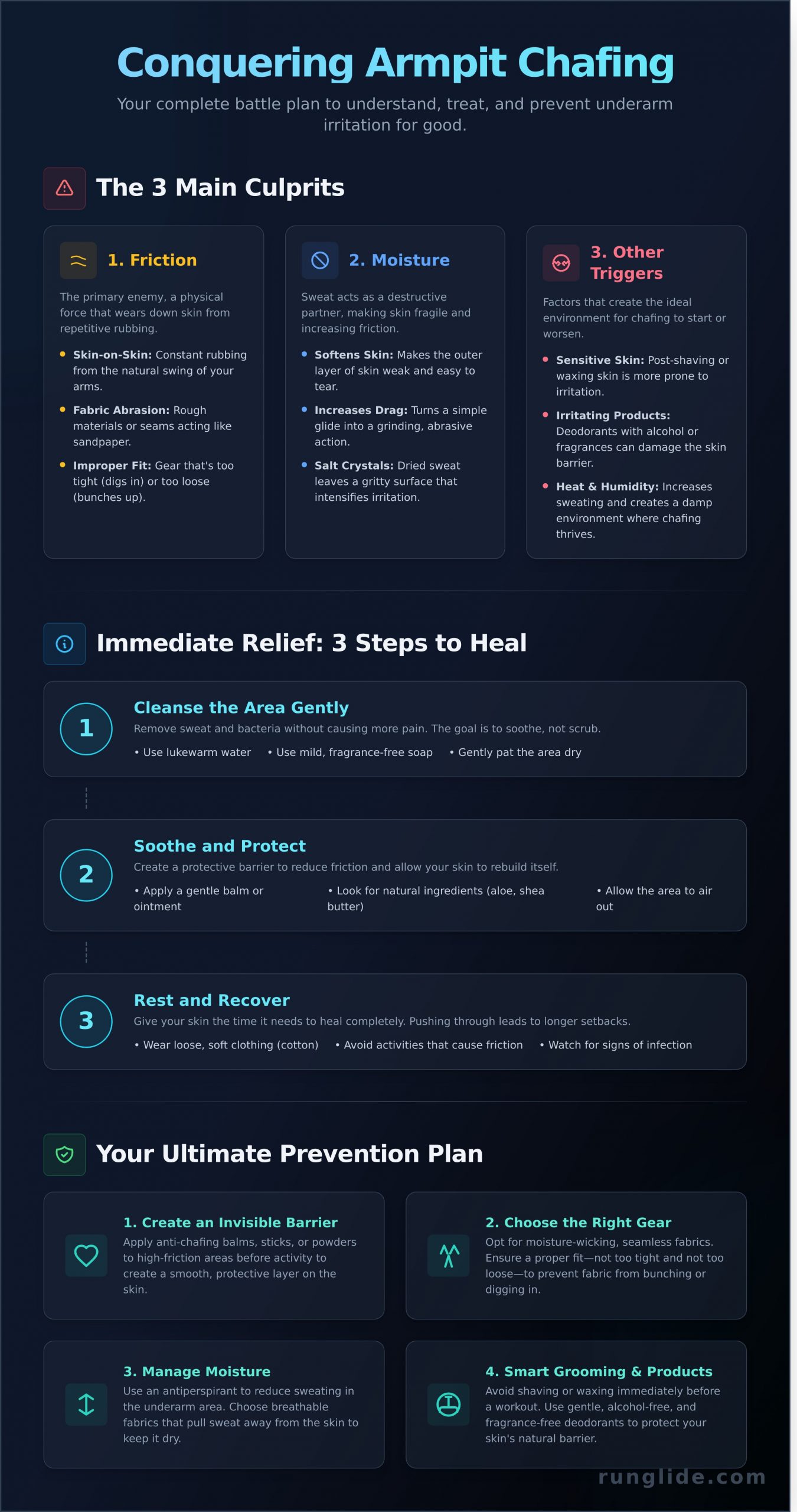
Your Ultimate Prevention Plan: Stop Armpit Chafing Before It Starts
True performance isn’t just about pushing your limits-it’s about smart preparation. Instead of reacting to the painful sting of chafing, the elite athlete takes control. This is your proactive strategy to build invisible armor for your skin, ensuring that irritation from armpit chafing never sidelines you again. A multi-layered approach combining the right gear, powerful products, and consistent habits is your key to conquering every workout, chafe-free.
Choose the Right Gear: Fabrics and Fit Are Crucial
Your first line of defense is what you wear. The wrong fabric can sabotage your performance by trapping moisture and creating friction. To protect your skin, focus on gear that works with you, not against you. Always prioritize:
- Moisture-Wicking Fabrics: Choose synthetics like polyester and nylon or natural performers like merino wool. These materials pull sweat away from your skin, keeping you dry. Cotton is the enemy-it absorbs moisture and becomes a heavy, abrasive source of irritation.
- Smarter Seams: Look for tops with flatlock seams or, even better, seamless construction. This eliminates raised edges that can dig into and rub against your skin.
- The Perfect Fit: Your top shouldn’t be excessively tight, which can constrict movement and increase pressure. It also shouldn’t be too baggy, as loose fabric can bunch up and cause friction.
When off-the-rack options don’t meet your needs for fabric and fit, custom apparel can be the solution. For high-performance gear tailored to your specifications, you can discover RAW Merch.
Create a Protective Barrier: Your Secret Weapon
The single most effective tool in your anti-chafing arsenal is a high-performance balm. A quality anti-chafe balm creates a smooth, invisible barrier on the skin, allowing surfaces to glide past each other without friction. Unlike basic lotions, a purpose-built balm is sweat- and water-resistant, giving you durable protection that lasts through your longest, toughest sessions. It’s the ultimate skin armor. Arm yourself with the best defense. Explore the RG Anti Chafe Balm in our shop.
Master Your Pre- and Post-Workout Routine
Great gear and a great balm are essential, but locking in protection requires a solid routine. Integrate these simple habits to keep your underarm skin healthy, resilient, and ready for anything.
- Pre-Workout: Always apply your anti-chafe balm to clean, dry skin before you get dressed. This ensures it bonds effectively for maximum protection.
- Post-Workout: Shower as soon as you can. Rinsing away sweat and salt buildup prevents bacteria and stops irritants from sitting on your skin.
- On Rest Days: Keep your underarm skin hydrated with a gentle, non-irritating moisturizer. Healthy skin is stronger and less prone to damage.
Targeted Anti-Chafing Tips for Your Sport
Chafing isn’t a one-size-fits-all problem. The unique movements of your sport create different friction points. Conquering irritation starts with understanding your specific battlefield. Your activity dictates your strategy, and the right protection is your secret weapon for performance.
Here’s how to build your defense and prevent painful armpit chafing, no matter how you move.
For Runners and Hikers
The relentless arm swing of a long run or hike is a perfect storm for irritation. Add the rubbing from hydration pack straps, and you have a recipe for raw, painful skin. While sleeveless tops offer freedom, they increase skin-on-skin contact. Short sleeves can introduce friction from seams. Your best defense is a proactive barrier. Apply balm not just in the armpit fold, but along any line where a strap or seam makes contact. A reliable balm is non-negotiable for long distances. Find your running partner: RG Anti Chafe Balm.
For Weightlifters and CrossFitters
Repetitive overhead movements-like presses, snatches, and pull-ups-repeatedly compress and stretch the skin in your underarms. This intense, focused friction can quickly lead to soreness. The cut of your tank top matters; a standard cut may bunch up, while a stringer exposes more skin to potential rubbing against barbells or kettlebells. Apply your anti-chafe armor to the entire area to ensure smooth, pain-free reps and protect your skin from equipment contact.
For Cyclists and Rowers
Your torso may be stable, but your arms are in constant motion. A cyclist’s forward-leaning posture can close the gap in the underarm, trapping sweat and increasing friction. For rowers, the reach-and-pull motion creates a consistent rubbing cycle. The key here is fit and fabric. A seamless, moisture-wicking jersey or top that fits like a second skin is essential to reduce fabric bunching. This minimizes a major cause of underarm irritation, letting you focus on your power and rhythm.
Debunking Common Myths About Underarm Chafing
When you’re dealing with painful underarm irritation, you want relief-fast. But bad advice and ineffective home remedies can make the burn even worse. It’s time to cut through the noise and separate fact from fiction. Understanding the truth is your first step toward conquering chafing for good.
Let’s debunk the most common myths so you can avoid mistakes and protect your skin effectively.
Myth: Deodorant Is Enough to Stop Chafing
Fact: Deodorant is engineered to fight odor and sweat, not friction. While antiperspirants can help keep the area dry, they don’t provide the necessary glide to prevent skin from rubbing raw. Worse, many deodorants contain alcohol and fragrances that can severely sting and inflame already sensitive skin, adding fuel to the fire. A dedicated anti-chafe balm is your true secret weapon, creating a protective barrier specifically designed to stop friction before it starts.
Myth: Baby Powder Is a Great Natural Solution
Fact: This is a classic mistake that often makes armpit chafing worse. Powder works by absorbing moisture, but only for a short time. As soon as you start sweating, the powder clumps together, forming a gritty, abrasive paste. This paste actually increases friction and intensifies the irritation. For lasting protection, you need a solution that repels moisture and provides a durable, smooth surface that won’t wash away with sweat.
Myth: Chafing Only Affects Overweight Individuals
Fact: This myth is completely false and contributes to a negative stigma. Chafing is caused by friction from repetitive motion, period. It affects athletes and active people of every body type. Runners, lifters, and hikers are all prime candidates for underarm chafing due to constant arm swings. The cause is movement, not weight. Embracing this fact helps everyone find the freedom to move without pain or judgment.
Don’t let misinformation sideline you. The right solution acts like invisible armor, giving you the confidence to push your limits. To truly prevent armpit chafing, equip yourself with a product built for performance and protection. Find your freedom to move at runglide.com.
Conquer Chafing and Reclaim Your Movement
You now hold the playbook for defeating friction. From understanding the causes to mastering prevention, you’re equipped to stop the burn before it starts. The best defense is a proactive one: choosing the right gear, managing moisture, and creating a reliable barrier are your keys to staying in the game. You no longer have to let painful armpit chafing cut your activities short.
Now, it’s time to add the ultimate armor to your arsenal. RG Anti Chafe Balm is the secret weapon trusted by athletes worldwide. Its powerful, sweat and water-resistant formula provides long-lasting, invisible protection that moves with you. Made with natural, non-greasy, and skin-friendly ingredients, it’s the reliable defense your skin deserves, letting you focus purely on your performance.
Don’t let chafing dictate your workout. Arm yourself with RG Anti Chafe Balm and shop now to reclaim your freedom. Push your limits, surpass your goals, and embrace the power of chafe-free movement. Your next personal best is waiting.
Frequently Asked Questions
How long does it take for armpit chafing to heal?
Minor chafing typically heals within two to three days with proper care. Your mission is to keep the area clean, dry, and protected from more friction. For more severe irritation, give your skin a week or more to fully recover. Focus on gentle cleansing and letting the skin breathe. Once healed, arm yourself with a quality anti-chafe balm to prevent future flare-ups. This lets you get back to conquering your goals without painful distractions.
Is it okay to work out if my armpits are already chafed?
Pushing through pain is one thing, but training with chafed skin is another. It’s best to rest the area to allow it to heal properly. Continuing to work out will only increase friction and sweat, making the irritation worse and delaying your recovery. Consider switching to exercises that don’t involve repetitive arm movements, like cycling or leg-focused strength training. Let your skin recover so you can come back stronger and ready to perform at your peak.
What is the difference between armpit chafing and a heat rash?
Think of it as friction versus blockage. Chafing is a mechanical injury caused by skin rubbing against skin or fabric, resulting in a raw, scraped-looking rash. A heat rash, on the other hand, occurs when sweat ducts get blocked, trapping perspiration under the skin. This creates clusters of small, itchy red bumps or tiny blisters. While both are uncomfortable, their causes are fundamentally different, and they require different approaches for relief and prevention.
Why does one of my armpits chafe but not the other one?
This is more common than you think and usually comes down to asymmetry. Your dominant arm may move differently or more vigorously during an activity, creating extra friction. It could also be a subtle difference in your anatomy or the way your shirt fits on one side. This targeted armpit chafing highlights the need for consistent protection on both sides, even if only one is currently irritated. Create an even field of play with a reliable barrier balm.
Should I put deodorant or antiperspirant on already chafed skin?
No, you should avoid applying deodorant or antiperspirant directly onto broken, chafed skin. The ingredients, especially alcohol, fragrances, and aluminum salts, can cause significant stinging and further irritation. Applying them can also trap bacteria and block the skin from breathing, which slows down the healing process. Wait until the skin is fully healed before resuming use. In the meantime, focus on keeping the area clean and dry to support a swift recovery.
How do I get rid of dark skin in my armpits caused by chafing?
The dark skin is post-inflammatory hyperpigmentation, your body’s response to irritation. The first and most critical step is to stop the friction. Use a reliable anti-chafe balm as your daily armor to prevent recurrence. The discoloration will naturally fade over time, but you can support the process with gentle exfoliation. Avoid harsh scrubs, as they can cause more irritation. Your primary weapon here is consistent prevention to keep skin calm and clear.
