
Uncategorized
Anti Chafe Balm for Women Runners: What Works
Mar
A run can feel brilliant right up until your skin starts to rub. One hot spot at the inner thighs, under the sports bra, or along the waistband can turn an easy 5K into a miserable finish. That is why finding the right anti chafe balm for women runners matters – not as a nice extra, but as part of a routine that keeps you moving comfortably and confidently.
For women, chafing is rarely just about distance. It can show up on a quick lunchtime jog, a long training run, or a humid holiday walk when your kit, your stride, and the weather all team up against your skin. The good news is that prevention is simple when you know what to use, where to apply it, and when to top it up.
Why women runners deal with chafing differently
Running is repetitive by nature. Thousands of steps mean thousands of chances for skin, seams, and fabric to create friction. Women runners often deal with a few especially common pressure points – inner thighs, underarms, sports bra lines, nipples, waistband edges, and sometimes the upper glutes where shorts or leggings shift.
Body shape plays a role, but so do sweat, heat, pace, and clothing choice. A pair of shorts that feels fine for 20 minutes can become a problem after an hour. A sports bra that fits well in cool weather can start rubbing badly in summer. Even small changes in training can trigger it. More hills, longer runs, or a new laundry detergent that leaves fabric stiffer than usual can all add up.
That is why the best approach is preventative, not reactive. Once skin is already irritated, every step feels worse. A good balm helps reduce the friction before it starts.
What to look for in an anti chafe balm for women runners
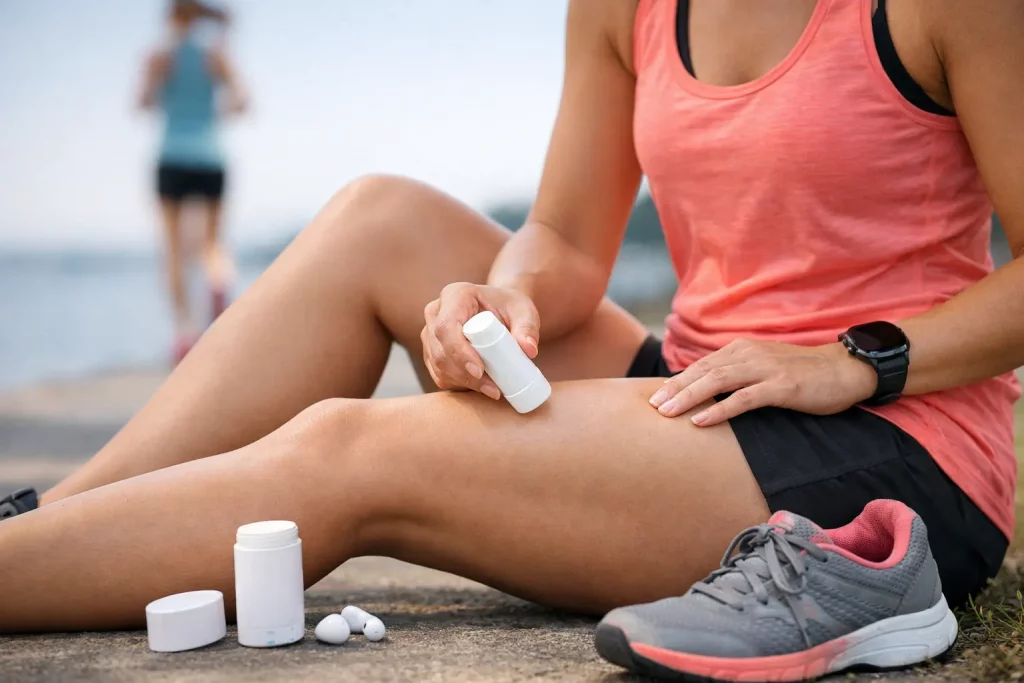
The best anti chafe balm for women runners should be easy to apply, easy to carry, and reliable once you are on the move. If it feels messy, greasy, or awkward to use, it tends to get left in the bag. A stick format is popular for a reason – quick swipe, no fuss, no need to get product all over your hands before heading out the door.
A good formula should create a smooth barrier on the skin without feeling heavy. That matters for runners because anything too thick can feel uncomfortable in heat, while anything too light may not last long enough. You want glide, but you also want staying power.
Ingredients matter too. Many runners prefer options that avoid petroleum and heavy oils, especially if they are applying the balm daily or to more sensitive areas. Cruelty-free and skin-friendly formulas can give extra peace of mind, particularly if your skin reacts easily after sweating.
There is also the question of where you run. If you are training through warm weather, high humidity, or long sessions, durability becomes more important. For shorter runs in mild conditions, almost any decent balm might do the job. For race day or marathon training, you need something you trust not to quit halfway through.
Where to apply anti chafe balm before a run
Most runners think of inner thighs first, and for good reason. It is one of the most common problem areas. But chafing often appears in places people forget until it is too late.
Apply balm anywhere skin rubs against skin or clothing. That usually includes the inner thighs, along the bra band, under the arms, around the waistband line, and anywhere seams tend to catch. If you know you are prone to irritation on the feet or toes, an anti-blister product may be worth using there too, especially for longer distances.
The key is not to wait for a warning sign. If an area usually becomes irritated by halfway through a run, apply balm before you leave. Prevention works best when it is part of the routine, just like tying your laces or checking your watch.
How much to use and when to reapply
You do not need to plaster it on. A few even swipes over each high-friction area is usually enough. The goal is a smooth, consistent layer, not a thick coating.
That said, more demanding conditions may call for more product. Long runs, races, trail sessions, and hot weather can all increase friction. If you are out for hours, especially in summer, carrying a small stick for reapplication can make a real difference. Portability matters here. If it fits neatly in a pocket, running belt, or kit bag, you are much more likely to use it when needed.
There is an element of trial and error. Some runners need just one application for a 10K. Others prefer to reapply before a warm-up and again before the start of a race. Your skin, your pace, and your gear all affect how long the protection lasts.
Balm versus powders, creams, and DIY fixes
Plenty of runners have tried talc, body lotion, deodorant, or random creams from the bathroom cabinet. Sometimes they work for a short walk. Often they fail when the pace picks up or the sweating starts.
Powders can help absorb moisture, but they do not always provide lasting glide. Creams may feel soothing at first, yet some absorb too quickly or leave a residue that does not hold up during a run. DIY tricks can be hit and miss, and race day is not the moment to gamble on a workaround.
A purpose-made balm is usually the most dependable option because it is designed specifically for friction. It is made to stay where you put it and help skin move more comfortably against skin or fabric. That focused performance is what makes the difference when the miles build up.
Clothing still matters – even with the best balm
A good balm can do a lot, but it is not there to rescue badly fitting kit every single time. If your shorts ride up constantly or your bra seam is already digging in before you leave the house, friction will still be harder to manage.
Think of balm and clothing as a team. Seam placement, fabric softness, fit, and moisture management all affect the result. Some women prefer longer shorts to reduce thigh contact. Others do better in leggings for steady support. In summer, lighter fabrics can help, but only if they do not shift too much as you run.
If one area keeps flaring up, look at both the product and the clothing. Sometimes the fix is as simple as changing a pair of shorts. Other times your kit is fine, and you just need more consistent protection on the skin.
When skin is already sore
If you are already chafed, the first job is to let the skin calm down. Clean the area gently, keep it dry, and avoid more rubbing if you can. Going straight back into the same clothing and conditions usually makes things worse.
Once the skin has settled, that is your cue to change the routine. Work out what caused the problem – heat, distance, fit, or forgetting to apply protection – and address it before the next session. A preventative product earns its place when it stops the cycle repeating.
Choosing a balm you will actually use
The best product is the one that fits your real routine. If you run before work, it needs to be quick. If you travel often, it needs to be compact. If you train most days, it needs to feel comfortable enough for regular use.
That is where a simple stick format stands out. It is practical, tidy, and easy to keep in your gym bag or race kit. For women runners who want reliable friction protection without the mess, that convenience is not a small detail. It is often the reason prevention becomes consistent.
If you are comparing options, look for a formula built for movement, a texture that does not feel greasy, and claims that match what runners actually need – comfort, staying power, and freedom to focus on the run instead of your skin. Brands such as RunGlyde have built their range around exactly that kind of use: helping active people stay comfortable for longer without overcomplicating the solution.
Running asks a lot from your body, but skin irritation does not have to be part of the deal. A reliable anti-chafe routine gives you one less thing to think about, which is exactly the point. When your skin stays comfortable, you can settle into your stride, trust your kit, and keep going where you want to go.
