
Uncategorized
Chafing: What It Is, Why It Happens, and How to Stop It for Good

Mar
You’re hitting your stride, ready to conquer the next mile, when the raw, stinging sensation of chafing forces you to stop. It’s more than just an annoyance; it’s the painful barrier standing between you and your personal best, leaving you with irritated skin and cutting your workouts short. You deserve to move without pain holding you back, and you shouldn’t have to guess which clothes or products will actually work.
Consider this your new game plan. We’re breaking down the science behind why chafing happens, from the role of moisture to the friction from your gear. More importantly, we’re arming you with the proven, athlete-focused strategies to prevent it for good. Get ready to find your secret weapon against friction and embrace the freedom of a completely pain-free performance. It’s time to unleash your potential.
Key Takeaways
- Uncover why most common household remedies fail to stop painful chafing and can even make irritation worse.
- Master a simple, 3-tier prevention strategy used by elite athletes to stay completely irritation-free.
- Get a clear framework for choosing a protective barrier that is based on performance, not just hype.
- Learn how to turn friction from a performance-killer into a complete non-issue during any activity.
What Is Chafing and Why Does It Derail Your Performance?
That raw, burning sensation that stops you in your tracks? That’s chafing. It’s more than just a minor rash-it’s a painful performance barrier standing between you and your personal best. When your focus should be on your pace, your form, or the finish line, this relentless irritation steals your mental energy and forces you to slow down or stop completely. It’s the unseen enemy that compromises your focus and halts your progress, turning a triumphant marathon into a torturous walk.
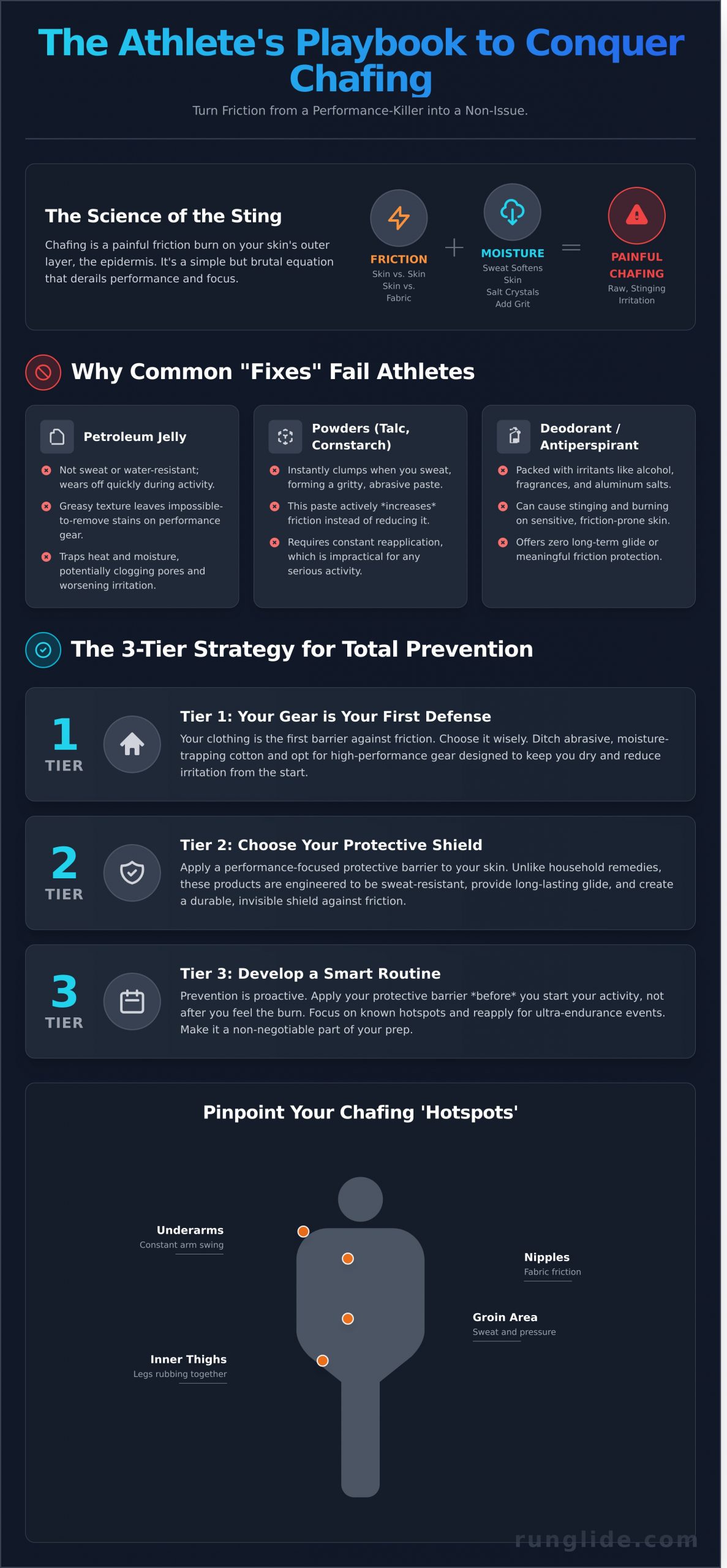
Moisture is friction’s ultimate partner in crime. Sweat doesn’t just cool you down; it dramatically softens your skin, making it far more vulnerable to damage. As that sweat evaporates, it leaves behind gritty salt crystals that intensify the rubbing effect, turning a simple workout into a painful battle against your own body and gear.
The Science of Friction: Skin vs. Skin and Skin vs. Fabric
Every stride you run and every pedal you push creates friction. This repetitive motion causes skin to rub against skin or against fabric. Ill-fitting clothes, rough seams, and materials that trap moisture (like cotton) act like sandpaper against your body. In simple terms, chafing is a friction burn of the epidermis worsened by moisture. For a more detailed breakdown of what is chafing and its medical context, this resource provides an excellent overview.
Identifying Your Chafing ‘Hotspots’
Every athlete has their own unique friction zones. Pinpointing your hotspots is the first step to conquering them for good. This isn’t a sign of weakness; it’s a common challenge for active people of all shapes and sizes. Where do you feel the burn?
- Inner Thighs: A classic hotspot for runners and walkers where legs rub together with every step.
- Underarms: Caused by the constant arm swing during high-intensity activities.
- Groin Area: Common for cyclists due to the combination of sweat, pressure, and fabric friction.
- Nipples: A well-known issue for long-distance runners, especially when wearing loose or wet shirts.
The Truth About Common Remedies: Why Old-School Fixes Fail
When that first sting of irritation hits, your first instinct is to raid the medicine cabinet. We get it. You want a quick fix to stop the burn and get back to your life. But the truth is, these household staples were never designed to withstand the heat, sweat, and endurance of your active life. For truly effective strategies in preventing chafing, you need a solution built for performance, not a temporary patch.
Before you reach for that old-school fix, understand why it’s destined to fail you when it matters most.
Petroleum Jelly and Lotions: A Greasy, Short-Term Fix
Sure, petroleum jelly feels slick at first. But this greasy solution is your performance gear’s worst enemy, leaving oily stains that are nearly impossible to remove. Worse, it’s not sweat- or water-resistant. It breaks down and wears off quickly, leaving you unprotected mid-run or mid-hike. By trapping heat and moisture against your skin, it can even clog pores and worsen irritation over time.
Powders (Talc & Cornstarch): The Moisture Magnet Problem
Powders seem like a logical choice. They absorb moisture and feel dry on application, offering a moment of relief. But the moment you start sweating, that advantage disappears. The powder becomes saturated, clumping into a gritty, abrasive paste. Instead of reducing friction, this paste actively increases it, turning a minor annoyance into raw, painful chafing. They require constant reapplication, which is simply not practical for any serious activity.
Deodorant and Antiperspirant: Not Designed for This
This is a popular “hack” you’ll see online, but it’s a recipe for disaster. Deodorants and antiperspirants are packed with fragrances, alcohol, and aluminum salts-ingredients designed to stop odor and block sweat ducts. Applying these to sensitive, friction-prone skin can cause stinging, burning, and further irritation. Their job is not to provide a protective barrier against friction, and they fail miserably at it, offering zero long-term glide or protection.
The Athlete’s 3-Tier Strategy for Total Chafing Prevention
Winning the battle against chafing isn’t about treating the burn after it happens. It’s about building a proactive defense so it never starts. True freedom in movement comes from a smart, multi-layered strategy that protects your skin from every angle. Embrace this simple, 3-tier framework to conquer irritation and unleash your peak performance.
Tier 1: Your Gear is Your First Line of Defence
Your clothing is the first barrier between your skin and friction. Choose it wisely. Ditch cotton, which traps moisture and becomes abrasive when wet. Instead, opt for high-performance gear made from seamless, moisture-wicking synthetic fabrics. These materials pull sweat away from your skin, keeping you dry and reducing the risk of irritation. The right fit is also crucial: avoid clothing that is loose enough to bunch up and create new friction points, or so tight that it digs into your skin. Compression shorts and form-fitting athletic tops are excellent choices, as they stay in place and create a smooth, protective layer.
Tier 2: Hydration and Skin Health
Your defense against skin irritation starts from within. Proper hydration is non-negotiable. When you’re well-hydrated, the salt concentration in your sweat is lower. Less salt means less of the gritty, crystal-like residue that can act like sandpaper on your skin. Beyond hydration, focus on overall skin health. As noted in a comprehensive overview from the Cleveland Clinic on Chafing, healthy skin is more resilient. Keep your skin clean and gently moisturized when you’re not training to maintain its natural strength and suppleness, making it less prone to breaking down under stress.
Beyond physical preparation, many athletes also cultivate mental and spiritual resilience to power through challenges. For those who draw strength from personal reflection and faith, you can learn more about {OOAB} Only One Afi Blog.
Tier 3: Create an Invisible, Protective Shield
Even with the best gear and perfect hydration, high-friction areas need a final, direct line of defense. This is where a topical barrier becomes your secret weapon. Think of it as invisible armor for your skin. Applying a high-quality anti-chafe balm creates a durable, slick surface that allows skin to glide smoothly past skin, or fabric to glide smoothly over skin. This shield doesn’t just reduce friction-it prevents it from ever starting. It’s the ultimate step in ensuring every stride, lift, or movement is powerful and pain-free, setting the stage for total protection.
Choosing Your Shield: A Head-to-Head of Protective Barriers
When you’re pushing your limits, your gear can’t fail you-and that includes your protection against friction. Choosing the right anti-chafe product is like choosing your armor. While powders, creams, and balms all promise relief, only one truly stands up to the demands of an athlete. Let’s compare your options to find the ultimate secret weapon.
Effectiveness & Durability
Your shield needs to last as long as you do. Powders absorb moisture initially but quickly turn into a useless paste with sweat. Creams offer lubrication, but most are water-based and wash away, leaving you vulnerable mid-workout. A high-performance balm stick is different. It creates a robust, breathable barrier that isn’t water-soluble. It glides on and stays put, delivering durable protection that won’t sweat off, no matter how long you go.
Application & Feel
Performance requires focus, not distraction. The last thing you need is a messy, greasy application process. Powders get everywhere, leaving a dusty residue on you and your clothes. Creams often feel sticky or oily and require you to use your hands, leaving a film that’s hard to wash off. In contrast, a balm stick offers a clean, targeted application. Just swipe it on directly where you need it-no mess, no greasy hands, just an invisible, comfortable layer of chafe-free confidence.
Ingredients & Skin Safety
What you put on your body matters. Your skin deserves ingredients that protect and nourish, not irritate. Many products rely on pore-clogging petroleum, parabens, or harsh artificial fragrances. For reliable protection against chafing, look for formulas built on a foundation of skin-safe, natural ingredients.
Many athletes are also exploring the benefits of plant-based ingredients for skin recovery and wellness. For those interested in this approach, the CBD Health Collection offers products formulated with this philosophy in mind.
- What to Look For: Natural waxes (like Candelilla Wax), and skin-soothing vitamins like Vitamin A & E.
- What to Avoid: Petroleum, parabens, phthalates, and strong artificial fragrances.
True performance comes from ingredients that work with your body. See what goes into a high-performance anti-chafe balm designed to keep you moving in complete comfort.
Runglide: Your Secret Weapon for Chafe-Free Performance
You’ve chosen the right gear and optimized your hydration, but for true peak performance, you need an elite level of protection. This is where you deploy your secret weapon. Runglide isn’t just another balm; it’s your invisible armor, a powerful barrier that lets you push your limits without the painful distraction of friction.
We designed Runglide to be the definitive solution for athletes who refuse to be held back. It empowers you to focus on your goals, not the burn. Its strength lies in its unique, performance-focused formula:
- Long-Lasting Protection: One application provides hours of reliable defense against friction.
- Sweat & Water-Resistant: Performs flawlessly through intense workouts, long races, and even in the rain.
- Non-Greasy & Clean: Glides on smooth without a sticky or oily residue, keeping you and your gear clean.
- Natural Ingredients: Made with skin-friendly, plant-derived ingredients. No petroleum, no parabens, no compromises.
Engineered for Athletes, Not Just Daily Comfort
Standard anti-chafing products can fail under pressure. Runglide was forged in the world of endurance sports, specifically engineered to withstand hours of intense, repetitive motion. Whether you’re a marathon runner, a long-distance cyclist, or a mountain hiker, its robust formula provides a durable, slick surface that moves with you. As one user said after conquering a major milestone, “It saved my first trek!”
How to Apply Runglide for Maximum Protection
Unlocking chafe-free performance is simple. For best results, apply a generous layer of Runglide directly to any potential hotspots-like your inner thighs, underarms, nipples, or feet-before you get dressed. The balm creates a breathable skin barrier that won’t absorb into your clothing or leave stains. When you’re done, it washes off easily with simple soap and water. Stop letting pain dictate your pace.
Ready to conquer chafing for good? Equip yourself with Runglide today.
Conquer Friction and Unleash Your Potential
The battle against skin irritation is won with strategy, not luck. You now understand that a proactive approach is essential for true prevention and that old-school fixes simply don’t cut it. By choosing the right protective barrier, you can stop painful chafing before it ever starts, allowing you to focus purely on your performance. The days of being sidelined by friction are over; it’s time to move with total confidence and freedom.
Your gear is only as good as your protection. Runglide is your secret weapon, trusted by seasoned athletes and fitness enthusiasts to eliminate that final barrier to peak performance. Our balm, crafted with powerful natural ingredients, creates an invisible, durable shield against friction and blisters. It’s the reliable armor you need to push further and train harder, without a second thought about irritation.
Stop letting pain dictate your limits. It’s time to focus on your goals, not your gear. Unleash your potential. Shop RG Anti Chafe Balm now. Your next personal best is waiting.
Frequently Asked Questions
What does chafing look like when it first starts?
Initially, chafing appears as a red, irritated patch of skin. You might feel a mild stinging or burning sensation, similar to a sunburn, in areas where friction occurs. The skin will be tender to the touch and can look slightly swollen. This is your body’s first signal to act. Addressing it at this stage with proper protection is the key to preventing more severe irritation, allowing you to stay focused on your performance without pain.
How long does it take for chafed skin to heal?
Mild chafing typically heals within a few days if the area is kept clean, dry, and protected from further friction. For more severe cases where the skin is raw or broken, recovery can take a week or more. The fastest path back to your routine is to allow the skin to rest and breathe. Proper care ensures you can get back to conquering your goals without any lingering discomfort holding you back.
For those looking into recovery aids, some athletes incorporate soothing topicals into their care routine; the CBD Health Collection offers a range of products that may help manage discomfort and support skin health.
Can chafing get infected if I don’t treat it?
Yes, absolutely. If severe chafing breaks the skin, it creates an open wound that becomes vulnerable to bacteria. Signs of an infection include increased pain, swelling, warmth, or pus, which can sideline you for much longer than the initial irritation. Protecting your skin is your best defense. Think of it as your invisible armor to prevent the friction that leads to these more serious issues and keep you in the game.
Is it bad to run with chafing?
Continuing to run with existing chafing will only make the irritation worse, increasing pain and significantly prolonging your recovery time. It can quickly turn a minor issue into a major setback. The smarter strategy is to rest for a day or two to allow your skin to begin healing. Use that time to gear up with the right protective balm so you can return to your training stronger and more prepared than before.
Does losing weight stop chafing completely?
Losing weight can certainly help by reducing areas where skin-on-skin friction occurs, but it is not a guaranteed cure. Chafing is also caused by repetitive motion, sweat, and ill-fitting clothing, which can affect athletes of all body types. The most reliable solution is a protective barrier that glides with your body. This empowers you to perform at your best, regardless of your size or the challenge ahead of you.
Can you use an anti-chafe balm on already chafed skin?
Anti-chafe balm is designed for prevention. You can apply it to mildly irritated skin to create a protective barrier and prevent further damage. However, you should never apply balm to broken, bleeding, or raw skin. For damaged skin, focus on cleaning the area and using a dedicated healing ointment. Once your skin has recovered, use the balm as your secret weapon to ensure it never happens again.
What’s the difference between chafing and a heat rash?
The key difference is the cause. Chafing is a friction injury, caused by skin rubbing against skin or clothing, resulting in raw, sore patches. A heat rash (prickly heat) is caused by blocked sweat ducts and appears as clusters of tiny, itchy red bumps or small blisters. While both are common in warm conditions, chafing is a mechanical irritation, whereas a heat rash is your skin’s reaction to trapped sweat.
Are anti-chafe balms waterproof?
High-performance anti-chafe balms are specifically formulated to be sweat- and water-resistant. This is an essential feature for any athlete. It ensures your protection won’t break down or wash away during an intense workout, a long run on a hot day, or even a swim. This durable, invisible barrier stays put when you need it most, empowering you to push your limits without fear of irritation.
