
Uncategorized
Blister Bandages: The Athlete’s Guide to Treatment vs. Prevention
Mar
That familiar, fiery sting. It starts as a small irritation, but you know what’s coming. A race you’ve trained for, a hike you’ve dreamed of—suddenly overshadowed by a single, painful hot spot. You’ve tried standard plasters that peel off with the first drop of sweat, leaving you exposed and frustrated. High-performance blister bandages can be an athlete’s secret weapon, offering instant relief and a protective shield that stays put, letting you push through the pain and finish strong.
But what if you never had to push through that pain in the first place? Conquering your goals isn’t just about toughing it out; it’s about smart preparation. This guide is your new game plan. We’ll arm you with the knowledge to know exactly when to use a bandage for rapid, waterproof healing and how to build an impenetrable defense to stop blisters from ever sidelining you again. It’s time to unleash your potential, free from the fear of friction.
Key Takeaways
- Adopt a proactive mindset to stop blisters before they start, making reactive treatment a thing of the past.
- Discover exactly when to use hydrocolloid blister bandages to create the optimal healing environment and accelerate recovery.
- Your footwear is your first line of defense—learn powerful, non-product strategies to eliminate friction at the source.
- Get a clear framework for choosing your secret weapon: a treatment-focused bandage or a prevention-first balm.
Understanding Blister Bandages: Your First Aid for Friction
Don’t let friction sideline you. A standard plaster might cover a blister, but a true blister bandage is your secret weapon for rapid healing and immediate relief. Unlike basic bandages, these advanced options act like a second skin, creating the perfect environment to get you back on your feet. They are designed not just to cover, but to actively heal.
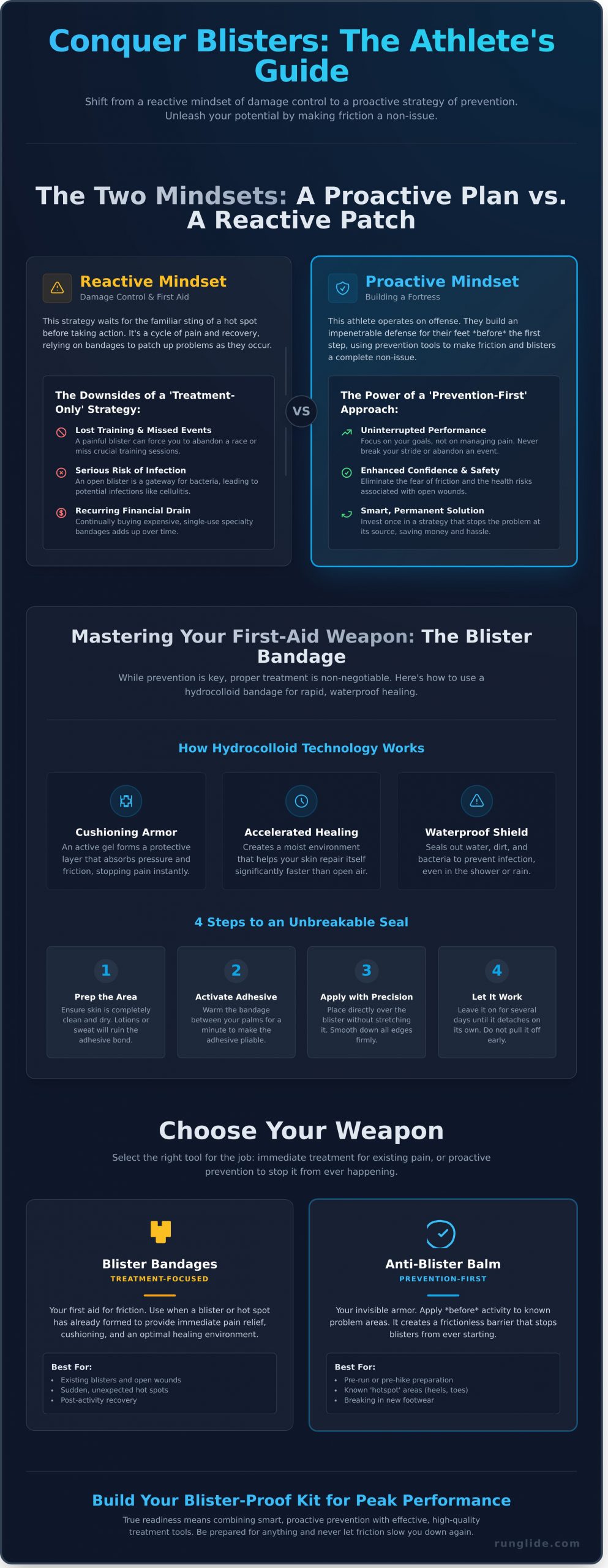
The magic is in the hydrocolloid technology. This active gel interacts with the natural moisture from your skin to form a protective, cushioned layer. To truly conquer this common athletic issue, it helps to know your enemy; understanding what a blister is reveals why a moist healing environment is so effective. As the bandage works, you’ll notice a white bubble forming. Don’t panic—this is a sign of success! It shows the hydrocolloid is drawing out moisture and creating a healing matrix. This process delivers incredible benefits:
- Cushioning Armor: Absorbs pressure and friction, stopping pain in its tracks.
- Accelerated Healing: The moist environment helps your skin repair itself faster.
- Waterproof Shield: Seals out water, dirt, and bacteria to prevent infection, whether you’re in the shower or caught in the rain.
Types of Blister Bandages on the Market
Choosing the right tool is key to conquering irritation. Hydrocolloid cushions are the gold standard for treating existing blisters, creating an optimal healing dome. Gel blister pads offer superior cushioning and are excellent for immediate pain relief on sensitive spots. For pure prevention, moleskin and foam are your go-to, allowing you to create a custom protective barrier over known ‘hotspots’ before a long run or hike.
How to Correctly Apply a Blister Bandage
Get the most out of your defense with proper application. It’s simple, fast, and makes all the difference. For an unbreakable seal that lets you perform without worry, follow these steps:
- Prep the Area: Ensure the skin is completely clean and dry. Lotions or sweat will prevent the bandage from sticking.
- Activate the Adhesive: Warm the bandage between your palms for about a minute. This makes the adhesive more pliable for a stronger bond.
- Apply with Precision: Place the bandage directly over the blister without stretching it. Firmly smooth down the edges to seal it.
- Let It Work: Leave the bandage on until it begins to detach on its own, which can be several days. Trust the process—pulling it off too early disrupts the healing skin underneath.
The Proactive Athlete’s Mindset: Treatment vs. Prevention
Every dedicated athlete has a plan. But when it comes to foot care, is your plan reactive or proactive? A reactive mindset is one of damage control—waiting for the familiar sting of a hot spot before reaching into your pack. It’s a strategy built around defense. The proactive athlete, however, operates differently. They build a fortress for their feet before the first step, making friction and blisters a non-issue. They play offense.
While high-quality blister bandages are a non-negotiable tool for immediate first aid, relying on them as your primary strategy is a surefire way to compromise your performance. True freedom on the trail, track, or court isn’t found in a bandage box. It’s unlocked when you prevent the damage from ever happening. As leading health authorities like the Mayo Clinic emphasize, a comprehensive approach to blister treatment and prevention is what puts you in control, letting you focus on conquering your goals, not managing pain.
The Downside of a ‘Treatment-Only’ Strategy
Constantly reacting to blisters doesn’t just hurt your feet—it sabotages your progress and undermines your confidence. This purely defensive approach is a cycle of pain and recovery that costs you more than you might realize. Consider the true price of waiting for a problem to appear:
- Lost Training and Missed Events: A deep, painful blister isn’t a minor inconvenience; it’s a performance killer. It can force you to abandon a race, cut a multi-day trek short, or miss crucial training sessions while you heal.
- Serious Risk of Infection: An open or popped blister is an open wound, creating a direct gateway for bacteria. Improper care can lead to serious infections like cellulitis, sidelining you for weeks and posing a genuine health risk.
- The Recurring Financial Drain: Those single-use specialty bandages are expensive. You’re continually paying to patch up a recurring problem instead of investing once in a permanent solution that stops it at the source.
The Power of a ‘Prevention-First’ Approach
Shifting your focus from treatment to prevention is the ultimate performance upgrade. Think of it as invisible armor for your skin—a secret weapon that ensures you never have to break your stride. Embracing a prevention-first mindset empowers you in every activity:
- Unshakable Confidence and Focus: Move without fear or hesitation. When you trust your protection, your mental energy goes toward your performance, not toward worrying about potential pain.
- Long-Term Skin and Foot Health: Prevention keeps your skin’s natural barrier strong, intact, and resilient. This leads to healthier, tougher feet over your entire athletic career, reducing your overall susceptibility to irritation.
- More Cost-Effective Over Time: A single, reliable preventative product can outlast dozens of boxes of blister bandages, making it a far smarter and more economical investment for any season.
- You Are in Complete Control: Stop letting friction dictate your pace and your performance. Prevention puts you firmly in command of your comfort, your endurance, and your results.
Your Ultimate Guide to Blister Prevention
Prevention is power. It’s about staying in the game, not recovering from it. The best defense against needing blister bandages is a rock-solid prevention strategy that stops friction before it starts. While it’s always smart to know how to treat a blister properly according to health experts, your primary goal should be to never let one form. Here’s your game plan to conquer chafing and keep your feet in peak condition.
Choosing the Right Gear: Shoes and Socks
Your footwear is your first line of defense. Start with a perfect fit by shopping for shoes in the afternoon when your feet are slightly swollen. Always break in new shoes gradually—never take them straight from the box to a race. But your shoes are only half the equation. Your socks are just as critical. Follow these non-negotiable rules:
- Ditch Cotton: Cotton acts like a sponge, trapping moisture against your skin and creating the perfect storm for friction and blisters.
- Choose Performance Fabrics: Opt for moisture-wicking materials like merino wool or synthetics (polyester, nylon) that pull sweat away from your skin.
- Consider Double-Layer Socks: This design is a game-changer. The inner layer moves with your foot while the outer layer moves with your shoe, absorbing friction between the layers instead of on your skin.
Friction Management: The Final Line of Defence
Even with perfect gear, high-impact activities create “hotspots”—areas on your heels, toes, or arches prone to rubbing. The key is to protect them before you feel that familiar sting. This is where you deploy your secret weapon: an anti-friction balm.
Think of it as invisible armor for your skin. A quality balm creates a durable, slick barrier that allows your socks to glide smoothly over your skin, eliminating the friction that causes blisters. It’s the ultimate proactive step. Applying a balm ensures you’re focused on your performance, not on the distraction of painful rubbing. Stay one step ahead and make friction a non-issue from the start.
Blister Bandages vs. Anti-Blister Balm: Choosing Your Weapon
In the fight against blisters, knowing your arsenal is key. This isn’t about one product being superior; it’s about deploying the right tool at the right time. Think of it as offense versus defense for your feet. One is for treating the damage, and the other is for preventing it from ever happening. The smartest athletes keep both in their gear bag.
Understanding the core purpose of each product will help you make the right call, keeping you on the move and focused on your performance. Here’s a clear breakdown:
| Feature | Blister Bandage | Anti-Blister Balm |
|---|---|---|
| Use Case | Treatment | Prevention |
| Application | After a blister or hot spot forms | Before activity begins |
| Goal | Heal & Cushion | Protect & Defend |
When to Reach for a Blister Bandage
A blister has already crashed the party. It’s painful, raw, and threatening your performance. This is where specialized blister bandages shine. Their job is reactive defense and damage control. Grab one when:
- A blister has already formed and is causing pain.
- You need to protect a raw or open blister from dirt and infection.
- The primary goal is to cushion a tender spot so you can finish your race or hike.
When an Anti-Blister Balm is the Smarter Choice
The best battle is the one you never have to fight. An anti-blister balm is your proactive strike against the friction that causes blisters in the first place. It creates a durable, invisible barrier on your skin. A balm is your go-to when:
- You’re heading out for any activity where friction is a risk (running, hiking, or breaking in new shoes).
- You apply it to known hot spots like heels, toes, and arches to stop blisters before they start.
- You want comprehensive, all-day protection that feels like nothing is there.
This is your secret weapon for conquering distance without pain. See how an anti-blister balm can become your invisible armor in our shop.
Build Your Blister-Proof Kit for Peak Performance
You’ve learned how blisters form and the difference between treatment and prevention. Now, it’s time to take command. True peak performance isn’t about reacting to problems—it’s about eliminating them before they ever hold you back. Being prepared is your secret weapon to conquering any challenge, from the track to the trail.
Stop letting friction dictate your limits. With the right tools, you can build an impenetrable defense against painful blisters and focus on what truly matters: surpassing your goals.
The Essentials for Your Gym Bag or Pack
A smart athlete is a prepared athlete. Your kit doesn’t need to be complicated, just effective. Pack these four essentials to stay protected and in control, ensuring nothing stops you from finishing strong.
- 1. Runglide Anti-Blister Balm (The Proactive Armor): This is the cornerstone of your defense. Apply it before you even think about lacing up. It’s your invisible shield, creating a powerful, friction-free barrier that stops blisters before they can start.
- 2. A small selection of hydrocolloid bandages (The Emergency Fix): While prevention is the goal, having a few high-quality blister bandages on hand provides a quick, cushioned fix if a hot spot unexpectedly appears. Think of them as your reliable backup plan.
- 3. Antiseptic wipes and a safety pin (For safe draining, if necessary): For those rare, must-drain situations, being equipped to handle it safely and hygienically is non-negotiable. Always clean the area and sterilize your tool.
- 4. A spare pair of high-quality, moisture-wicking socks: Never underestimate the power of dry feet. A fresh pair of socks can be the difference between a new personal best and a painful walk home.
Stop Treating Blisters. Start Preventing Them.
The message is simple: reacting to pain is a losing game. Why waste time, focus, and energy on treatment when you can eliminate the problem at its source? You deserve to train, compete, and explore without the nagging fear of friction. This is about more than just avoiding pain; it’s about unlocking your full potential and embracing the freedom of a body that can perform without limits.
Take control of your comfort and performance. Get the Runglide Anti-Chafe Balm and make blisters a thing of the past.
From Treatment to Triumph: Your Blister-Proof Future
Ultimately, the journey to your peak performance is paved with preparation, not just reaction. Understanding your gear and adopting a proactive mindset are your first lines of defense. While keeping high-quality blister bandages in your kit is a non-negotiable part of smart first aid, the true victory lies in making them a last resort, not a regular necessity. This shift from a treatment mindset to a prevention-first strategy is the defining characteristic of an athlete who is truly in control and ready to push their boundaries without fear of being sidelined.
This is where your secret weapon comes in. Runglide is the invisible armor trusted by seasoned athletes and casual fitness enthusiasts to conquer any physical challenge. Formulated with natural ingredients and free from petroleum or oils, it provides a durable, chafe-free barrier that lets you focus on your goals, not the nagging pain of friction. It’s time to stop patching up problems and start preventing them at the source. Your next personal best is waiting.
Stop treating, start preventing. Equip yourself with your invisible armor today.
Frequently Asked Questions
Can you put a blister bandage on an open or popped blister?
Absolutely. A hydrocolloid blister bandage is the perfect defense for an open or popped blister. It acts like a second skin, creating a moist, cushioned barrier that protects the raw area from friction and bacteria. This shield speeds up healing, reduces pain, and helps you get back to your training with confidence. Just be sure to clean the area gently with mild soap and water and pat it completely dry before applying the bandage for the best results.
How long should you leave a hydrocolloid blister bandage on?
Leave it on until it starts to peel away on its own, which could be several days. You might see a white bubble form underneath—this is a good sign that the bandage is absorbing fluid and helping your blister heal. Tearing it off too soon can damage the fragile new skin underneath, delaying your recovery. Trust the bandage to do its job. It’s designed to stay put so you can keep moving while it works its magic.
Should I pop a blister before putting a bandage on it?
No, it’s best to leave a blister intact. That bubble of skin is a natural, sterile barrier protecting the wound from infection. Popping it opens the door to bacteria and can increase pain and healing time. The best strategy is to clean the area and apply a blister bandage directly over the top. The bandage’s cushion will protect it from the friction that could cause it to burst, letting your body heal it from the inside out.
Are blister bandages waterproof enough for swimming or showering?
Yes, high-quality blister bandages are designed to be waterproof. They create a strong seal that keeps out water, dirt, and germs, allowing you to shower, sweat, and even swim without worry. For maximum protection, apply the bandage to clean, completely dry skin, and press down firmly on the edges to secure the seal. This ensures your blister stays protected so you can continue your active lifestyle without interruption.
Do blister bandages help prevent blisters, or only treat them?
They are a powerful tool for both. While excellent for treating existing blisters, blister bandages are also a secret weapon for prevention. If you feel a hotspot developing or know a certain pair of shoes causes trouble, apply a bandage *before* you start your activity. It acts as a protective layer of armor, absorbing the friction that would otherwise create a painful blister. This proactive step keeps you in the game and focused on your performance.
Can I use an anti-blister balm on a blister that has already formed?
No, an anti-blister balm is strictly for prevention on intact skin. Its purpose is to reduce friction before a blister forms. Applying balm to broken skin or a formed blister can trap bacteria and interfere with the healing process. Once a blister appears, switch your strategy to treatment. Gently clean the area and cover it with a proper blister bandage to cushion the wound and create an ideal healing environment.
What’s the difference between a blister bandage and liquid skin?
Think of a blister bandage as cushioned armor and liquid skin as a simple sealant. Liquid skin creates a thin, waterproof film over minor cuts but offers zero padding. A hydrocolloid blister bandage, on the other hand, provides a thick, gel-like cushion that absorbs impact and friction. It also absorbs fluid from the blister to promote faster healing. For an athlete, the superior cushioning of a blister bandage is essential for staying comfortable and active.
